Episode Transcript
[00:00:00] Speaker A: Well, I didn't become a rich real estate investor. What I became was an overwhelmed landlord.
[00:00:05] Speaker B: So you're playing, I guess, a role of almost general contractor on top of property manager.
[00:00:11] Speaker A: Yeah, and I realized that I, I really stepped in it with this one because I wasn't charging him for that service. All right, well, before, when I took it over, four of the seven units were empty and destroyed.
[00:00:24] Speaker B: So 1350 times seven. Right. Versus zero. It's very easy to see which one is working better, but he's got to
[00:00:29] Speaker A: put, he's got to pour money into it and. But he'd have to do that anyway. But you know, it's worth it. And he's a smart investor. He knows it's worth it, otherwise he would have sold it to me.
[00:00:38] Speaker B: This podcast is for informational purposes only and does not constitute financial, legal or investment advice. Please consult a professional advisor before making any decision based on what you hear on the show. Welcome everybody, to another episode of Distress to Success.
This is where we talk with professionals who are helping reinvent blighted communities in a profitable way.
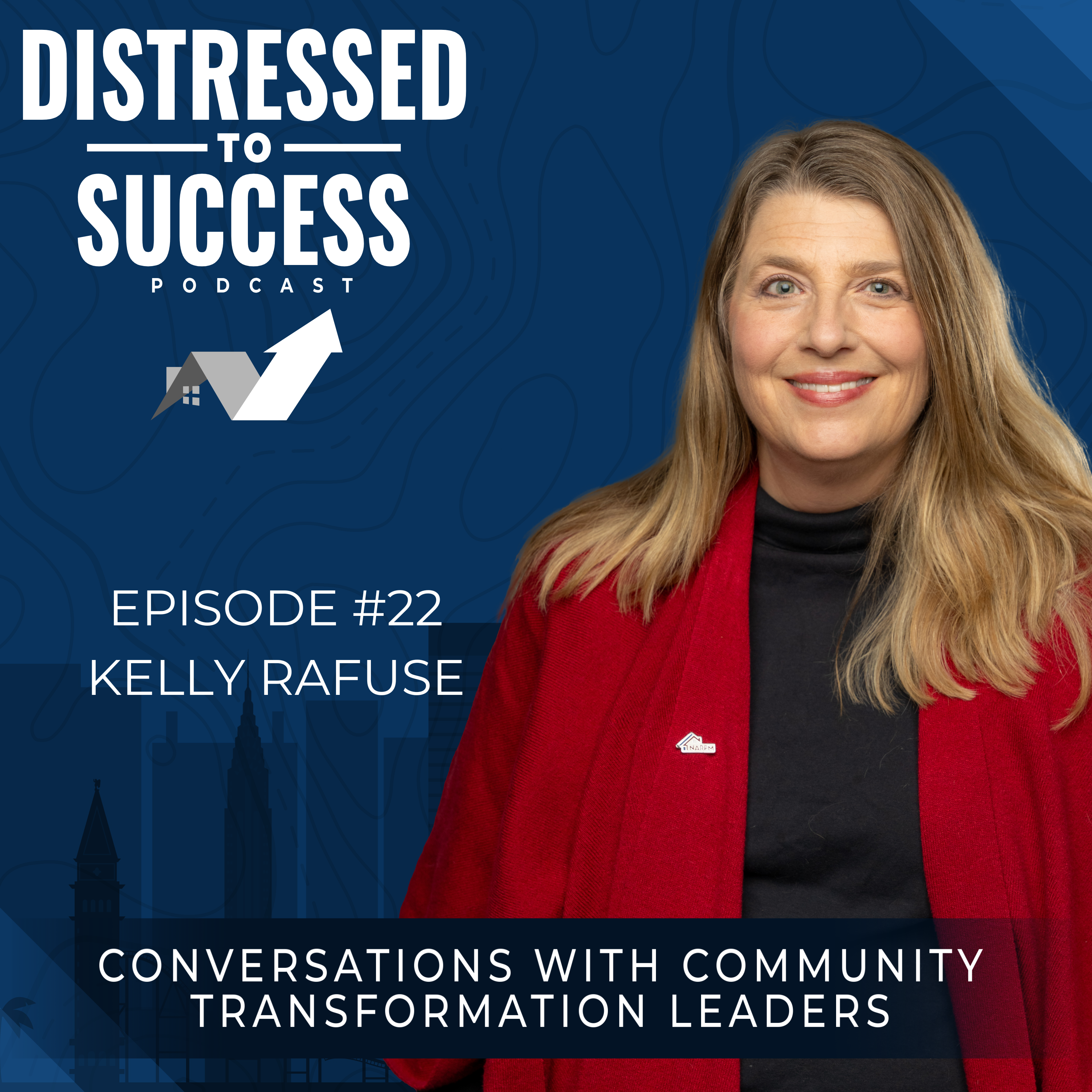
I'm your host, Brian Seidensticker. I'm the founder of Last Best Partners. And with us today, I was able to snag some time from Kelly Ray Fuse. She's the founder of Crimson Cape Property Management.
And they specialize in transforming distressed rental properties into profitable, well managed assets. And I think that was well crafted. I can say that I didn't necessarily come up with that sentence, but I thought it was a very good, I'll say, intro into exactly what you guys do. Kelly. But thanks for joining us. Welcome.
[00:01:29] Speaker A: Hi, thank you for having me.
[00:01:32] Speaker B: Well, I know you're in property management.
You know, you're in eastern Pennsylvania area, kind of specializing in, I'll say, an off nominal market. Right. Which I love to talk about those sorts of scenarios because everybody wants to be in Detroit. Everybody wants to. Not Detroit, sorry, Denver. Everybody wants to be in like the major metro areas, you know, South Florida, you know, Austin, Texas.
But in reality, those are tough markets. Right. And so it's how do you make real estate investment work? And in your case, rental investments work in areas that maybe aren't where everybody wants to be. And that's what you guys have been doing so well. So before we dive into some of that juicy of the how, I guess I'd love to figure out the why and the background of how did you end up diving into property management and how did you get to the success that you're seeing today?
[00:02:27] Speaker A: Well, first off, I Just want to say the Wilkes Barre, Pennsylvania area, northeastern pa. NEPA gets a bad rap. It's actually not a bad place to live. Honestly, I've been here quite a while.
My former career was a top 40 radio disc jockey and music director. Can you tell by the voice? That was a long time ago. So I ended up at a radio station out here and then I moved on to a bigger market. And then I decided to come back because I got a great job offer from an even bigger station in the area.
And I was here a good 12 years before that went sideways.
It's kind of a dying industry, radio. But while that was on the downslide, I got into real estate. And the reason I got into real estate was this area has a very cheap buy in or it did.
That's kind of going away now that more people are discovering it.
But in 2007, when I started this journey as a real estate investor with my husband, we were able to buy quite a few rental properties in quick succession to the point where I thought, wow, that's a nice little bridge. When my radio career falls out from under me, like the whole industry is going, I will, you know, I'll be rich. I'll be a rich real estate investor. Well, I didn't become a rich real estate investor. What I became was an overwhelmed landlord.
So I learned property management by the bootstraps and I made all the mistakes.
And right now I'm taking over properties from similar owners, investors that also made all the mistakes. And I'm turning around what happens to their properties when they make the mistakes.
So that's how I got into it. It was a very inexpensive buy in.
We ended up, you know, building a nice modest portfolio. I mean, my husband and I aren't, we were never rich. I mean that people in radio don't make the money that they think we do. We're not all Ryan sequel.
So I mean, I worked in radio, he worked in TV and so yeah, that in, in Wilkes Barre, Pennsylvania.
[00:04:38] Speaker B: So not, not everybody's Taylor Swift and Travis Kelce, you know, in that, in that realm. Right.
[00:04:46] Speaker A: Although Taylor is from the Reading area, which is a similar real estate market.
[00:04:51] Speaker B: Ah, right. That's a connection. I love that.
[00:04:54] Speaker A: That's also a good one to, to invest in.
But yeah, we got in 2007, 2008. Back then, properties were running for like 550amonth. It was real hard to keep up with the maintenance that was required for all these buildings. But you know, we, we iterated and we figured it out and then the Pandemic hit. I thought we were done, but the pandemic ended up turning everything around.
All of a sudden, you know, people didn't want to live in the big cities anymore. They were moving out here. I mean, they were already moving out here in droves before the pandemic. But after, you know, all of a sudden, that 550amonth apartments now running for 1350.
[00:05:36] Speaker B: So that's what the benefit of. Yeah, people don't necessarily. No, it's changing back a little bit. But people. For a while, you didn't have to live where your job is. You live wherever the job came with you. Right.
There's many, many, many markets that can reflect that with the skyrocketing of values. And I'm from a little town in western Montana that certainly felt the effect of. I'll say that the pandemic, plus the. There's been some shows on TV that have helped energize the real estate market in western Montana anyway.
But you, you hit on something I certainly agree with. Right. Is, you know, your area has a bad rap. I'm now live in northeast Ohio and, and I regularly have conversations with people that come to visit family, friends, you know, and they're like, wow, this is not what I imagined. Right. The Cleveland area, because it's. It isn't. I mean, I think, I really think people in their mind have like this idea of a, like a crumbling city that's just dirt and rust. Right. And like, that's what these other areas are like. And I was like, no, you know, this is actually a beautifully green national parks. More city, they call them reservations here, but city parks than anywhere else I've ever lived. And so I, I hear you. Right? And that's, you know, those areas are those maybe not diamonds, but gems right out there. And there's still an opportunity because that is still a good investment. Versus South Florida, California, where buying that same house is going to be half a million dollars. And trying to cash flow that positive is just never going to happen.
[00:07:17] Speaker A: It was instant cash flow when we bought in out here. Instant.
And it's funny you mentioned diamonds and gems. Wilkes Barre's nickname is the diamond city.
[00:07:28] Speaker B: Hey, man, didn't even know that. But the universe does that for us every once in a while, right?
So, okay, so you guys started in 2007. 8. And then, you know, today 20, 26. Roughly how many properties are you managing today?
[00:07:43] Speaker A: 75.
[00:07:44] Speaker B: 75.
[00:07:46] Speaker A: Yeah. We're growing slowly.
And that's by design because it's. It started off, it was Pretty much just me. On the management side, my husband is focused on, you know, helping investors buy properties. That's his shtick.
He has a sister company, Guerrilla Real Estate and Crimson Cape. That's, that's my baby. And I started this management company because back when I was an investor, I couldn't find a property manager. I tried, I went, I went through. I think none are.
[00:08:17] Speaker B: Not a good one.
[00:08:18] Speaker A: Not. Well, not a good. I mean, not one that, that did what I needed done, put it that way.
So, yeah, I ended up firing two of them before I decided, you know what, I'm just going to do this myself because the results are the same.
Might as well keep the money. Yeah.
[00:08:36] Speaker B: If you're still going to be the person that's answering all the questions in email or emails even at that time and phone calls, you know. Yeah. To your point, what are, what are you paying for?
[00:08:47] Speaker A: Right.
[00:08:47] Speaker B: Just less money in your pocket at the end of the day.
[00:08:51] Speaker A: And I think a lot of property managers, they think the job is just to collect rents and you know, coordinate maintenance calls. Tenant calls for maintenance, they call a handyman, handyman goes up, does the job, maybe doesn't do it. Right. Is there any follow up? I mean.
Yeah, yeah.
[00:09:11] Speaker B: Which is a way, right. Of managing properties, but it's not a good way of managing those properties because all that does is, you know, ultimately, you know, higher, higher, you pay higher fees. Right. To the maintenance guy. Because they're not really interested in optimizing that, that cash flow to, to you. Right. As the owner, investor. They just want to fix the problem in the easiest, fastest way they can and get that box checked. Right. That's kind of the, the general opinion of, of many property managers out there, you know, as far as transforming distressed rental properties into well, managed assets. Kelly. Which is essential, you know, specialize in. I think it always helps to really get an idea of like an example or two. What, what do you mean? Like, what were the things that were happening? What did you do, right. To make it run the way it does today? And obviously, why is that better?
[00:10:06] Speaker A: Okay, well, I, I'll give you an example of some of my, my hardest cases and I'm working on two of them right now. And I've been working on them for about a year.
These properties came to me.
Usually there's, there's two situations. Either the owner tried to do it himself and got completely overwhelmed or they had management in place that just, I mean, underlying problems were never addressed.
And with these in Wilkes Barre especially, almost all of the rentals are what you call C class properties.
So there's a lot of deferred maintenance. They're older buildings.
You can't just go in there with the mindset of most property managers where I'm just going to collect the rents and call a handyman when something breaks.
You really have to steward these properties and educate owners about what needs to be done.
So this one particular property, it's a seven unit brick row home in the heart of the city.
And people were like, oh, it's terrible down there, that neighborhood. Well, you know, the reason that neighborhood was terrible was that building.
And the people that were living in that building.
By the time I took it over, four of the units were empty and three still had tenants in them. But I tried, I always try to work with existing tenants, but there was no working with these people. There was just garbage everywhere.
And yeah, they were frustrated too, because nothing ever got fixed. The one guy, every time he wanted to take a shower, he had to go in the basement and turn the hot water heater on, turn the water heater on at the faucets because the shower would just leak if that were left on. So he'd turn it on, the shower would leak, he'd have hot water, he'd take a shower, then he'd have to wrap a towel around himself, run two flights of stairs down the basement and turn the, the valves off.
[00:12:14] Speaker B: Oh, geez.
[00:12:15] Speaker A: That's how he was living.
So. Yeah, who is it? Yeah, there were landlord problems as well as tenant problems there.
[00:12:26] Speaker B: Yes, I can imagine.
[00:12:27] Speaker A: Yeah.
[00:12:29] Speaker B: I don't know if this is the right way. It just reminds me of a quote I heard once that was, you know, your, your success isn't defined by how high you, you aim. It's like by, it's by the lowest standard that you set, right. And to me, that was life changing in the fact that that's so true.
Because if you're, you want to get here, but you're willing to accept here constantly, then you're just going to be just above that, right? Because that's your pain tolerance. And so, you know, in that case, right. I was like, well, if the, if the, you know, property management company is willing to manage at that level, right. With that, this level of tent, you're going to end up with, right.
And it's just not the best scenario, right. For that, not only that property, that investor, but it sounds like the whole community, right? And this, we could go down a whole nother rabbit hole of what that type of building does to the, you know the equity. Right. That everybody else in the community has in their properties. And I think it's an unappreciated aspect of what people like you do, Kelly, and what you sounds like you've done many times, which is you're not just.
You're adding to the value of that particular property. There's an untold amount of value you're adding to every property around it in the community in doing the right thing and say, refurbishing that property.
Anyway, I'm gonna say thank you for all the communities that are out there. You've helped, even though I'm not in them. But I'm gonna say thank you on their behalf for doing that.
[00:13:58] Speaker A: Well, the neighbors already have done that. Because the first thing I did was first after I tried working with the tenants for a month, I just decided this wasn't going to happen.
And one of them I actually evicted because he never even answered his door. And so I, you know, I just took him to court. And I mean, the previous management company had already started the eviction, so I just completed it.
The other two tenants, I negotiated with them to just move out at the end of the month. You're not paying your rent anyway.
I had the, my. The city inspector, because the city trusts me, because I've been doing this for a few years now. I had the inspector walk through with me and he failed the units.
And so I just explained to the tenants, look, the city failed the units. There's really no way we can fix them with you still here. So since you're not even paying your rent anyway, just go at the end of the month and we won't chase you. And that's how that ended. And then there was the big garbage cleanup. $4,000 worth of garbage. I mean, it was like it's a seven unit row home. So like behind the building, you know, there's like notches between the townhouses.
Those were just full of garbage and mattresses and couches and just from the various tenants that had lived there. So that was a big garbage hall.
So the tenants were gone, the building was empty, the garbage was gone. The next thing I did was hired some contractors that I'd worked with to paint the front porches, just replace rotted wood and paint them up, make it look nice. And just that act of improvement caused all the neighbors to really take notice.
You know, a lot of people coming up and saying, thank you so much.
You know, this one of these going to be ready to rent.
You know, they were, they were real happy that we were doing what we were doing.
I was able to get one unit that wasn't too bad, fixed up and showable, and we rented that one. See, we took over exactly a year ago in July of 2025.
I got that rented.
I think it was March or April of this year. I finally got a tenant in there.
And we're still working on the other six.
I mean, the other six needed to be rewired.
The electrical was all messed up, the plumbing was all messed up. We had to replace heating systems.
But they're getting close.
I'm already kind of sort of showing one unit. I really didn't want to show it, but the owner is putting a lot of pressure on me to get it rented.
Against my better judgment, I don't like showing things till they're perfect.
But it's close and I'm hoping within the next month or two have a couple more of these rented.
[00:16:53] Speaker B: Got it. So you're playing, I guess, a role of almost general contractor on top of property manager.
[00:17:01] Speaker A: Yeah. And I realized that I, I really stepped in it with this one because I wasn't charging him for that service.
[00:17:09] Speaker B: Yeah.
[00:17:09] Speaker A: We finally worked something out where he's giving me a, I. I call it a small stipend, you know, basically the equivalent of my management fee if the units were rented for, you know, in exchange for my services coordinating all this rehab.
But in the future, as I take these on, that's going to be a whole other product and I'm going to be making some real money.
[00:17:31] Speaker B: That's awesome.
[00:17:32] Speaker A: Using this as, you know, an example. Yeah. Look what I can do.
Look what we can bring back to this community. We've already improved the neighborhood simply by getting rid of what was there.
[00:17:46] Speaker B: Yeah, that certainly is an improvement. Right. When you can make that steps in those directions.
What are some of the things that. When you, I guess, are assessing that property and you basically eventually got to the conclusion of there just needs to be a start over button pressed here and redoing the units entirely and now getting a whole new set of, of tenants in there. Like, how did you get to that conclusion? Like, what did you. What, like was it a. Hey, here's the financials today, right? Here's what it'll cost. Here's what you could do down the road. Was it that formal or was it just a meeting of the minds and agreeing like, hey, this is not going to work the way it is. We need to, we need to do something different.
[00:18:36] Speaker A: Yeah, there, there was.
I wasn't experienced enough then to make it formal.
I know a lot more about what it takes to rehab seven units in an apartment building than I used to.
Last year when I walked through that, I know a lot of other property managers walked in and walked right back out again because there was another one on the tour with me who did that.
But I'm walking in. I flipped houses before with my husband and I. Actually, the house I live in now, we flipped. I mean, this place was horrible. We actually took it down to the studs and it's like this nice open plan little home that we live in now.
[00:19:19] Speaker B: It's awesome.
[00:19:20] Speaker A: Yeah.
But yeah, I flipped houses before, so I figured, all right, it's kind of like flipping seven houses. I mean, if you flip one, you can flip seven.
You know, this unit's not too bad. We could probably have this one up and running in a few months. And you know, the other ones, who knows? I mean, they're just so gross that I'm not even going to know what I'm looking at until we are able to go in there without gas masks.
[00:19:43] Speaker B: Yeah.
[00:19:45] Speaker A: So, you know, it went in stages. And the owner of the building was.
He was committed. He was committed to. To making it work. Because I asked him several times, do you want to sell it?
Because I would have bought it off him.
My husband and I would have figured out a way to buy this often because I believed that it could be turned around.
[00:20:07] Speaker B: Yeah.
[00:20:09] Speaker A: And once it's turned around, it would be a nice cash flowing property.
[00:20:15] Speaker B: So what.
What you might be asking what some. What that cash flow would look like in that scenario. Post. What was it before and what was it after? Just rough numbers.
[00:20:26] Speaker A: All right. Well, before, when I took it over, four of the seven units were empty and destroyed. Three had tenants.
The three tenants were paying a thousand. Well, they weren't paying the three tenants. Rents were $1,000 a month.
No one was paying rent.
[00:20:46] Speaker B: Cash flow effectively zero.
[00:20:47] Speaker A: Yeah, effectively zero.
I rehabbed the first unit tenant moved in in April and I listed it for 1350.
She moved in with two little dogs. So there's pet rent. So he's actually getting 1425 for that.
Not bad. Tenant pays all utilities.
[00:21:10] Speaker B: Yeah.
[00:21:11] Speaker A: And so the other six units probably be pulling in around the same. 1350 probably be the minimum.
[00:21:18] Speaker B: So 1350 times seven. Right. Versus zero. It's very easy to see which one is working better.
[00:21:23] Speaker A: Yeah, yeah, but he's got to put. He's got to pour money into it and. But he'd have to do that. Anyway, he tried to sell it as is. No One was buying it or they were making ridiculously low ball offers as they should.
[00:21:35] Speaker B: Right.
[00:21:36] Speaker A: Because of what it would take to bring this building back to life.
[00:21:39] Speaker B: Yep. Now, now he knows. If he didn't know before now he definitely knows what that, what it takes to turn a property like that around.
[00:21:47] Speaker A: Right, right. But you know it's worth it. And he's a smart investor. He knows it's worth it. Otherwise he would have sold it to me.
[00:21:54] Speaker B: Very true.
[00:21:55] Speaker A: And I'd be pocketing in the profits in a year.
[00:21:59] Speaker B: Well, I guess if you were to, I don't know if it's before this project, but you know, your younger self. Right. Maybe right after you got into the, the business back in, we'll say 2009, 2010.
Is there any piece of advice or guidance you would give your younger self that would help you get to where you're at today? Just maybe faster, maybe a little less.
I'll say painful. Right. Because I think everybody goes through experiences that aren't all rainbows and sunshine. And sometimes that native experience is emotional, sometimes it's, you know, financial, sometimes both. But is there any piece of advice you'd give your younger self to save you either that pain or get you to where you're at in a, in a faster way?
[00:22:47] Speaker A: I probably would have built the property management business a lot sooner than I did because I tried to go at it as an owner.
Investor, owner, landlord, you know, investor, landlord. I guess that's, that's the way to call it. Investor, landlord, do it yourself. I tried to do that. And you get emotionally involved with tenants, they take advantage of you. And then at least with me, you know, I get really hard and like I turn into like the mean landlady when I get taken advantage of. And it was a roller coaster emotionally. And then when I finally put my business hat on and started looking at it like it is a business, suddenly I had it humming like a machine.
And when I started managing other owners properties, I really was detached. And now I have, I have a little bit of help. I'm not that big of a company. I've only got two part time employees right now.
But I do have an assistant, Marie, who handles, she's the tenant facing employee. So basically I just make the big decisions now. I don't have to interface with, you know, the, the emergencies.
Everything's, everything's an emergency when you're dealing with people. And it's always messy.
[00:24:19] Speaker B: Always, always.
[00:24:21] Speaker A: Right.
[00:24:21] Speaker B: Well, what. I guess when, so 2007, 2008, kind of when you entered the space. When, what year did you decide? Hey, I think, I think I'm a property manager. Right. Or.
And not an investor landlord.
[00:24:35] Speaker A: I think that journey started around 2016 when I tried to hand it off to a property manager a couple times and that did not work.
And when I took it back and said, all right, we got to do this ourselves, I was still very much in that investor landlord mode, but I was starting to think of it more as a business and yeah, that's, that's ten years now.
[00:25:00] Speaker B: Right.
[00:25:00] Speaker A: To get to the point where I'm at now.
[00:25:02] Speaker B: So you're, so you would have given, you know, instead of, instead of figuring that in 2016. Right. Let's just say in 2009 if you would have told yourself, nope, go this direction sooner. Right, right. Yourself, you know, considered a business and be a property manager.
[00:25:16] Speaker A: Right. Get the, get the real estate license, get the education, join narpam, you know, get the industry knowledge and you know,
[00:25:26] Speaker B: this is all theoretical but you, you would be at the place you're at now just six years, Six ish years earlier. Six, seven years earlier.
[00:25:35] Speaker A: Yeah, maybe.
[00:25:36] Speaker B: I'd say that's, that's pretty effective words of advice if you can save yourself six years and getting to your place of success.
[00:25:44] Speaker A: Yeah. And I also would have told my younger self you're not going to get rich off this quickly.
[00:25:49] Speaker B: Yeah.
Set those expectations correctly.
[00:25:52] Speaker A: Right, right.
[00:25:53] Speaker B: That's a good one. That's a great one. Well, I don't want to steal all of the, of the ideas for this, but I think it's a great segue to our carve outs. Kelly, for those journeying the first time, carve outs is just words of advice that or quotes etc that have nothing to do with what we talked about today.
I do have a carve out. Hopefully you can come up with one as well. Kelly, I'll go first just to give you a few minutes but I've been reading this book called Anxious Generation by Jonathan Height and it's eye opening. I have younger kids, I have a five year old, nine year old and just learning what the impacts of social media can have on a developing.
It's more than a brain. Right. Just a developing young person. Whether tween teen into young adulthood is alarming to say the least. I don't think it's a real big surprise to anybody out there listening that it does have an effect. I think we as society have known that for a long time. But just the why and what you might be able to do to help prevent some of that things and really digging into not just the why today, but like why we evolutionary need to have more in person time and not as much online time. Right.
Probably throughout all of our lives. Right. And so I'm, I'm certainly not going to make an excuse that the amount of time that I spend on my cell phone is acceptable by any means just because I'm, I am an adult.
But it is especially impactful for kids that are developing into their teenage years and beyond.
So anyway, there's my carve out. It's a book called Anxious Generation. Check it out, it's an amazing one. He also writes. He and a partner write another book called the Coddling of the American Mind, and I've read that one as well. Both are great, but Jonathan Height and his last name is a little unique. It's a I H, a I D T Height.
So anyway, hopefully I gave you enough time, Kelly, to kind of think of a carve out or two on your end. Anything you. Any words of advice and wisdom from your end.
[00:28:06] Speaker A: Embrace AI.
Don't be afraid of it. Embrace it.
I love working with ChatGPT.
I actually bought the plus upgrade.
[00:28:19] Speaker B: Nice.
[00:28:20] Speaker A: Because it remembers what we talked about. And actually I'm using.
I've named it Data after Brett Spiner's character on Star Trek Next Generation.
[00:28:31] Speaker B: That's awesome.
[00:28:32] Speaker A: I love it. Yeah, yeah, he, he calls me Captain. It's great. We have like a rapport back and forth.
It's, it's. He's my external brain, so I have these loops in my brain. It's like I have 47 tabs open.
And I was having some horrible anxiety about a year ago where I, I would just wake up in the middle of the night, you know, oh, my God, that water heater at 108 George is like spewing carbon monoxide. And all the tenants are going to, You know, none of that was actually happening, but I was just carrying this, this load in my brain, like all of this operational stuff. And, you know, property management is never done ever.
[00:29:19] Speaker B: Nope.
[00:29:20] Speaker A: So I've started using ChatGPT to park those issues or put them in my calendar for the next day. So have the plumber check out the water heater at 108 George because obviously my intuition is telling me something's not right with it.
And I had him check it out. And, you know, it wasn't as dire as I thought it was, but it did need to be serviced.
And yeah, it's, it's, it's amazing how I work with this AI. I Can't imagine. I mean, I think my company has been able to grow to 75 doors and build systems a lot more quickly than if I'd been just trying to do it all by myself with my overloaded brain.
And the fact is that I can't work more than 12 hours a day. 10, 12 hours a day. I can because I got a, I have a family.
[00:30:14] Speaker B: Yeah, you could, but it comes at the cost. Right. It's something else. Whether it's your sleep, whether it's your family, whether it's, you know, whatever you. The short life that we all have. At the end of the day, you know, finding that balance is key. I, I mean, I, I hear it, but I think it doesn't hurt to repeat it. Right. Of, of. I think you're spot on. Right. Embracing AI and I, it's, it's sad, but I think true of three, four years ago, right. Somebody who could be a top team member in your organization. Right. From a company perspective, if they don't embrace AI, they could become a bottom performer. Right. Overnight. And I really use the term of any, anybody in the workforce today that isn't at least investigating, you know, AI is a, is a, I call force multiplier. It to me, in the way we've adapted, it has never been a replacement of anybody but a force multiplier. And if I think if more people looked at it is like it's not replacing your job. There still needs to be someone that asks it to go do things.
But if you embrace that, right, as part of the workforce, then you, you are now, you know, the ability to be seven people or remember things that nobody ever would. Right? Right. And you can, you can do things. It sounds like you've, you've done this where you create almost a second brain, right. Where it knows your emails, it knows the conversations, and so it can remind you, hey, you told so and so you were going to do this in a conversation last week. And I do it. I was like, really? Holy crap, I forgot about that.
And that stuff happens all the time. So embrace it. I think that, I think you're spot on.
I'm a side bar that just because it reminded me. You seem you like Star Trek and I love Star Trek too, but I was watching the first episode, episode one, so I guess the.
In Star wars, right, they did the middle three, then they went back and made the first three and then they eventually skipped forward and made the last three of the nine. We went to the very beginning, episode one with my kids this last weekend and it's been a minute for anybody listening that maybe hasn't seen it, right? It's, it.
There's a droid, basically an Android army that's fighting a bunch of aliens at the end of the day.
And I remember watching that movie going, wow, that is so wild. And in the future of these, and you know, these robots that would be able to, you know, walk, you know, they're walking upright and do these things and then I'm, you know, this is 20 years later since they made the movie. And I'm watching the movie and my kids are going, that's not wildly crazy in today's technology with AI being one of those and the, you know, robotics being tied to it over the next five, 10 years.
But it's just crazy with the changes that are coming with AI and everything else in the next five to 10 years. So sorry for that wild left turn, Kelly, but it just is a crazy world that we live in and many of it good ways.
[00:33:07] Speaker A: Yeah, we are not replacing people with AI, at least not now. I mean, to err as human, to really screw things up requires AI. So one of Marie, my assistant Marie, one of her main jobs is, is to watch the AI that's taking care of our maintenance coordination. We're working with a company called Vendoroo. I don't know if you've heard of them, but they were a game changer. They what allowed me to go from 32 doors to 75 and that because I could not coordinate all of the maintenance of these C class properties all by myself anymore, it was just overwhelming.
But she needs to make sure that the work orders don't get stuck and she needs to make sure that the vendors are getting the communications from the AI and that they're not getting too many of them or that they're understanding them.
And yeah, with her just watching that dashboard, it's working very well.
[00:34:08] Speaker B: What sounds like a second inadvertent carve out Vendoroo for those out there listening or in the property management space and don't know of that. Definitely, you know, check it out. Sounds like a game changer for you, Kelly, and can be a game changer for them as well.
Well, Kelly, I immensely appreciate your time and thanks for sharing your story and the things that have, have been unique to, to your success and then and the way you got there sounds like you'd be a great resource for, for investors that are looking to get into to single family, you know, property. Not just single family, but properties and eastern Pennsylvania or just markets where, you know, the cash return can be good versus many of those primary markets where everybody wants to be. But good luck, you know, making it cash flow positive. So thank you again, Kelly, and good luck to everybody out there listening and, and, and best of luck to your, to your, your journey.
[00:35:01] Speaker A: Thank you so much for having me on this podcast. I can't wait to post the link on my Facebook page.
[00:35:08] Speaker B: Well, sounds great. All right, take care, everybody.
[00:35:10] Speaker A: Hey,