Episode Transcript
[00:00:00] Speaker A: I am a bootstrapper from day one. Started Synecdoche before even finishing my undergrad. Finishing undergrad in architecture in 2009. Clearly, there were no jobs to be had. Nobody was hiring. Construction takes the hit. And so I had met my partner at school and we found our first project on Craigslist. And that was the tipping point for us, is we were designing projects and we would ask our clients after a project was done, hey, how's business? And they're like, oh, we're doing better than we expected.
And it's like, that's amazing. And we think design may have played a part in it. So how do we get a slice of that bigger pie that you weren't even planning to capture all that revenue?
[00:00:41] Speaker B: Right.
[00:00:41] Speaker A: We'd love that performance bonus. And so that's how we started saying, maybe we should just start investing into these projects because we're continuously seeing the projects we design do really well.
[00:00:52] Speaker C: This podcast is for informational purposes only and does not constitute financial, legal, or. Or investment advice. Please consult a professional advisor before making any decision based on what you hear on the show.
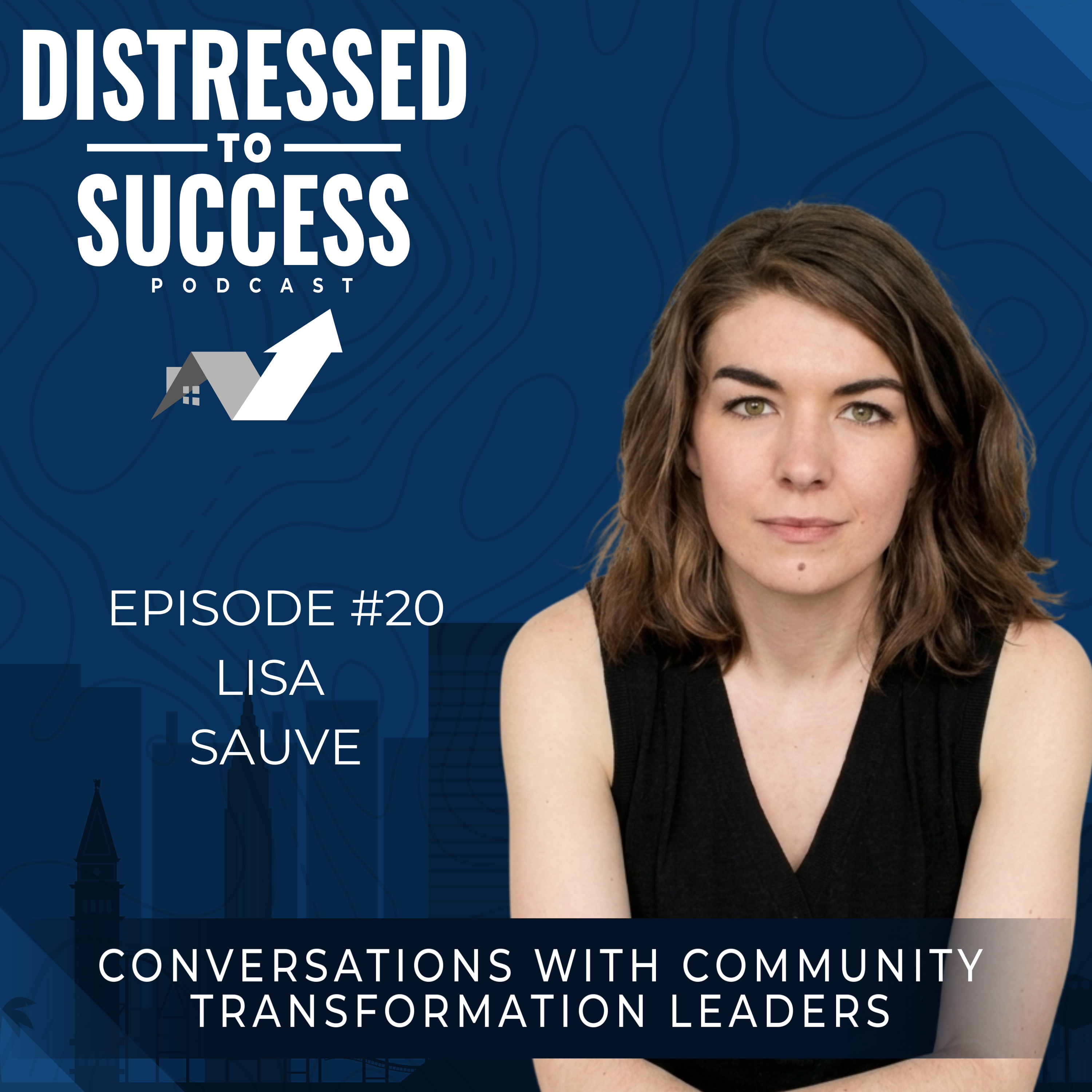
Hi, everybody. Welcome to another episode of Distress to Success, where we talk with professionals who are helping reinvent blighted communities in a profitable way. And with us today, I was lucky enough to be introduced to and had a great initial kind of conversation. I had a ton of questions, and so I'm going to save them for today. But Lisa Save is the principal and co founder at. I'm going to slow down for this one. Synecdoche, which is a firm that focuses on architectural equity. And I'm sure there's gotta be at least some of you out there that, like me, was wondering, what is architectural equity? We're getting into that. But first, I guess. Lisa, thanks for joining us.
[00:01:42] Speaker A: Thanks for having me, Brian. Looking forward to the conversation.
[00:01:46] Speaker C: Well, maybe let's, you know, before we get into the fun stuff, let's maybe get a little background of your. You're, I think, an entrepreneur at heart. It sure sounds like it's. But just give us some background of your path and how you ended up with at Synecdoche and this concept of. I'm going to call it Architectural Equity.
[00:02:06] Speaker A: Well, I am a bootstrapper from day one.
Started synecdoche before even finishing my undergrad.
Finishing undergrad in architecture in 2009. Clearly there were no jobs to be had. Nobody was hiring. Construction takes the hit.
And so I had met my partner at school and we found our first project on Craigslist and Did it under what we called a firm and realized really quickly how to form an llc, get an ein and open a checking account to be able to cash a check and buy materials.
So from there I never actually ended up deviating. And Synecdoche has always had projects rolling in ever since then slowly at first, a project a year, but it really allowed me an alternative pathway to becoming licensed architect and owning my own firm.
[00:03:03] Speaker C: That's awesome. That's awesome. You said in 2009 and obviously now 2026, time flies. But what are, what are some of the projects, types of projects that you have been involved in over the years?
[00:03:18] Speaker A: Yeah, so primarily in commercial for sure. So not a lot of residential work, especially like single family homes and that type of work.
When we started, we like to call ourselves a startup for startups. So living alongside the pain points of trying to start up a brick and mortar business and us as designers and architects being able to solve the spatial problems of that. And, and so that is a lot of what we still do is work with the decision makers at companies, understanding the business models and translating it into built space.
A lot of what we do is an adaptive reuse.
And so it's either interior build outs or full renovations of existing buildings. But we have also trickled into a bit of infill and new construction as well.
[00:04:10] Speaker C: Okay, so do you have.
And I'm sure maybe it's evolved over the years, but what are those commercials? That very big.
Right, but is that, are these, you know, $100,000 projects? Are these, you know, $100 million projects? Are there, is there somewhere in the middle that you guys have really found, really fits your passion in size and scale.
What is the sweet spot for synecdoche?
[00:04:34] Speaker A: We love a thousand square foot project.
They are definitely the hardest. Right. There is no budget to be had, but it means that it's a design problem as much as a budget problem and so really finding creative solutions and that every single design move has to have an impact and nothing is aesthetic.
So right, a thousand square feet. A couple hundred thousand dollars.
Right. We do a lot of hospitality and retail. So restaurants, bars, cafes, retail spaces and then a good amount of office work.
And so that's maybe on our higher end, if we're working in, in the office design space workspace, it's probably about 20 to 50,000 square feet. So those are our two like sweet spots under 5,000 and about 25,000 square feet in those two typologies.
[00:05:29] Speaker C: Got it. And what are, what are some of the recent, you Know, you know, I don't know how much specifics you can share, but what are some of the recent projects that you are or have completed? You know, and you know, again, commercial is a very wide net, but, you know, I'm sure it's across the board. But what, what are some examples?
[00:05:49] Speaker A: Yeah, so in the kind of those two categories, we just finished Umbo, a restaurant up in Traverse City, Michigan. And so that the owners bought a two story building, about 700 square foot floor plate, so 1400 square feet total upstairs for prep kitchen and a small airbnb and then 700 square feet for the kitchen and dining room with 25 seats.
So that was amazing to figure out the space, planning and logistics of it.
Luckily, we have actually a millworker in our building and so we were able to work really closely with some custom build outs to encapsulate the entire design. The chef had given us the prompt that she wanted it to feel like they were dining in an oyster shell. So they do a lot of seafood and have an oyster shell oyster shucking station. So that was a really fun one. And the chef couple, they even did a lot of the construction themselves. So we spent a lot of time coaching them with our fabrication expertise and really close construction admin services to help them realize a lot of that work.
And then another project that we just finished is Bamboo Co working and their Grand Rapids location.
So this was a conversion of an art school and gallery into five stories of co working.
And so similarly multiple, like large volumes of space for large gallery works and figuring out how to maintain a lot of the kind of dramatic spaces while still optimizing rentable square footage since. Right. A lot of their business model is how many desks and doors to private offices can you create.
And so, yeah, those are again, the two kind of spectrums of 700 square foot restaurant, lunch and dinner service and about 35,000 square foot co working conversion in downtown space.
[00:08:01] Speaker B: Yeah.
[00:08:01] Speaker C: So to kind of dive into this architectural equity concept. Right. And I think for those that are familiar with development. Right. Obviously there's, you know, you gotta buy the property. Right. You kind of have a vision in mind. And really the first two people you talk to typically is an architect and a general contractor. And there's really two big buckets of expenses. There's all the material that you need to buy in order to make that vision come true and then there's all the labor. Right. You got overhead you got to pay for. And one of those, I'll say, larger buckets of overhead expense can be the architectural side.
And so I know projects that we've been involved in sometimes is 3 to 5% or more, right. The smaller the project, really that percentage can go up, which can add up to a pretty significant amount, right? And so either A, have to go figure out how to pay for that or I didn't even know that this option existed, right? This option B, which is really where you guys thrive in, which is, hey, find an architect that's extremely good at what they do and maybe they are willing to take equity in the project to help cover that overhead. And you still end up with, you know, A plus players, you know, doing that. But what even more interested me, right, I think what was just amazing about the, the structure is alignment of incentives, right? And I don't know, not every architectural firm works this way, but several of the projects we worked on, it's a percentage of the overall budget, right? And so there's a, there's a rub there maybe intentionally, but there's always a rub of, okay, is the architect just adding all these things to increase the price because they know that's going to increase what they're getting paid.
And on the equity side they're like, I don't want to do that, I want to cut corners, right? And then so there's always like this level of mistrust is probably too big of a word, but this level of the other, I'm sure the architects just like, hey, trying to do the right thing for that particular solution. They're not, they're not actively saying, I'm going to pick the most expensive material out. They're just trying to achieve that. And then on the flip side, you have the owner of the building that's like, hey, I want to minimize the cost. And so this concept of saying, hey, nope, we're on the same team, well, it gets rid of that rub, right? It basically says, hey, you, the architect is going to have equity in it. So you're going to make that decision. All the decisions are going to be based on the long term cash flow of the ending business in mind. And so you have the right incentive to make those decisions. If it's pick this material because that ultimately benefits the business long run the material, or pick that design if it doesn't help in the long run. Okay, let's, let's go the inexpensive route because we have equity in this. So the lower the costs of the overall project, the better. Anyway, that was where my mind went when we first started speaking about is that alignment of incentives, incentives.
But Maybe correct some of those things of like, did I get any of that description wrong? And help fill in the gap of like, where did you invent this, this concept or where did it come from?
[00:11:18] Speaker A: Didn't invent it, really observed it through. I mean doing a lot of offices, you see, you know, tech firms and a lot of the different ways it's like, how do you get talent when you're running a lean startup budget?
And a lot of that is, right, vested shares and so you can promise a return later if you have skin in the game early.
And so it's like, how do you mimic that with what we're doing? And so I think a lot of what you're talking about, right, once you get into construction or you know, the design side, it makes a lot of sense. You know, how you pick and choose for your capital cost, right, Your hard costs. But even before that architecture, all of these soft costs, all of these labor costs come in so early to the project. And when you're kicking tires doing land feasibility, trying to figure out if a project were pencil, it takes expertise, right, to run those numbers to do the test fits and understand what is the optimized project that is going to make a site work, make a development model work. And so all of those can be sunk costs that you have to decide to walk away from as a developer.
And it's really just the developer, you know, putting that early capital in to get to a point of go, no go.
And right, the bank is always going to want you to spend your equity first before you get to draw on that loan.
And so how to spend to the soft cost, right. Get to that permit, we can spend down what would have been the value we charged, just deducted as part of that equity. So yeah, it really is just understanding the life cycle of capital over a project, right.
How we saw it in other businesses and startups and that kind of long term vesting if you go for being acquired or going public.
And then understanding similarly in the real estate development side, how the money gets spent in sequence on the capital expense, but how much us as architects and our engineer partners can have impact and influence on the operating expenses too. Right?
And right. Capital expense is a one time thing. Yes. Then you have your debt service over multiple years depending on, you know, what you end up with at a price per square foot with high end finishes and things, but just as much your operating expense and your operating revenue is really about optimizing that floor plate for the business model and making sure that you're not, you Know, pumping too high of utility costs and the like into it over the long run. So what's your payoff model of, you know, different mechanical systems and things?
So. Right. It really is a holistic understanding of, like, what's the full bottom line return, both capital and operational expenses and what gets spent first. And we know that we can come in earlier than sometimes architects are brought in, but it's not an expense. A lot of people want to bear early, but. Right. More people at the table early allows more coordination.
But putting skin in the game shows we understand our value, that we're adding to it.
But we're going. We're working towards the same thing that we want to return our own value, not the client's investment that we're all investing together.
[00:14:59] Speaker C: Got it, Got it.
You touched on it. I'll just ask.
I use this term architectural equity. And maybe, you know, folks are fixated on. I certainly was on just the architectural piece.
[00:15:12] Speaker B: Yeah.
[00:15:13] Speaker C: Sounds like at least synecdocheat. Right. Does much more than just sit around and do the drawings. Right. There's a whole lot more holistic thinking that's involved. Sounds like maybe some engineering. But what are. What are all the pieces of the puzzle? Right. That. That synecdoche kind of brings to the table under this structure.
[00:15:30] Speaker A: Yeah. I will do full, like, land use feasibility. So what's the zoning code and buy. Right.
Projects that are. Are the potential. The test fits for all of those. Right. Under the architect, we hold a lot of contracts, typically civil engineering, mechanical, electrical, plumbing, structural. Right.
And so to even go with our consultants early and at least get some advisory notes on some of our assumptions is pretty major.
And so, yeah, we'll start before a program is really written with partners or if we're leading a project too. Right. We might see a potential project and just want to go after it. As an architecture firm, say we're going to acquire this building and rehab and redevelop it.
And so we're in there early on doing development models, working on pro forma and really seeing how design decisions. Pencil.
I think a lot of the time. Right. Like, architects can work under the directive of a client. This is the program. Right. We need 40 units of housing, plus a clubhouse and a leasing office.
Go and design me the building. Right. The multifamily building where we can say, hey, yes, it's zone R5 or something that allows this.
But we can look at. Maybe there's a neighborhood plan that recommends it be upzoned. And so what would the upzoning actually Allow and should we talk to the city now and talk about getting it upzoned or pud or something. Right.
To optimize. It's like you got one shot, it's going to last at least 50 years.
So let's get it right. So we do a lot of that pre development work as well.
[00:17:24] Speaker C: Okay. Now do you synecdoche, do you guys, I say search out and develop your own buildings and projects with 100% equity in those structures or are you always partnering with somebody that has that vision and that long term operating and comes to you somehow. Is it a mixture of both?
[00:17:45] Speaker A: It's a mix, yeah. So right. I'm sitting in my building, 16,000 square feet with eight tenants that we assembled.
So.
[00:17:54] Speaker B: Right.
[00:17:54] Speaker A: Working with a lot of small businesses. We have our own network that we can kind of bring to the table and say, hey, I have this restaurant we just designed. They have a friend who's left the same kitchen and wants to start their own restaurant.
How can we make those introductions to get a lease into the space that we're trying to solve together so we can curate tenants. So sometimes we've gone in.
So like this building, our building, we, we did this all alone. So we bought it, worked with the bank, have a record with our bank with other projects where they saw the end performance of the investment and understood the value we underwrote as our equity.
Right. So it's like this is the services that we would write as a contract. Here's the dollar amount, we're going to roll that in as equity. So not having to come in with cash up front either to be able to do our own projects, but just be able to come with validation of what the value of that work would have been and then like Bill against it. Right. To show progress on those services as a portion of the equity, you know, invested.
So yeah, we've been a limited partner, right. Where some other client is leading the vision and we come on and we say we believe in this too. We think it go even further. Let's help push it together.
And then sometimes, yeah, we've seen the potential and rallied up others to join us.
[00:19:35] Speaker C: Got it. So they across the board, a mixture of both.
I guess you kind of went into it a little bit, but I guess what does that process look like as far as, you know, since it's.
I'm assuming. Right. And maybe I shouldn't assume. We all know what that does. But it's not just a, hey, you know, it's 10 of equity in a project. If I'm L.P. right. Versus 100. Right. If you're the GP, does it, does it vary? Like what is that range and how do you, how do you get to what that, you know, percentage is going to be on a project?
Yeah.
[00:20:06] Speaker A: So.
[00:20:07] Speaker B: Right.
[00:20:07] Speaker A: Even as a business, you still have to manage your cash flow and your payroll. So like any project, defining the scope, roles and responsibilities, then we write a service contract just like any other project where we might be hired for architectural services, write the proposal with our fee outline per phase, we bill flat fee per phase and bill monthly on percentage of progress. So it's not tied to budget.
And so then it's like if the fee.
[00:20:44] Speaker B: Right.
[00:20:45] Speaker A: Is $50,000, it's like you could pay us $50,000 or you could. We could buy in for $50,000. Right.
And so that's with the developer. Right. They're finding investors and have it underwritten in terms of how much they need to raise and then proportionalize it based on how much capital you're coming up with. So it's not like we'll take 10% for the work we're doing. It's like, here's $50,000 worth of services. How much percentage does that get us?
[00:21:13] Speaker C: Okay. And is that.
So, for example, right. If it's a million dollar project, essentially that $50,000 services would be what, 5%?
[00:21:23] Speaker B: Right.
[00:21:23] Speaker C: Roughly equity in that project. Do I have those numbers correctly?
[00:21:27] Speaker A: Well, if you're $1 million, let's say that, right. Loan to value, you've got to raise 250k in cash in equity. So really you're looking at 50,000 out of the 250k. Okay.
[00:21:38] Speaker B: Right.
[00:21:38] Speaker C: So it's not 5%. Right. It ends up being 20%.
[00:21:41] Speaker B: Yep.
[00:21:41] Speaker C: In that particular.
[00:21:42] Speaker B: Yeah.
[00:21:43] Speaker C: Okay, so it's, it's a. Services out of total cash needed. Right.
[00:21:49] Speaker A: Out of the equity overall.
[00:21:52] Speaker C: Yep, got it, got it, got it. Okay. So does that, is that typically a. All right, services are rendered, you know, service contracts generated, you agree to what that percentage is and then that. That is what it is. Or does it, does it ever all like change over time depending on, you know. Oh, yeah, always happens. Right, so how does that, how does that typically work?
[00:22:13] Speaker A: But right. Change orders, cost to creep. All of those things can also mean a capital call for investors.
The bank's not going to be the one that's just going to increase the loan amount. They're going to want to see everybody, you know, come up with a little bit more to manage the same amount of risk exposure. And so we've Definitely had projects where we're doing one in 2020 and.
[00:22:39] Speaker B: Right.
[00:22:39] Speaker A: All the material expenses and delays and things required a capital call. And so we had to come up, right, with additional funds to maintain our proportion of shares.
It all comes down to, you know, the development operating agreement to say if you can't come up with those funds, the other investment partners have a right to, you know, show up with those funds and dilute your shares.
But yeah, right, It's a risk reward thing. It's not just profit sharing, it's investment, which means sometimes it's a capital call and you got to come up with more cash and sometimes you get those distributions.
[00:23:17] Speaker C: Okay. So it's a case by case. Right. Depending on what that ends up being. Okay. It's going to require this much more. These many more funds of that bank will cover this. Right. Equity needs to be this and whatever the services piece of that ends up being, you know, might change that equity structure.
[00:23:37] Speaker A: Yeah. Because some of it might be. All right, well the scope changed and we have to do ad service anyway. So we'll roll up our ad service and then have to write a check for the difference too or something like that. But sometimes it's just. Yeah, right. Material cost increased of some weird astronomical amount. Right. Timeline changed or something.
And so we have to do a capital call to just do the adjustment and there's not really a services change. So it really helps to do this incrementally to the proportion of understanding, you know, development in the business models so that you don't get sunk too deep into an investment that you can't maintain for sure.
[00:24:20] Speaker C: Right. But it's a level setting opportunity, right. To make sure that, you know, everyone agrees that this, this is it because the only way you ultimately get paid in these, right. Is that it, it ends up being an, a profitable venture. Right. Whether it's, you know, leasing out the space or it's the restaurant that's going to operate there. Right. It's got to be a profitable venture at the end of the day.
Otherwise it's not, it's not, it's all donated time.
[00:24:45] Speaker A: Exactly. And so that's where it's like you have to have money left over after all your debt service.
And so it's not just how much cost we're spending on doing a build out, right. It's how many seats can we get in a restaurant and what's the turn or what's the experience that can increase
[00:25:06] Speaker B: the, you know, margins off the venue that create that profit margin. Right.
And so understanding business model that goes with it and how space and design is a really big part of this trust, you know, in partnership too.
So when we're making propositions about design to say, you know what, we really have to invest in these and acoustic treatments. Yes, it feels like something that you could be out, but you don't want a loud space that people are leaving over their own. Ordering the second bottle of wine at third, right. That could be the payoff in two months just because. And instead you've got three post yard reviews because it's noisy and they're conversation and they're spending over $100 for.
Right. So you've really got to match the spatial experience.
What should be the value of space?
Those are distracted. It's really effectively too. So for us, we've seen it EE that stuff out and the cost it
[00:26:22] Speaker A: takes to remobilize, to install things, right.
Shut down the restaurant or, you know, the business for a day to do the installation, having to remobilize the labor, buy the stuff anyway that you should have bought months ago.
And so for us, it's like, yes, you should do this. And we have skin in the game, right. We also want to see a return on this. So believe us when we say that this is not superfluous design recommendation.
This is for the actual performance of the project.
[00:26:53] Speaker C: Well, I, you know, to kind of summarize that is it's, you know, back to the alignment of incentives. You get another pair of entrepreneurial eyes on the project. Right. It's not, you know, solely on whoever the project sponsor. A lot of times that's one person or one firm and they have a very single track mind. And, and you know, don't really think about, it's impossible to think about all the things. And so there's, trust me, there's a happy medium, right. You get, you can get too many chefs in the kitchen, but you know, just having another perspective, another set of eyes. And I think in your case, right, having that experience in all of these different business types, you can bring that to the table and know, like you said, hey, maybe the layout that you have in mind, it doesn't work. We've seen it not work. And this is because, and so think about it from this perspective. And it's hard to put a value on that. A dollar value. There's immense value to it. Right? It's just hard to put a dollar value to it. Those are the different benefits that, that, that come from a structure like this.
[00:27:53] Speaker A: Yeah, I mean, that's right. Instead of Being like, our design is the best and that's why you should pay us more. It's like, let's let, let the design play out and the better profit will pay us more. Right, right. So it's like how, how do you become a well paid architecture firm? It's by having well performing projects. And that was the tipping point for us is we were designing projects and we would ask our clients, you know, after a project was done, hey, how's business? And they're like, oh, we're doing better than we expected.
And it's like, that's amazing. And we think design may have played a part in it. So how do we get a slice of that bigger pie that you weren't even planning to capture all that revenue. Right. We'd love that performance bonus. And so that's how we start saying, maybe we should just start investing into these projects because we're continuously seeing the projects we design do really well.
[00:28:49] Speaker C: Now, did you, did you, did you go down this road of this concept in 2009 from the very beginning or did you kind of, you know, evolve into it? And I guess when in that time career timeline did you say, hey, this is the route we're going to go. And now it's like your primary path.
[00:29:07] Speaker A: 2018, I think was our first one and that was investing into the business.
And so we did a few business investments and have now primarily focused on the real estate side of things.
But.
[00:29:20] Speaker B: Right.
[00:29:20] Speaker A: You have to build up a mature enough business that you have cash flow or reserves because. Right. You're not getting paid for the project.
And so how do you do the work and maintain a staff when there's no money coming in.
[00:29:37] Speaker B: Right.
[00:29:38] Speaker A: But you have to have a work output. And so. Right. We, we can only take on so much. That can basically means that our architecture firm doesn't take, make much of a profit. Right. Because that profit is of the profit margin of the other projects in the studio is supplementing these investment projects.
And so it really took having enough projects in the pipeline to have that margin to be able to take on projects where we weren't going to see compensation until it was completed. Right. And giving those distributions.
[00:30:17] Speaker C: So, so do you have at this point, are you still doing, I'll say, standard, you know, contracts as well as the equity?
[00:30:23] Speaker B: Oh yeah, yeah.
[00:30:25] Speaker A: I mean we love to just, you know, work with clients. And I mean, you gotta think about it this way.
Not everybody is good to go into business with either. And there's certain clients. It's great to be like, we'd love to design this for you and we hope you do really well.
But we can't invest in everything. Right. Like again, you have to understand like what are you investing in in terms of your portfolio too? So we have a handful, but we definitely just do architectural services as well. But we can bring to those projects again, a lot more of this expertise. So even if it's a tenant doing a lease, it's like, let's look at your lease and figure out are these accurate rentable square footage numbers, you know, so we just have a wider view to advocate for our clients and our projects, no matter the type of contract structure that we're working on.
[00:31:23] Speaker C: So how many of the equity structures have you done to date?
[00:31:30] Speaker B: Six.
Seven.
[00:31:32] Speaker C: Seven?
[00:31:33] Speaker A: Yeah.
[00:31:34] Speaker C: So you're at some point, right, you have a little bit I'll call VC firm or VC mindset. You hinted on it earlier, like not everybody is good to go into business together.
And of those seven, like how did, how did you find those or how did they find you? How did you end up, you know, going down this road and, and how did you decide like this is somebody that we think is, you know, we want to work together on as opposed to be services for.
[00:32:04] Speaker A: Yeah, I mean it's, you've got to find people at the end of the day. Right.
Anybody can write a solid business model, but the people executing on it are core. So you're investing in people as much as you're investing in the project.
And a lot of it is do these partners have a track record of success and a reputation that they're fun to work with, that they're trustworthy, all of these things.
And so we did a hair salon and it was like you've got a clientele and a portfolio of work for a long period that you guys are going to be one of the best salons in town.
It makes sense to, you know, invest in this. So it's people like at the caliber in the field that they're in doing that work. Right. Too. And seeing their portfolio of work and saying, yeah, like you're absolutely capable of executing to the highest level and we believe in it. But sometimes it's people have the talent but maybe not the resources. Right. Especially for small business, sometimes it's like friends and family, you know, funds. And especially if you're leasing a space, there isn't an asset for a bank loan to secure against.
So you're going to get smaller loans for build outs for small businesses when you're leasing. So the more you can show up with cash. Right.
Or equity trade.
Right. The easier it is to actually realize your business and vision. So that was like a lot of it is those early projects are small, but we were kind of that gap financing per se that made the cost feasible for them to actually realize a business.
And we just knew that their talent was there. And then the real estate ones, so much easier to like run a full performer, look at case studies and like plug yourself in as an investor.
[00:34:12] Speaker C: Does this, does this make sense or not?
[00:34:14] Speaker B: Yeah.
[00:34:14] Speaker C: Right.
Well, what.
Well, and how many do you want to go into?
I'll leave it up to you. And if you want to avoid it, that's fine too. But I guess I would. I'm always curious of like pain points. Right. It's not always sunshine or maybe it is sunshine and rainbows. That'd be fun. Fantastic. But what are some of the pain points that you've run into that maybe you could, you know, tell your younger self? You know, I'll say 2017 right before your first project like this to say, hey, if. Keep this in mind and it will save you, you know, some pain in some form, you know, down the road. Any kind of words of wisdom for your younger self?
[00:34:50] Speaker A: I think there's a lot of sweat equity that everybody puts in. In addition, like, once you are an investor, you're willing to just kind of, you know, keep going and keep pushing because you want to see the best results.
I think sometimes that allows scope creep to happen. Right. I'm just going to do more work or better work or you know, pick up a hammer or like build something out or just buy the better I'll pay for the margin without actually tracking those additional contributions.
Right. So being really cognizant about if you or partner is putting more into it than measured or not carrying their weight, measuring and syncing up on that through the process and the project delivery. Right. Because at some point cash isn't the only measure of equity or dollar signs. Right. Like actual time invested, attention to the project.
Those are things that other than a dollar value can really create friction in terms of, yes, you wrote a check for 100k but you're not showing up to all the meetings. And then when you do, we have to explain everything to you and you've got a different opinion or something like that. Right. So those are the types of like difficult points that you've got to have, I think a really tight line of, you know, your raci diagram, your rules.
Right. Your responsibilities, all of those sorts of things between all of the partners and Then all of the right consultants and other people working on the project to
[00:36:28] Speaker C: really define, well up front who roles and responsibilities. Right. And it's so much easier than it sounds or no, it's a lot harder than it sounds. The exact opposite, right. It sounds easy but then when you dive into a project it's it always a little murky. But the more time you can concentrate on that up front, the less long term pain.
[00:36:51] Speaker B: Right.
[00:36:51] Speaker C: And I've certainly, I'll echo that. Right. And I don't know that I've learned that lesson entirely or implemented it entirely, but it's, you know, that constant reminder, wow, we should have defined this better. Right? And because it doesn't just rear its head once and you know, figure it out and then you're done. Right. It's one of those unless it's solved up front and well defined, it just continues to rear its head. Ugly head, right. You're having to continually play whack a mole, right.
[00:37:20] Speaker A: And like problems come up and scope changes and so it's really like communication, everybody being available to say, hey, this hurdle has come up and it's not actually clear who's going to tackle this because we didn't think that this hurdle was going to occur. Somebody has to own it and helps like lead the solution.
And so just being able to even communicate and say, all right, is this something that somebody just has the skill to take care of and we can close this out or is it going to take a large amount of additional time and how do we measure and compensate that as a thing too? So I think those are big things that we've probably invested a lot more, you know, than what it is on paper.
But again, sometimes that's just a choice. Like we just believe in it and this is how we're going to roll up our sleeves and do a bit more.
And then like the time, right, you're like a project is finished and typically you're like once it's finished, you've been paid out the time between finishing a project and actually seeing returns, right. So it can take a while just to see a project stabilized, right.
Getting the clients closing out the last of those construction expenses before you just have your regular monthly expenses and things. And so it could still be a whole nother year after you've got your certificate of occupancy before you're actually seeing a profit margin in distributions.
So it's like don't bet on those coming to supplement your revenue stream in any short term cycle.
[00:38:59] Speaker C: It's either a have A lot of cash built up. If you want to take this on from the start or like you guys did, you know, have your pipeline of, of standard projects. Right. To supplement that, you know, while you grow this concept, what's the geographic footprint of Synecdoche? Lisa, you mentioned Grand Rapids, Michigan, Is it what, beyond that, where. Where are all the projects that you are taking on or would be willing to take on?
[00:39:25] Speaker A: Yeah, we're definitely like Midwest, so we're in Detroit, but.
[00:39:29] Speaker B: Right.
[00:39:30] Speaker A: Traverse City is four hours north.
Grand Rapids is two hours west. We finished a project in Milwaukee last year, Wisconsin.
We're in talks with a couple in Chicago, so.
[00:39:42] Speaker B: Right.
[00:39:43] Speaker A: A lot within that range. We also have a furniture line.
We make host stands. It has to started out of one project.
The host stand we photographed for a restaurant went viral and now we sell them to a lot of other architecture firms and interiors firms. And so if you've ever been to a Tommy Bahama or a Delta One Lounge, you've seen our host stand. And so those we ship across the country and we work with our mill worker to produce and we've even done some custom fabrication work out in the Bay Area.
So really I think architecture is pretty nimble and it's about partnerships. So we've been finding architecture record sometimes in another state and that we're really coming in with a different sort of business and design sensibility.
We've taken a lead in different ways.
[00:40:35] Speaker C: Well, it's amazing. It's an amazing concept and definitely one that I didn't even thought of. Right. Love the fact that it aligns and incentives and hopefully some. Some listeners are. Are thinking the same way, whether they're looking to solve that in their. In their market. Right. In their areas or want to reach out to you. And we'll get to your contact information here shortly, Lisa. But before we do that, one of my favorite sections of the podcast is a is what I call carve outs. And I totally stole it from another podcast.
But you know, a quote, a product, a book you read recently, anything that you'd want to suggest to the audience that you think is just worthwhile checking out. And I'll go first to give you at least a couple minutes to think on it.
I was actually listening to a whole separate podcast and I guess different but kind of a similar concept.
The guest had mentioned Richard Scarry's Busytown book set for really pseudo educating young kids. It's a book and book set for young kids on how the economy actually works. You've got the farmer that grows the wheat, you've got the mill worker that grinds it into flour and they got to take it to market and just describes how economy works. And I have a five year old right now and thought it was an awesome idea. So I, so I went ahead and bought it and started reading it and they were spot on. It's such a cool set of books to really educate how the economy actually works. And so that's my carve out for the day is Richard Scarry's Busytown book set. Hopefully I give you enough time Lisa, but do you have a carve out or two?
[00:42:23] Speaker A: I love it.
I was thinking about Richard Scarry this morning because it's always nice to be on an urban street and see it mimicked in real life.
I would say I I read this book earlier in the year. Alchemy Subtitles. The Dark Art and Curious Science of Creating Magic in Brands, Business and Life by Rory Sutherland.
There's some, you know, things I don't agree with totally in the book, but it talks about human behavior and how our assumptions versus how people and what we say versus what we actually do and believe.
And so it's a really interesting book about really understanding the core of human behavior and how we need to reflect and ask the right questions to design towards that instead of making assumptions what might be the rational choice because we as humans are nonlinear and sometimes irrational.
And it was just a really insightful book that I'd recommend for everybody.
[00:43:30] Speaker C: Again, Alchemy by who?
[00:43:32] Speaker A: By Roy Sutherland.
[00:43:35] Speaker C: Roy Sutherland, excellent. Well, Lisa, again, immensely appreciate your time. Love the concept. I think it's so cool what you guys are putting together. If somebody is listening and would like to connect with you, what's the easiest best way to do that?
[00:43:49] Speaker A: Oh yeah, the MO Synecdoche is probably, you know, the hub that I hang out at Most and so lisanecdoche.design and all of our social media handles and things. But you can shoot me an email. I'll tell you, Synecdoche is not Schenectady, New York.
So yeah, shoot me an email, Lisa.
N E C D O C H E I mean you can find me on LinkedIn all the different channels, but I just also I'm pretty transparent. So if anybody's curious about even how we're doing some of our real estate or project deals, I'm happy to walk anybody through it if they want to jump on. You know, 15 minute call we'll have.
[00:44:33] Speaker C: For anybody listening, want to check out the notes below. We'll have that email typed out again. Lisa Save, I appreciate your time again and for all you listeners, good luck out there. Hopefully you're solving your blighted issues in your communities and can turn that distressed into some success. Thank you everybody.