[00:00:00] Speaker A: But in time we, we ran out of money and we realized, you know, it's a very liquid, intense business. We were not able to successfully take down our second 25 unit. So we ended up fixing, flipping a lot of properties and getting the wholesaling. So we had to learn to raise capital, invite other investors in to participate with us in these opportunities. The developer owes 22 and a half million dollars to the lender. We're buying it for 18 and a half billion.
This is the market right now where you can get great class A opportunities from distressed developers that just built these assets and now they're getting leased up and you can get a brand new building for far less than it cost to build it just a year or two ago.
[00:00:39] Speaker B: This podcast is for informational purposes only and does not constitute financial, legal or investment advice. Please consult a professional advisor before making any decision based on what you hear on the show. Welcome everybody to another episode of Distress to Success.
This is where we talk with professionals who are helping reinvent lighted communities in a profitable way.
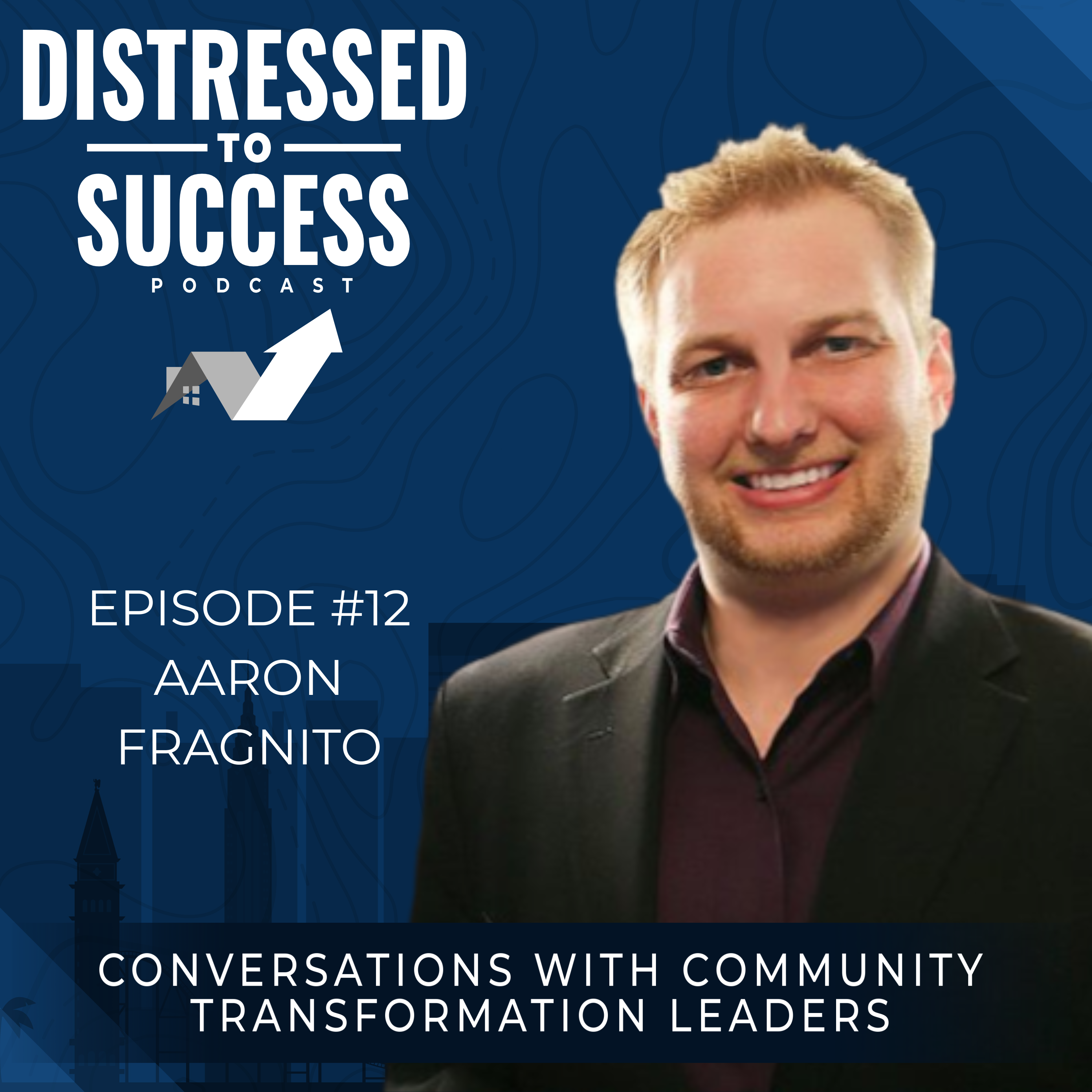
With me today, I guess I was lucky to snag some time from Aaron Fragnito. He's the co founder of People's Capital Group and they've done, I think you mentioned, over 60 fix and flips in the New Jersey market. He's done a lot of work in the multifamily and you just have a plethora of really awesome experience dealing with the types of assets that I think we're trying to find solutions for. Aaron. But thanks for joining us.
[00:01:26] Speaker A: Glad to be here, Brian. Absolutely. Enjoy it.
[00:01:30] Speaker B: Well, to kind of, yeah, I guess kick it off.
[00:01:32] Speaker A: Right.
[00:01:33] Speaker B: I always like to hear people's story and background and you know, most folks have a pretty colorful story on finding that, that success. So give us a little color on, on your background. Like how did you, what is your journey like from, you know, when you decide to get into real estate to finding that success that got you to where you're at today?
[00:01:54] Speaker A: Sure. So I was graduating College, Rowan University, 2009. Terrible job market.
Probably the worst job market in generations. I remember I went to a job fair. There was a enterprise rent a car and there was an insurance company and you could work for 100% commission or enterprise rent a car was looking for people to clean the cars. Start at the kind of the bottom of the ranks there.
Neither one interest me. I had read a book called Rich Dad, Poor dad and that's of course the Purple Bible. A lot of people know about it. So I had a passion for real Estate, which I didn't quite recognize until I had read that book and realized I wanted to own large scale real estate. Just didn't really know how to do it, didn't have any money or experience.
So I moved out to Steamboat Springs, Colorado for six months. I taught kids how to ski and read more books on starting a real estate investment firm. And I made a goal, a set of goals. Said okay, in 10 years I want to have a net worth $1 million and the passive income of $100,000. And kind of worked my way down from that goal and said, okay, I need to learn the industry, make connections and get started as a realtor. So moved back to Jersey, got my real estate license. I learned the industry that way. Got really into short sales and REOs, quite frankly, because there wasn't much else you could do in the market at that time. It was such a down market. And really learned how investors buy these deals at great prices, started facilitating transactions with them to get them properties at great prices and making relationships with real estate investors. I would go to real estate networking groups, I'd speak there. I started my own group called New Jersey Real Estate Network. We now have about 5,000 members in it and we do about four events a year and a number of online events as well.
And so yeah, we're just kind of learned the business that way. And then met my business partner, Seth Martinez, who I work with today. And then Seth had sold a medical billing company. So he was liquid and he was managing his assets and experience in the operations side.
I was learning how to find great deals and I was good at public speaking, marketing, branding. So we kind of complimented each other's weaknesses and teamed up there and bought our first property in Newark, New Jersey, where we're actually buying a big property today.
And we put a. I wouldn't used to staple signs and telephone poles and said we buy houses and you might see those around sometimes, probably more so in the past than you do now. Those used to work really well.
And we found a six family for $220,000 and purchased it and put about 60, 70,000 into it, renovated the units up, leased it up to fair market value and then refinanced our money back out about one year and this light bulb went off that, you know, you can buy, renovate, refinance, repeat and just build a nice portfolio that way. But in time we, we ran out of money and we realized, you know, it's a very liquid, intense business. You want to multiple properties at once, it's tough. So we had to learn to raise capital, invite other investors in, to participate with us in these opportunities.
And so we went out, we started talking to other real estate investors we knew and high net worth individuals and inviting them into our deals and, and grew from there. And today we have our own in house property management company. We're currently working on acquiring about a $19 million asset in Newark. We still do a lot in Newark, very active there. Seth and I have completed over 280 transactions together through the years now over the last 13 years and we have about 113 private investors, about 83% reinvestment rate and we're strictly focused on this North Jersey market and just bringing our investors great opportunities and performing for them.
[00:05:27] Speaker B: Got it. So, sounds like you've gone through or maybe still do a lot of different asset classes and acquisition types. Is there a, a class that People's Capital Group focuses on today more than others? I guess the prep A preferred asset class you mentioned, a $19 million multifamily acquisition. Is that really was that kind of the, the promised land, if you will?
[00:05:53] Speaker A: Yeah, I mean I prefer class A real estate. I mean obviously I'd rather have a nice brand new building than some old 100 year old Class C building. The truth is most of the money is actually made in a lot of the older assets and through the years those are the ones you end up getting a lot of the time, especially in this like North Jersey market where you have a lot of older housing stock in need of repositioning and improvement and deferred maintenance and so on.
So we're very experienced in the art of buying like a class C apartment building and repositioning it into class B. That's kind of our specialty. We've done that, you know, a B minus into a B plus. But now we're starting to see opportunities in the class A space where really they just were not existing over the last decade or so.
Class A pretty much since like 2016 has been selling for pretty tough to swallow cap rates and you're just not going to make great multiples on it. Now what we're seeing is distressed developers. For example, the building we're buying right now, the developer owes 22 and a half million dollars to the lender. We're buying it for 18 and a half million lenders. Taking a $4 million haircut. He probably invested $26 million to build this thing. We're buying it for a six million dollar, you know, below replacement value costs. So this is the market right now where you can get great class A opportunities from distressed developers that just built these assets and now they're getting leased up and you can get a brand new building from far less than it costs to build it just a year or two ago.
And that's the market we're in right now. And that's, we're, you know, taking advantage of and we're able to snag those deals if you know the right people and you know where to look. And we've been, you know, doing transactions in this market successfully for many years. So we have those relationships in place because they're off market deals. They're not like sitting on the Internet. Generally banks don't want to air their dirty laundry. So non performing notes and distressed assets are generally bought more through like a whisper campaign or a pocket listing. So you got to know the right brokers and receivership companies.
So that's we're seeing right now in the market and I like it because class A real estate is better than class B or C and I'd rather be buying class A. But the numbers have to make sense for our investors. Quite frankly, they haven't because our investors want to earn high mid teen to high teen irrs. And you just weren't getting that in class A real estate for the last decade. But now you know where to look. You can, it's very nice.
[00:08:16] Speaker B: So is that I'd say part of your secret sauce by. Not all this, but it's the, you guys have established the relationships with the receivership, you know, entities. Right. Or the bank.
[00:08:27] Speaker A: Right.
[00:08:27] Speaker B: Representatives to, to catch wind of those whisper listings, I like that term.
And then you know, be able to.
Yeah, I mean you're solving a solution for the bank. Right. Like you said, they won't, they don't want to air their dirty laundry, but they still have dirty laundry. They want to find a solution for it. And so you're able to step in and help solve that, you know, for them and take that asset off their book.
[00:08:53] Speaker A: Right.
[00:08:53] Speaker B: And they don't necessarily have to go public with it at that point. Is that kind of the, the, the secret sauce?
[00:09:00] Speaker A: Yeah, that's it. You got it. It's all about who you know. Right. And also having relationships forged with those, with those lenders, with those receivership companies, with those brokers that trade in distressed properties and being on their A list. Right. Because they're not going to go and call every single buyer they know or put it on the Internet and then, you know, wait for a bunch of tire kickers to come they kind of go straight to the buyers that they know perform and have that reputation to perform. So yeah, that's exactly it. And you know, you can call it a secret sauce, but it's not all that secret. Right? It's all about who you know in this business and most businesses and most in the industry.
And it takes time to build those relationships. It does. And that's why it's important to team up with operators that have that experience and that track record and those relationships in place. Because it took me, you know, over a decade to forge these relationships. Right. Someone coming into a market brand new isn't going to be able to quite, you know, do that so quickly.
Or an investor that's part time or kind of a mom and pop landlord. Right. So that's why you, that's why people invest, you know, passively with syndication operators because they should have those relationships in place. They should be able to find those great deals and put them under contract for great prices. Where you normally, as a regular landlord or a smaller single investor would never be able to even find that opportunity, let alone take it down as a single investor. And that's kind of the, you know, the, the benefit of pooling money together and buying a larger asset.
[00:10:30] Speaker B: Yeah, yeah, well, yeah, you're exactly right. The, the, you know, who, you know, is much more important. Right. Than necessarily the secret sauce, you know, formula, if you will. But if you could provide a gem of knowledge. Right. To, I'd say the, the listeners, if they're a fledgling entrepreneur in the real estate space in their market, like, is there any word of advice you could give them? Like, here's how you establish those relationships or how did, how did you go about establishing those relationships with those individuals or those groups?
[00:11:04] Speaker A: Go to industry specific events. You know, I just went to an event in Newark, New Jersey called the Newark Summit, and there was 1200 people there. And I saw like every single broker I know, you know, that sells property in that market. And we're all pals, you know, so go to local real estate networking events. You can find them right on meetup.com or eventbrite and go out there, take the time, you know, pay the $35 or whatever. If it's a big summit, maybe it's $400, but. And get your foot in the room, make those connections. And then when you have those connections in place, follow up, follow up, follow up, follow up. Actually take those brokers out to lunch, you know, get to know them, understand what they have. And brokers have two types of Listings. They have the listings that are on the Internet that everyone knows about, that they're good buyers already passed on. Then they have the listings that are about to come to market. The people, the sellers they're talking to, the whisper, you know, the deals that no one really knows about just yet. And they're going to start bringing in their A buyers and say, hey, I got a deal coming. You know, it's over here on, on Main street and I'm about to sign a listing with a seller. I think I can get them down to 4 million, you know, and here's the deal, here's the da, da. And that's how you get a good deal. You get in early before a bunch of other buyers know about it. If it's sitting on LoopNet, that means all the guys like me already passed on. It means it's probably, probably a reason. It's probably not a great deal. It's probably overpriced. It's actually the overpriced. And, and now there are scenarios where like a seller will finally just be, oh, I'm tired of all these low balls, I'll just take a low ball offer. But like, that rarely happens. So it's all about building those relationships. Just like an investor, you know, you're going to want to get that FaceTime in. And it's not just like you're going to go to one event and conquer the market. You keep going to events, keep going to RIAs, keep going to big summits, have a social media presence.
And then, you know, you can also hit the phones. You can call brokers that are listing properties that are the listings you want to buy, start to submit offers, submit otherwise and you know, maybe submit the loi in person, say, yeah, I have an li, I'll email to you, but I want to grab lunch. Doesn't matter if the seller accepts my offer or not. I just want to tell you what we're doing here. We're looking for our process for closing and start building that relationship, you know, one on one, face to face.
[00:13:27] Speaker B: Yeah, well, I don't know if this has been your experience, I guess in, in our, when we, in our experience building that relationship actually took, I'd say a couple deals of maybe weren't the biggest winners. Right. It was a, hey, you know, proving that you are a legitimate buyer and have the ability to close. Right. And proving that you are a closer and not just a tire kicker.
Right. And I think that's, that was for us was a very important, I guess, role to establish with those relationships and then all of a sudden a light, you know, switch in their mind from, you know, hey, you're just pick a number right. Scenario to I've got this. And I. Their most important thing is they need to close it.
[00:14:10] Speaker A: Right.
[00:14:10] Speaker B: And so who are they going to call? Right. Not this list of a thousand people that they loosely know. It's like the three, four or five people that they know can close that deal. And so being able to check that box for them and it's really, I guess patting their back or scratching their back on a deal or two, right. Not don't do it to lose money, but you might have to buy a property that isn't the best deal ever to establish that relationship. That was our experience. Right. And then you know, that kind of turns the table on future deals going forward. Did you have a similar experience at all like that, Aaron?
[00:14:44] Speaker A: Yeah, I mean that's ultimately the way you build relationships is you close the deal, you put money in their pocket. You know, I'm kind of just speaking for people that like don't have that luxury necessarily yet, you know, but yeah, and that's it. You gotta close deals. And when you close deals, brokers look at the tax records and they say, oh, this company bought this property, you know, and paid a good price. And then all of a sudden you get calls from other brokers with similar opportunities. They say, hey, you bought one, 23 Main Street. You know, you want to look at mine, mine's right right down the street. Or it's a similar.
And yeah, so. And closing deals, putting monies in brokers pockets or wholesalers pockets, that's the best way to get on the top of their list. And you'll quickly get up there and not only will you get on the top of their list, but you'll. Other brokers will hear about it via either tax records or just talk and then they're going to start to want to be your broker as well. And before you know, you'll have them ringing on your phone more than you can handle and, and pitching your deals, you know, and, and then you say, oh boy, what now? And now I'm really out of money now. Now I got to figure out how
[00:15:50] Speaker B: do I, how do I, how do I filter all these. Yeah, phone calls. Exactly. But that's a good problem to have, right?
As opposed to not, not sure who to talk to. Well, I appreciate that Aaron. I guess maybe a note to self, right. If you could go back in time and talk to Aaron fragnito back in 2009. Is there any word of advice or two or three pieces of advice that you'd give your younger self that would help you get to the success that you have today? But they do it maybe a little faster with a little less pain or, you know, in my case, maybe a little less expense associated with learning those hard lessons. Anything in that realm?
[00:16:32] Speaker A: Yeah, it would probably be stay the course and educate yourself through some type of coach or mentor, you know, educational program.
I remember back in 2013, you know, Seth and I were starting this business and Joe Fairless was like the only like syndication coach out there and he's still doing it now.
And instead of like buying his book and taking his course, I think we just tried to learn on ourselves.
And the art of raising capital is very tough. Underwriting apartment buildings, understand the structure and you know, the debt and the equity. Syndication wasn't really like a thing back then. Now it's a buzzword. Now everyone has a podcast and a real estate syndication, so it's much more popular line of work.
But you know, we got, we, we raised money for our first 25 unit and we tried to buy another 25 unit and we started raising money from the general public once we exhausted friends and family and realized, wow, it's a lot harder to raise money from the general public beyond friends and family. And we were not able to successfully take down our second 25 unit. So we ended up fixing, flipping a lot of properties and getting the wholesaling. Now we made hay while the sun shot. I mean the sheriff sale auctions were a gold mine back then and we had some really good years. So I'm not saying it was necessarily completely the wrong way to go, but it was also, it was a pivot we had to do almost by force because we weren't able to learn capital raising and syndication and large scale property management essentially quickly enough to implement it.
And it got us off track a little bit, you know, and now we're, we're more focused on syndication and capital raising and taking down large scale assets. We've developed our management company since 2015 to allow us to really have the infrastructure in place to do this successfully. So don't be guilty of the shiny object syndrome, as many entrepreneurs are, including myself.
Stay the course, you know, pivot as markets change and so on. Take advantage of opportunities that you see are crystal clear, but don't be afraid to embrace with, with a coach or a mentor, obviously, you know, shop around for the right one. I think some of them are way overpriced. But there are some good value coaches out there. Learn the space you're in, become the best at that one niche. Don't do everything everywhere, right? You're not a $6 billion REIT. You're not buying intern, you know, nationally and doing this and that, you know, even asset class, right. Like mixed use and multif family. Try to stay the course with an asset class that makes the most sense, you know, that, that you have experience in and is in the market you are focused on.
So yeah, stay, stay the course. Don't go awry.
[00:19:17] Speaker B: Got it. That's good, that's. I, I can second that a million times. As far as, you know, all the, all the moments where like ah, maybe there's something better to do, right. I'm good or bad, chose to stick with whatever that path was and you know, eventually highly paid off.
And so yeah, staying the course, remaining focused. Well, I appreciate it, Aaron, I guess really to kind of round out, you know, before we wrap up, I call carve outs. Right. And for anybody new listening, carve outs are really anything random, Aaron, that you've either bought, heard, you know, read, listened to, word of advice, you know, recently that you think the, the audience would highly benefit from, you know, from.
And it can have nothing to do with what we talked about today.
And I'll go first to give you a little time to, to think on it, but I got a, one of those aura rings for Christmas.
I was curious to see what that looks like. I'm kind of, I'll say health curious and I'm also an engineer, I love data.
So the cool thing about the aura ring is it gives you all this information and it really has been life changing and the fact that never really realized how much like how important this is going to sound bad like how important sleep and the sleep cycle and different things that you do, like how that impacts your, your sleep and your quality of sleep. Little things from like when you eat right to having a, a beer or an adult beverage. I can win in the day. And it's just been eye opening and life changing and the fact like changing some very basic habits to just get immensely higher quality sleep at the end of the day.
That's the biggest benefit out of it that I've gotten. It does some other things as well, but quite frankly all the other things are I guess replicating what my watch already does too. But the sleep aspect of the OURA ring has been fantastic. So anyway, that'd be my recommendation for anybody in the audience that is, I guess health, curious and want to know more or enable themselves with information to do better, then the aura ring is definitely, definitely worth it. So anyway, hopefully I give you enough, enough time. Aaron, what would be your car voucher too?
[00:21:39] Speaker A: Yeah, Brian, I'll add to that, you know, because it is about having a work life balance. You. When I started in this business too, I worked like seven days a week. I didn't have, you know, kids or wife, you know, so I kind of could. I was, you know, 23 years old so I could just work, work, work. But I realized, oh, in time, like having a work life balance is super important. I think after two years I got a little burned out and realized I really needed to have that balance. I remember I went on a vacation and I was on the phone the whole time and just taking calls because I like didn't know how to put my phone to vacation mode or whatever, you know, so I just wouldn't do it. And now realizing it is very important to have that work life balance and that goes into a lot of things. You know, getting that eight hours of sleep, exercise. To me, faith is super important. Being part of my church community, you know, I teach Sunday school and part of a couple different church communities and really enjoy those people around me. Having a good male Christian, mentors and, you know, having that integrity when you run your business is super important. And it all goes back to, in my opinion, having a higher power, having faith. So that is super important. And then also what goes that is taking care of your body, treating like a temple, exercise, diet, eating right, not drinking too much, you know, and just trying to have everything in moderation and not working too much and stressing yourself out, but also achieving to a higher standard and trying to, you know, when you are working, be 100% on, 100% focused and give it your best.
[00:23:09] Speaker B: Thanks, Aaron. I immensely appreciate that. I'm sure the audience does as well.
For anybody that is curious or wants to learn more about you or People's Capital Group, what's. What's the best way to connect with you?
[00:23:21] Speaker A: Sure. So they can go to peoplescapitalgroup.com we have tons of information there. We have a podcast called the Passive Cash Flow Podcast. We have educational master classes as well that teach about passive investing and how to build and preserve your wealth in real estate. We're strictly New Jersey focused. We have a lot of market information up there as well, multi family housing data and so on. We just came out with a really nice white paper that digs into kind of projections in the multifamily market and what we're seeing right now, which is a lot of institutional capital overlooking multifamily and actually a great opportunity to invest in multifamily over the next year or two here, a lot of the data is telling us. So we we create a white paper that, like really digs into that. It's very interesting.
Yeah. It's all PeoplesCapitalGroup.com you can learn more about investment opportunities, join a wait list, see if you qualify to to team up with us as a partner on our next investment opportunity and just educate yourself on real estate investing and passive wealth creation. It all
[email protected] I appreciate that.
[00:24:24] Speaker B: Well, thanks everybody, for listening. Hopefully you learned a thing or two. I know I did. And thank you again, Aaron, for joining us.
[00:24:31] Speaker A: Thanks, Brian. Appreciate it. Have a good day.