Episode Transcript
[00:00:00] Speaker A: I think about real estate as a product, not as an asset. It's not something that I just believe that I can buy and trade freely. I have to improve it and then I create a market for it.
I'm not in the business of building affordable housing. I'm in the business of building accessible architecture. I want to give people access to spaces that they never thought they could live in, cooking kitchens that they never thought they could have, have bathrooms that are awesome, showers that are great, bedrooms, spaces where their friends come over, they say, wow, this is amazing.
The amount of money that it takes to build a bad project is exactly the same amount of money as it takes to build an amazing project. A building costs what it costs.
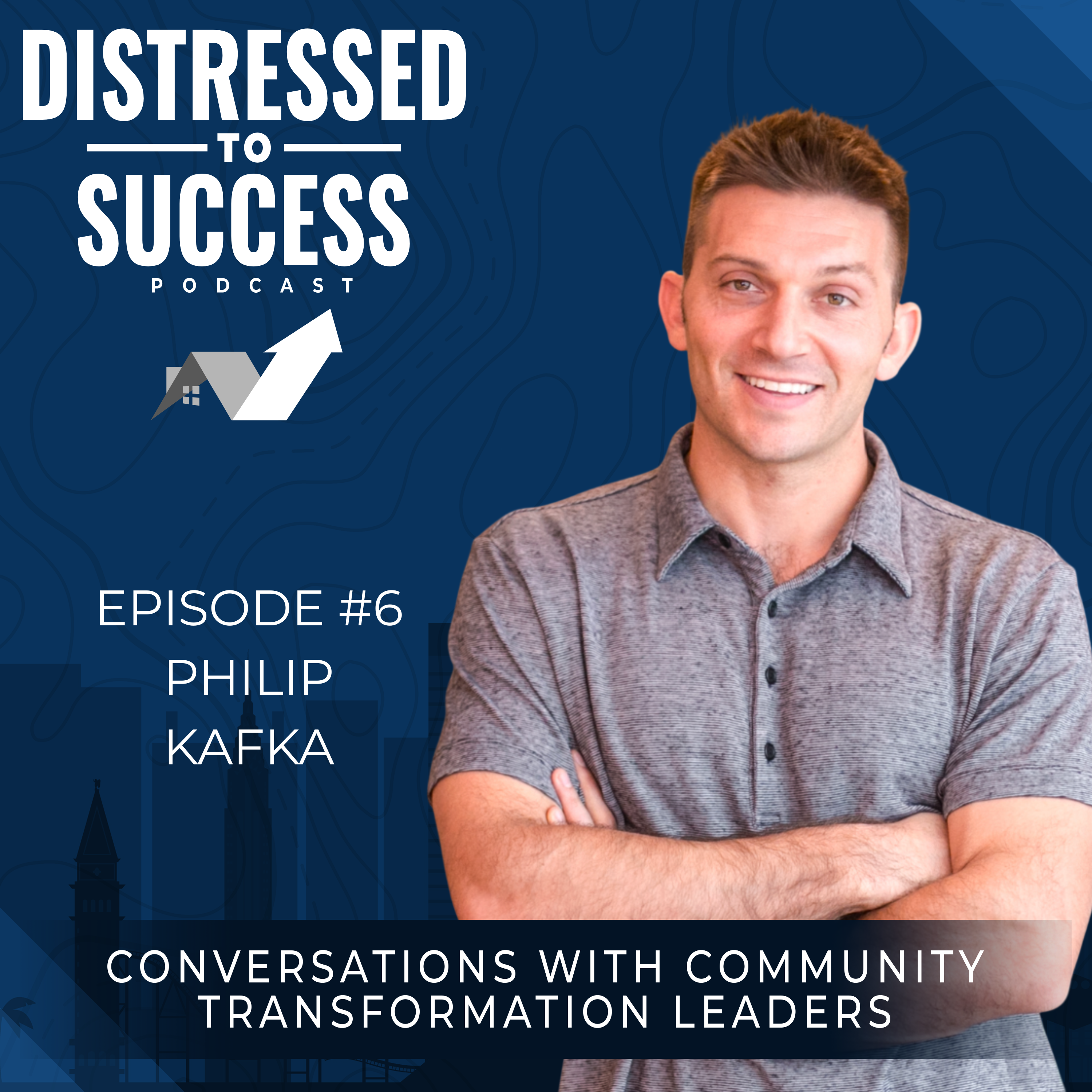
[00:00:37] Speaker B: This podcast is for informational purposes only and does not constitute financial, legal, or investment advice. Please consult a professional advisor before making any decision based on what you hear on the show. Hi everybody. Welcome to another episode of Distress to Success, where we talk with professionals who are helping reinvent blighted communities ultimately in a profitable way. With me today is a gentleman with an amazingly cool story, Philip Kafka, who's president of Prince Concepts. And guess we connected really, I think, through social media. Philip. And anyhow, welcome.
[00:01:14] Speaker A: Thank you. Thanks for having me. Brian.
[00:01:16] Speaker B: Yeah, I think I just really want to start a little bit, Philip, on maybe a little bit of your background and how you ended up in, you know, I'll say real estate development. I know you're an architect, you know, and have you do more than that, obviously, but do you have a little, little background on how you ended up in real estate in general?
[00:01:37] Speaker A: Sure. Actually, like, I. My work is very focused in architecture and I have a great focus. Architecture. I did not study architecture.
Our products have won significant architectural awards, but architecture is not my, my focus. It's just a tool that I use. I actually studied philosophy in college and then I made my way to New York City where I was an entrepreneur and I started a billboard company. And so billboards are kind of like real estate. You know, you sign a long term lease for a wall, you study the zoning laws, and then you, you, you go around a city with a zoning map and you basically develop signage assets as opposed to real estate assets.
So I started in New York City developing a signed company and I would go and just get a zoning map and I'd go to areas and I would try to lease walls from owners of buildings.
And this is related to, like the way that I approach development because as a young guy with not a lot of capital behind me, I couldn't go and get the prime locations and pay that kind of rent that a landlord in, like, midtown Manhattan maybe wanted for a billboard. So I had to go to off the beaten path areas, find off the beaten path sign locations, and then I had to figure out ways to distinguish that location from the other companies. So, like, I would have to go and find a wall that was across the street from, like, the coolest bar. And then I would specifically go and market that wall to, like, a very niche liquor company. And there was value to them because that was a really cool, off the beaten path bar that, like, you had to know to know that it was great. And so there was advertising value. And so that kind of background in the billboard business and the way that I developed my company, kind of bootstrapping it in New York City, led me to wanting to get into development. And I started to travel around the Midwest and the Rust Belt, really looking for places to buy real estate, places where the real estate might be undervalued, but there was still signage potential. And so just because the market might be different in a city that has different socioeconomics, there's still an advertising market. The advertisers are just different.
So I traveled all over the country. I ended up in Detroit, and I'd never seen anything like it. Very interesting place, built for two and a half million, only 700,000.
And I. My idea was to buy real estate that was significantly undervalued, develop signage on it to carry the property. I still have not developed a sign, but I bought and developed now a lot of real estate.
And I never materialized that vision, but the idea itself led me to Detroit. I bought and developed real estate, and I ended up selling my company in 2015 successfully to a large public company.
And.
And it wasn't like an exit where I could do nothing. It was an exit where I could do some cool stuff. And Detroit was a place where development was needed. There was room for somebody like me that had ideas.
The entry point was low, and I was able to kind of buy a lot of real estate in the core of the city and a lot of real estate in one place. So, like, that's what kind of kicked off my. My development career is, like, I actually needed to develop. I wasn't just investing in an area where there was actually an audience already and where people wanted to be. And I wasn't just moving money from, like, one person's pension account to, like, an investment in real estate. I was actually having to develop a product. And so, like I always say That I think about real estate as a product, not as an asset. It's not something that I, that I just believe that I can buy and trade freely. I have to improve it and then, then I create a market for it.
So that's kind of my background.
[00:05:03] Speaker B: Yeah.
[00:05:04] Speaker A: And you know, like how I approach real estate, how I got into real estate. And I can keep going, I can keep talking about this long time. But I'll let you jump in.
[00:05:13] Speaker B: No, that's a, that's an excellent set. One is fascinating. Right. Is. So out of curiosity, where, where did you move from to New York City?
[00:05:22] Speaker A: I grew up in Texas. I'm originally from Dallas, Texas.
[00:05:25] Speaker B: Okay.
[00:05:25] Speaker A: And I went to college in Chicago and, and I actually played tennis in college. I played one year pro tennis after college and then I went to New York after that. So I was kind of on the road around the world. And then I made my way to New York, but I'm from Texas. I lived in Chicago for university and then I made my way to New York professionally.
[00:05:42] Speaker B: That's cool.
[00:05:42] Speaker A: And now I live in Detroit.
[00:05:43] Speaker B: Yeah, well, it's, yeah, there's not, I'm sure you get the question all the time, what took you to Detroit from New York? Usually people are trying to go from Detroit to New York and being a.
I'm from Cleveland now, not a native Clevelander, but I'm, I consider myself a Clevelander now, but I get that question all the time. Like, what took you? I'm from Montana originally to, to Cleveland, but I've grown to absolutely love Cleveland as I'm sure you absolutely, you know, love Detroit. Maybe not all aspects, but at least enough to, to move there and, and start a family. But you, you hinted at Prince Concepts a little bit. Right. But can you tell us more about what Prince Concepts is and of the project or projects that you're currently working in Detroit?
[00:06:26] Speaker A: Yes. So Prince, the essence of like unlike most real estate, like a lot of real estate operations are really in their asset driven. So they're, they're really, they're, they're really, they really understand money well. They know how to finance projects. They know how to get incentives to projects. They understand the money side of projects. Like I approach real estate from a totally different perspective and I think that's why you even thought that I was an architect. I am a product first real estate developer. I'm not thinking about the market, I'm not thinking about the incentives, I'm not thinking about the financing. I mean, now I never really have to think about those things. Because that's how I get projects done now. But I was a product first developer. And so to me, it didn't matter that there was not a growing population in Detroit when I got here. What mattered to me was that there was a city with an audience.
There was a. There's a. Like, there was a place that was relevant internationally, that had a history and it had infrastructure. Like, you grew up in a place like Montana, and you can find a lot of land for a very low price, but you, you don't have infrastructure. You don't have international airports, you don't have, you know, large highway systems to transport people. You don't have sewer lines to tap into and water lines and power lines and gas lines oftentimes.
And so there's a lot of value in this place. That's Detroit. A lot of infrastructure that was built. But the land cost and the real estate cost, in my opinion, did not reflect that infrastructure. And that was in large part due to dogma of people who'd grown up here and had negative experiences here and who had a prejudice against the city. Let's say I didn't come with that prejudice. I didn't come with that baggage. I'm not from here.
So what that allowed me to do was it allowed me to buy a lot of real estate in one place. And it was a place that everyone told you you don't want to be, a place that everyone told you, like, you don't want to invest there. And, and it's true, there was no investment to make. If you'd bought a piece of real estate there or here, where I am now, and you'd sat on it, it would not have gone up in value. It would have been a liability. So I knew the onus was on me to come up with ideas that were so exciting that I actually created the value in the real estate. I wasn't, like I always say, like, you go to New York City and the city works for you. You could be somebody that inherited a building in the 1960s and you maybe didn't do anything to that building. If anything, it's deteriorated since then. But the asset value, because the city's worked so hard for you has gone up significantly. Detroit is not the kind of place where the city works for you, but it's the kind of place that allows you, it gives you the room to do the work yourself. So, like to connect all these dots, the money that I saved on acquisition, that I really should have, that I really should have paid for the real estate because it had all that infrastructure built in.
I didn't save it. I invested it into the product. And I built apartments, and I built restaurants. I've done restaurants, apartments, public spaces, office buildings.
I built spaces that made people say, I want to be there. So, like, you know, people talk in the very soft sense about place making.
Like, that's literally what I'm trying to do is. But I'm not talking about an academic sense. I'm not talking about it in a. Like, in a social sense. I'm talking about it. And like, I'm literally trying to make the real estate that I bought a place that people want to be.
And, you know, and. And basically I took the savings and acquisition and invested into the product.
[00:09:48] Speaker B: So is it. Are all of those projects you mentioned, from restaurants, housing, you know, commercial, are they all in that same area that you.
[00:09:58] Speaker A: 90, 95 of what we developed and own is in this one area called Core City. It's at a major intersection two miles, exactly two miles northwest of core of downtown. So, like, you're two miles away from the Pistons where they play, and the Red Wings and the Tigers and the Lions and all the entertainment of downtown and all the development that Dan Gilbert's been doing downtown. You're two miles from there. You can see downtown straight down Grand River. You're right next to highways with great access. But this was land that, you know, 10, 12 years ago, I was buying for, you know, between a dollar and five dollars a square foot.
And like, that's in the core of a city. So, like, it's not so far off the beaten path. It was just an area that, for decades, people had not invested. There hadn't been an investment in Core city since the 1960s before I got here. So the 1960s was the last decade when there actually it was an investment in. Or city. Yeah, the area. The area where I'm working, you've kind of epitomized.
[00:10:57] Speaker B: Right. Of. I have a. I certainly am of the mindset as well, of, you know, where others don't want to be. There's probably an opportunity. Right. You just got to figure out how to tap into that opportunity. And you obviously saw that a lot of it is. Is you creating that opportunity. Like you said, you had to create a product do.
Is there any. Any part of, I'll say, the success that you've had so far and that. And in having as much real estate as you have in a location to where you. You have some control over that? I guess I've. I've talked to folks who you know, they, they won't buy a building unless they can buy the whole block. Right? Because they want to control the neighbors. They want to control everything that's going into there. Is there any aspect of that, of where you're in the project you're doing, or could you have done what you're doing, like single building at a time?
[00:11:44] Speaker A: Well, I think if you look at my body of work, it, I do own a lot of real estate in one area, but it's not about control, it's about generosity. And, and I, and first and foremost, I'm not an altruist, I'm a business person. Like I, I don't say generosity when I talk about trees. I don't talk about them as an environmentalist. I am a real estate developer that wants to make the best product I could possibly make and I want to make business with it. Like there's no doubt about it. But like I talk about learning, earning a lot of property in one area, terms of generosity. Because I'm able to build public parks like I have and I planted, I've only built 40 apartments, but I planted a thousand trees.
And I'm not able to do that if I'm not the beneficiary of at least a significant part of that investment, right? Like if I own an acre, I can turn half that acre into a public park. If I can develop the other half acre that I, that remains around it. Do you know what I'm saying? But if I just buy one piece of something, it's very difficult for me to be generous with that thing because I have to get the best return on investment. There's the way to get, the return is not dynamic, it's one dimensional. The way to get the return is to get as much rent out of that building as I possibly can. Whereas if I buy a piece of land and I own land around it, if I beautify the neighborhood at large because I basically take the savings that I should have spent on land and invested into the place instead of like, you think about it, if, if I, if I bought a piece of property for $500,000, that money is gone from the neighborhood. The guy that just sold me that property takes that money and goes somewhere else. Whereas if I buy that piece of property for a hundred thousand dollars and then I take $400,000 that I saved and I put it into the place, I've now done something really good. Like, it's so much better, it's so much better for that money to stay in the place where I'M actually acquiring the real estate. And that can really only happen with, I'm not going to say a significant amount of like, land control. And I don't like the word control either. Like, I've had four tenants who I've released and sold land to that have now built their own homes. I have three more private homes that, from land that I've released from an option I had with the city to these, to these builders, I want to get rid of control. But like, that's because I've already established enough of an attitude and enough of like a significant investment in the public realm to make this a place. Now I still have a lot more investment in place to do, but I wouldn't have been able to do it if I didn't own adjacent properties.
You know what I'm saying?
[00:14:15] Speaker B: Yeah, I think, I think, yeah. I love the concept of being generous because I think what it boils down to is, you know, if your price point is, is low enough, right, you have to mean for the project. And this is, I guess, epitomizes the whole distress to success thing, right? For the project to be long term sustainable, right. It's got to be profitable, right. To do that, you've got to net certain amounts, right. Per square foot, right. You know, depending on what you plan to do with it.
[00:14:41] Speaker A: Right.
[00:14:42] Speaker B: You can exceed what you have to to get for that particular lot of land. Right.
And if you exceed it enough, then you can help offset, you know, not doing anything or doing something different with the next chunk of land, right?
And it's very hard to do with, you know, an eighth of an acre, quarter of an acre, but if you've got, you know, several acres, for example, then it gives you a whole lot more flexibility on what you can do with, with a part of the land and then, you know, be able to give back and, you know, with the generosity on the, on the rest of it. So, yes, I guess long story short, makes total, total sense to me and I, you know, I think the listeners will definitely get that and I. The mindset, right? I think of a lot of developers that's, you're, you're definitely unique. Philip, is, is the, you know, I need to maximize, you know, every square foot, maximize the revenue of every square foot as opposed to, hey, you know, I can do something different with a piece of my land, right, or piece of my real estate as opposed to, you know, putting the most, you know, units in and getting the most revenue out of those units, which I think is the default mindset of many Many developers now?
Yeah, I guess as far as the type of projects or you know, long term, you know, plan for some of what you're doing there.
You mentioned restaurants, you know, residential, commercial. Like what, what is the project that you're working on right now?
[00:16:08] Speaker A: Right now I have a duplex project under construction. I built, I designed a project in two phases by a, by a very world class architect, Edwin Chan. We'd worked on another project together that we won a lot of awards on and it's, it's 14 duplexes.
So 28 units, sorry, 12 duplexes, 24 units.
I completed the first 10 in phase one and I rent those out and now phase two is those are for sale duplexes. So I'm building them to a brown box completion, selling them at a wholesale price. And then the buyer not only gets a nice architectural place and a beautiful landscaped habitat to live in, they also get a rental unit to help them pay their mortgage. It's kind of my answer to affordable esque housing. You know, like I don't really believe in compromising.
Like I have a vision of what I, what I would never build a product that I myself wouldn't live in. Like I almost say that I would never build a restaurant that I myself wouldn't eat at.
So like it's, you know, I'm not going to build standard affordable housing like the traditional apartment today. Luxury. In a luxury building, a one bedroom apartment typically has two large windows, one in the living room and one in the adjacent bedroom. Our one bedroom apartments have 10 windows and large windows. So like there's a great amount of architectural generosity. Again, how do we pay for those windows? So those, it comes from the savings in the land. And we like, we're building 14 apartments or planting 160 trees. You know, like there's an immense amount of generosity that's able to go into our projects. And so like what I'm working on right now are these duplexes. I'm also always kind of renovating cat commercial spaces. We have a commercial corridor here. I have my own, we have our own cafe.
And just to paint the picture for your listeners too, the neighborhood where I developed. When I arrived here, There were only four operational houses across this like 30 acre swath of land.
Four residents who'd remained here since the 60s. They were homeowners and they were enthusiastic about the work because like in their minds the neighborhood, the neighborhood was the best intersection in Detroit. It's like, what took you guys so long? Like we've been here We've known it's great. Like, what's, what's wrong with you all? And so like that was kind of the habitat. It wasn't even like there was, it wasn't even like it was a lower socioeconomic class of businesses and now it's like higher rent paying tenants. These were abandoned buildings that were on demolition lists and these were swaths of land where homes had been either abandoned or demolished.
So it was a very interesting habitat and like really proud people who'd remained here.
So I'm working on the, like, I almost have commercial tenants coming in and out developing these new apartments.
We're thinking about the future. We have a large portfolio now. So like a lot of the work is management. I mean, we have a, we have another plan for the next five years of development that we want to do and we always have ideas.
But right now a lot of it's management, stabilization and just making sure the neighborhood continues to run.
[00:19:07] Speaker B: Well. That's awesome, by the way, that the, the folks that had stuck it out, right. And they're willing to hop in and yeah, the attitude of where have you all been? This, we've known this is the best part of Citi forever. That's, that's amazing. You know, as far, I guess back to the duplex concept, I think it's, it's a brilliant idea, but it's. Make sure it's the idea of selling it, right. And it's, you know, owner occupied, but the owner owns both sides of the duplex, right. So it's a, hey, you know, I'm gonna sell this at a certain price, right. You know, know you'll still have a mortgage payment, but it's going to be offset by rent that you can collect from unit number two. And obviously both, it sounds like, from the architect that you partnered with, like the unit is a beautiful unit. It's not that you're stuck in low income housing on one side, right. Trying to pay for, for the other side. Right. It's a, it's a place that really everybody want to live, correct?
[00:19:59] Speaker A: Yeah, okay, absolutely. It's, it's architecture. I mean like I. Trying to figure out all the time how to give just your everyday person that works a regular job. I'm not in the business of building affordable housing. I'm in the business of building accessible architecture. So like, I want to give people access to spaces that they never thought they could live in, cooking kitchens that they never thought they could have, have bathrooms that are awesome, showers that are great bedrooms, spaces where their friends Come over. They say, wow, this is amazing.
But for the person that, you know, works just a regular job that, you know is. Is. Is a teacher or works for the city or works at a salary job at a company, that's my objective. Because I think that too little. I'm not obsessed with architecture, and I don't even really care about it that much. It's just like another spice in the closet. Like a chef, a really good chef doesn't get obsessed with sumac. They just know they can use it to make the dish better.
And like, real estate is the thing. It's the dish. And architecture is just one of the seasonings. And I really believe in the seasoning, and I use it pretty frequently. And I don't really think any other chefs using it. Like, not a lot of people in real estate are actually using real architecture. And I don't think about architecture as picking cabinets and picking paint colors and picking finishes. It's a system of thinking about, like, how you frame space.
That's what exists, you know, and like, the quality of the space is the product of real estate. And like, Detroit taught me this because Detroit was a city with so much space. And I'd get here and I'd say, wow, it's so beautiful already. Why is it so beautiful? Because of all that space. And so, like, my challenge is like, how do I just frame the space in such a beautiful way? And then the interesting is people come into our apartments and they say, wow, for between a thousand and two thousand dollars a month, I can live here.
[00:21:45] Speaker B: Wow.
[00:21:46] Speaker A: Like, I'm lucky. That feels good.
And like, you know, it's the kind of apartment where somebody like art, we have very little tenant turnover because everybody feels lucky to live in one of our apartments.
[00:21:57] Speaker B: And where they was a ground up development, those apartments, or was there a remodel at all?
[00:22:02] Speaker A: All of the apartments are ground up.
[00:22:04] Speaker B: Okay.
[00:22:04] Speaker A: All of our commercial stuff is renovations, adaptive reuse of buildings. Okay.
[00:22:10] Speaker B: Yeah, I'm going to dive into that a little bit here shortly. But so on the duplex. So I'm. I'm a buyer, right? What's. What is a dup run for me?
[00:22:20] Speaker A: So. So the way that I'm selling them, there's two ways that I'm giving you an edge. Edge number one is I'm selling them as a brown box.
So you're not really paying for the finished product. It's like something is worth significantly less if it's unfinished. You know, once something gets finished, there's a much larger market. There's A mortgage market, and you can buy it and it. But it's worth more, but it's done.
So I'm. I'm selling the units unfinished, where I'm taking care of everything that code requires.
And I'm selling you the unit where you only have to do cosmetic things. Pick your flooring, pick what you want your walls covered with. Pick what you want your ceilings covered with. Pick your light fixtures.
But the building is done. So it's basically like a low, low, low level home renovation for people. But they're getting a brand new building, brand new systems in this architect design project in a beautiful architect design landscape.
And so what the. I sell, I sell those brown boxes for like, it depends on the unit, but between 240 to $250 per square foot, which is, you know, a slight markup on what my actual cost is, a buyer should have about 25 to $50 per square foot left to do to finish it out. So you should be all in for around 275 to $285 per square foot.
Now that's the rents end up being like. If we take rents from phase one, a buyer is buying like they're buying an 8 to 9% return.
That includes all their expenses and everything.
But more importantly, you're buying something at a wholesale cost. You're finishing it out if you have an edge. Like, like architects have bought them, some people that know how to build things about them. You're having an appreciating asset. It's your stock value. You get your 8 to 9% dividend, but it's your stock value buying something that's unfinished. Because in Detroit, let's say a finished product that's this brand new sells for about $415 a square foot. Like that's what a condo sells for, a nice condo. So if we calculate that you're buying something for 275, 285 a square foot, that's what you're all in at. It's probably worth around 385 to 400. And you're getting your dividend and it's kind of customized. And it's in this area that continues to grow, which is Core City, where the money that they just paid me for the unit is going right back into the neighborhood. You know, like, the thing is, that's the other thing about. That's the other thing about control in a way, is that is that even the buyer or the tenant feels good because they trust my taste and they say, wow, whatever, I'm paying Him is going right back into this neighborhood, around my business, around the thing that I just bought. And like, that not only makes me feel good, it makes all the other investors in the neighborhood investors in terms of business owners and other buyers and people who've built their homes. That makes them feel good too.
[00:25:10] Speaker B: Absolutely, absolutely. So is the. So I'm assuming you are the Prince Concepts or the primary contractor is finishing out that brown box concept, you know, or does the buyer have the option of going and finding their own or are they required to go find their own?
[00:25:24] Speaker A: No, I don't want to finish it out. Like one of the things that I'm doing. Like, I'm also unique in terms of like, there's a lot of money in finish out because most people need that. And again, that's where you create the most value in your product isn't like the last 20%, let's say, you know, like that's how you make it look really good and make somebody. That's the wow factor, you know, like.
[00:25:45] Speaker B: So everybody's opinion is different as well. So it's like wow.
[00:25:48] Speaker A: Correct.
[00:25:49] Speaker B: Wow to one is not wow to another.
[00:25:51] Speaker A: Yeah, exactly. And so it's hard to like, but I'm foregoing the profit of that kind of like stage of the project. I don't want to do the build outs because we're a small scale company and we have so much work to do that we want to continue to do other work. I love to sell the units to somebody and then they take it off my hands and it doesn't matter if I don't make as much profit on selling that unit. Again, it's not altruism. I'm not doing this as a favor to them. It's a symbiotic relationship. They're getting a wholesale cost and I'm free to go do other projects in the neighborhood. Do you know what I'm saying? So I actually don't want to do the build out.
I have so much other work to do that, like, I'm happy that I have other people actually doing work in the neighborhood.
[00:26:34] Speaker B: Yeah, exact. Well, then you attract other potential contractors, you know, depending on their work, etc. Out of the 24 units in this particular phase, do you have any pre sold or sold because they're completed yet?
[00:26:48] Speaker A: So 10 units. 10 units are in first phase and that's five duplexes. I kept all those. Okay. In phase two, I have two that are pre sold and so there's, there's seven duplexes. I want to keep two or three duplexes. So I'm really only selling four or five.
And I have two that are pre sold AND. And I have two that are kind of earmarked right now. So I'm kind of close, but I have, I have know I'm like the first two. One is sold to an architect who knows the area very well. He and his wife bought one. One is sold to a chef partner of mine who has two restaurants in Core City. So he knows about the value of like having business in Core City.
[00:27:31] Speaker B: Yeah.
[00:27:32] Speaker A: And the ones that are earmarked are like other people that know a lot about Core City. You know, it's. They. They understand how much the stock is going to appreciate based on all the work that we're doing here. And so it's exciting to them.
[00:27:43] Speaker B: That's awesome.
[00:27:44] Speaker A: Well, not.
[00:27:45] Speaker B: You said, you mentioned on the commercial side, they're repurposed or refurbished buildings. So can you tell us a little bit about how that, how you put that together?
[00:27:55] Speaker A: These were buildings that were in the area here. Like, they were old, kind of like light industrial, like upholstery factories, an old grocery store, old car wash, kind of like old kind of classic Detroit buildings. Pre war buildings, all brick buildings, and they were all abandoned. There was one architectural salvage warehouse in one of the buildings. They remained a tenant until they bought their own building, then they moved. But really the buildings were delivered totally empty and kind of derelict and abandoned. If they were in Detroit today, as the way Detroit operates today, they would be on the city's demolition list.
They were. I had to replace all the systems, all the roofs. Everything's brand new in the buildings. But I have this great old shell. And, you know, you don't really get to see brick buildings built today. Not authentic ones. You see brick facades, but brick. Brick looks different when it's working and it's actually supporting structure or when it's just a facade. And like, these are real brick buildings, so they feel good and they surround, like, public spaces that I've made. So I planted a lot of trees. And a project called Core City park, which won a lot of awards, was a significant park that we converted. What was the asphalt parking lot in between these buildings? And like, if you want to talk, like, talk about the stress, I'll tell you the story of how I activated these commercial buildings. This was in an area that wasn't desirable. My friend had a great cafe in Detroit and I brought him over to the buildings when I was building my first housing project over here, which was kind of an exciting Housing project, but it wasn't done yet. And I was like, would you like to put a cafe here?
And he's like, are you crazy? No.
And I said, okay, like I'm going to call him again in six months because I knew what my plan was.
So for the next six months, I designed with a world class landscape architect a Beautiful park with 110 trees in an 8,000 square foot space.
110 trees, 8,000 square foot space right in the city. I didn't touch the buildings and we finished the park and I brought him back and I said, how would you like to put a cafe here? He's like, I can put a cafe here on this park. And he's like, what about, what's the space next door? We have this bakery concept. Can we put a bakery there? I said, sure. So it's phenomenal. I really learned a lot in that moment because it's like when I showed belief in the place and I invested in things that don't collect rent, like trees and that were just an attempt to. That kind of quietly communicated belief in the future.
My tenants started to believe and I was able to like get everybody else excited about this place because I showed true belief by making this beautiful, generous park.
So my generosity inspired others to want to invest.
[00:30:33] Speaker B: Yeah.
[00:30:34] Speaker A: And like be here. And so like, that's how I got the commercial corridor going, is by building this park. Nobody would have built these buildings. So many people in Detroit, they buy these old commercial buildings and then they literally just put a for lease sign up and expect something to happen. They are textbook. Treating real estate like an asset. Like you can't just buy something cheap. Put a for lease or a for sale sign up and expect somebody to want it for more than what you paid for it. Like, I just, I, I don't understand that logic. And like, like to me you have to work to make somebody want the thing.
And like you have to make it beautiful, you have to make it valuable. You have to make it a place or a space that makes people feel good.
And like that's, that's the whole body of our work.
[00:31:19] Speaker B: That's awesome.
But when in redoing those older buildings, were you able to take advantage of any sort of like historical tax credit program or any sort of, you know, offset, you know, to some of those expenses for maintaining that historical flavor or did you were able to make it work without that?
[00:31:40] Speaker A: All we were able to do was I got what's called a PA to 10 district which froze our property taxes for 10 years on the building.
Yeah. So we basically were able to freeze our property taxes for 10 years and that was with a 210 district, which is something the city of Detroit or state of Michigan offers. Otherwise, I haven't gotten any other incentives.
Nothing on the residential and nothing on the parks. We just, we build those out of our own kind of, we just consider them investments in the product. Yeah, you know, it's kind of like you, if you touch your iPhone, you know, it's titanium or it's made from really good materials.
Like it could be plastic and it would probably be cheaper. They'd make more money if it was plastic. But they, they really try to make you want it, you know what I mean?
[00:32:27] Speaker B: Right.
[00:32:27] Speaker A: And like that, that's what our philosophy has been in Core City is like, you know, the incentive as I see it is the, is the well priced land and then it's up to me to make people want it with like what we build, you know? Yeah.
[00:32:40] Speaker B: That's amazing. That's amazing. Well, what, I guess, what's the next phase after the, the duplexes are done?
[00:32:46] Speaker A: When the duplexes are done, you know, like, I don't know. I, I, I, I'm a little bit, I've been developing, I sold my business in August of 2015 and so that's a little bit more than 10 years ago. That's 10 and a half years ago. And I've literally been developing every, every month of, every year since.
And like, I mean I would love to get to a place where I can kind of take a rest and just think. I mean we have a lot of plans for a lot of things we want to do. But real estate development is different than other get.
It's very, it's very intense.
[00:33:23] Speaker B: Right.
[00:33:24] Speaker A: You know, like it's very capital intensive.
It's like, it's just, it's, you're under scrutiny of the public's eye all the time.
I mean, I'd like to take a little bit of a break, but we have some other like renovation projects of restaurants we're going to do and things like that. You know, I'm, I'm pretty enthusiastic about my projects and about my ideas. I'm really not that enthusiastic of a real estate developer anymore, you know. Got it. It's like, it's, it's a toll.
It does, it takes a toll. And you know, when you own a lot of land somewhere, no matter how many trees you plant, like, you're just the guy that owns a lot of land. You know, like I always say, like If Mother Teresa owned a lot of land, they'd find a way to hate her too. Right? You know what I mean?
So, like, it's, it's, it's so like. But I do it because I love the work and I, I, I love the ideas. I love to see them come to life, you know, and, and it works. Like we, we build a project and it leases up and, and people, like, are receptive and they like living in our apartments. Like, we don't have a lot of tenant turnover. We, like, people are happy. People go to our restaurants and our cafe and they're happy. Yeah. And so, like, I do believe that I'm creating a lot of good value.
But, but I don't know. Like, you know, it's, it's hard to say. Like, the thing that's most exciting to me is planting trees and like, doing the public spaces.
There's no scrutiny. There's like, you know, no tenants to deal with. But then on the other side, there's no revenue, you know, so it's like, it's got to be a mix of those things all the time. So, like, for me to keep doing the things that I love, which is like planting the trees and doing the parks, I have to also build the projects to subsidize them.
So it's always just kind of mixing it up. And I mean, look, we have kind of a monopoly on housing. Like, nobody's doing housing. Like, we're doing housing. It's very hard for somebody to distinguish the quality of our restaurants, which are amazing, and like, the quality of the architecture and the quality of the chefs that we choose to work with are really high level.
But it's very hard.
Those things usually get put into a rotation of like 20 other restaurants that people go to. Okay, like, but if you live in one of our apartments, there's not another apartment like it. In the Midwest, like in America. Maybe if you live in one of our apartments, it's one of one.
And so, like, like people that, that's kind of our edge. And that's what's most exciting to me too.
[00:35:48] Speaker B: Got it, Got it. Well, it's, Is there any, any hurdles keeping you from, from here to the finish line? And in this next phase, again, public.
[00:35:57] Speaker A: Perception of, like, of an individual that owns real estate is a hurdle.
Public perception of. Because, and I understand the sensitivity. Like, you can be an artist and you can paint a canvas, it's bad, and no one ever has to see it. It can just stay in your basement and no one ever has to see It. But like real estate, you're dealing with land, which is a finite resource, which everybody has to deal with, everybody has to drive by everybody. And you're using up a resource that's finite, which is land on this earth.
So, like, the projects better damn well be good. And so like.
Right.
And the other thing I say about real estate is like, the amount of money that it takes to build a bad project is exactly the same amount of money as it takes to build an amazing project. A building costs what it costs. If you want to build 100 apartments, like the H Vac, the Electric, the plumbing, the roof, the structure, it's all going to cost the same.
[00:36:54] Speaker B: Right.
[00:36:54] Speaker A: Like, it's just like it's those last. That last 10% of like thinking about it, like, how do I really make this special that like distinguishes was that a good building or a bad building, you know?
[00:37:06] Speaker B: Right.
[00:37:06] Speaker A: And the cost is the same. So I understand the sensitivity. So it's a great. The public perception is a great hurdle, no doubt about it. Especially in a town like Detroit that's had a difficult history. What gives me motivation in Detroit is that like the real Detroiters that have been here for a long time, from the people that we work with to the residents around our projects, they're like gung ho on us. They love us, you know, from our electricians to our backhoe operators to our plumbers, like, they love our work to the old time residents in Detroit, they love our work that motivates us.
But. And they don't really think development is a controversial thing. That's a new age thing.
[00:37:42] Speaker B: Yeah.
[00:37:43] Speaker A: You know. Yeah, but that's the biggest hurdle, I would say, like, if I'm just speaking frankly.
[00:37:49] Speaker B: Yeah, well, yeah, that's like you said, that's one that all developers go through because it's impossible to make everybody happy no matter what you do. Right. So it's a hurdle. Well, I love what you're doing, Philip. I think it's amazing work you put together. And all the projects you seem to touch, seem to be amazing, I guess. Before we go, I'd like to touch on totally off topic subject I call carve outs.
And really what carve outs are for those listening for the first time is, you know, anything that we've come across that might be of beneficial use to you as the audience, you know, products that we've used, books that we've read, podcasts that we've listened to, et cetera, besides this one. But I gave a long intro there, Philip, to give you a chance to Kind of think about, you know, any carve outs, you know, maybe one or two of those that you want to share with the audience.
[00:38:48] Speaker A: Well, absolutely. Like, there's a great book that has nothing to do with real estate that motivates my body of work. It's called the Power of Myth by Joseph Campbell. It's, it's. I mean, it's. It's the body of his entire work. He was a mythologist, historian, philosopher, but primarily mythologist. And this was a conversation, one of the last conversations he had, being interviewed by a guy named Bill Moyers, who was an interviewer for pbs.
But it's him talking about, you know, mythology in the world and how it enters our own lives and how it enters our work and our marriages and our relationships and everything.
And it's a huge motivator for the work because my projects, I believe, gain attention, good attention and bad attention, because they're material. Like, they, they have a myth, they tell a story. And like, you know, if you are hyper religious in one religion, the myth of another religion you don't, like, you don't believe in. And, you know, but in terms of apathy, it isn't like you have an opinion on apathy. And so, like, our projects are, are.
Are saturated in, like, mythology. And like, I'm always trying to think about what does this communicate and what is this bringing into the world. And, like, that's a book that definitely motivated this thinking. Like, I don't just think about what we're doing as bricks and wires and wood. I think about it as, like, these things are coming together to tell a story. And, like, that book is definitely a huge motivator. And I, you know, I used to read that book up until a few years ago. I used to read that book at least once a year. I haven't picked it up for a few years. I probably need to.
[00:40:28] Speaker B: Yeah, it sounds like when you're done with this next phase, something to pick up again.
[00:40:32] Speaker A: You know, it's important maybe for the work. Like, I think that actually I probably didn't read it for a fast few years because I told you I got married a couple months ago. And like, I met the woman that I was going to marry a few, like, a few years ago. And, like, I didn't really feel like you need mythology when you're trying to achieve something big. Like, you need to feel like you're not alone in the world. You know, like, when you're out trying to, like, bring your ideas to life and like, what you learned through this book and you learned through mythology is that, like, there's a lot of people that have traversed this path that we're on. And, like, it kind of gives you a lot of context and a lot of courage for what it is that you're trying to do, if it's something innovative and inspired and different. So it's a. It's a great book and I highly recommend it.
[00:41:12] Speaker B: That's awesome.
[00:41:12] Speaker A: Power of Myth.
[00:41:13] Speaker B: I've not read that one. I'm going to add that to my, my audible list. Hopefully it's on audible.
[00:41:19] Speaker A: A lot of people forgot about this. Okay, but this is a stupid one. But I'll just say it because I was on a plane. I was flying from Detroit to New York. It was. It was a 24 hour turnaround trip.
So it's only an hour flight. So like an hour and 20 minutes from Detroit to New York. I watched the first half of Saving Private Ryan and from New York back to Detroit, I watched the second half of Saving Private Ryan. And I just forgot how good that movie was, man. That was just.
[00:41:44] Speaker B: It was like the original realistic movie. Yeah, it's in the characters.
[00:41:50] Speaker A: The characters were so good. Like, you know, the sniper, every single character. That was just so good.
[00:41:56] Speaker B: So good. Yeah, I'll have to bust that one out. Maybe not over the holidays, not really a holiday show, but after the holidays.
Well, Phil, I again, immensely appreciate your time. I know I learned a ton. Definitely added some inspiration for me and what you're doing and your mindset going into these.
These projects, which is. Which is amazing. I'm sure audience did as well. Thank you again.
Hopefully we can do this again sometime.
[00:42:25] Speaker A: Thank you for your interest. Yeah, it was great. All right, thanks, Brian. Happy holidays.
[00:42:28] Speaker B: Likewise. Good luck, everybody.