Episode Transcript
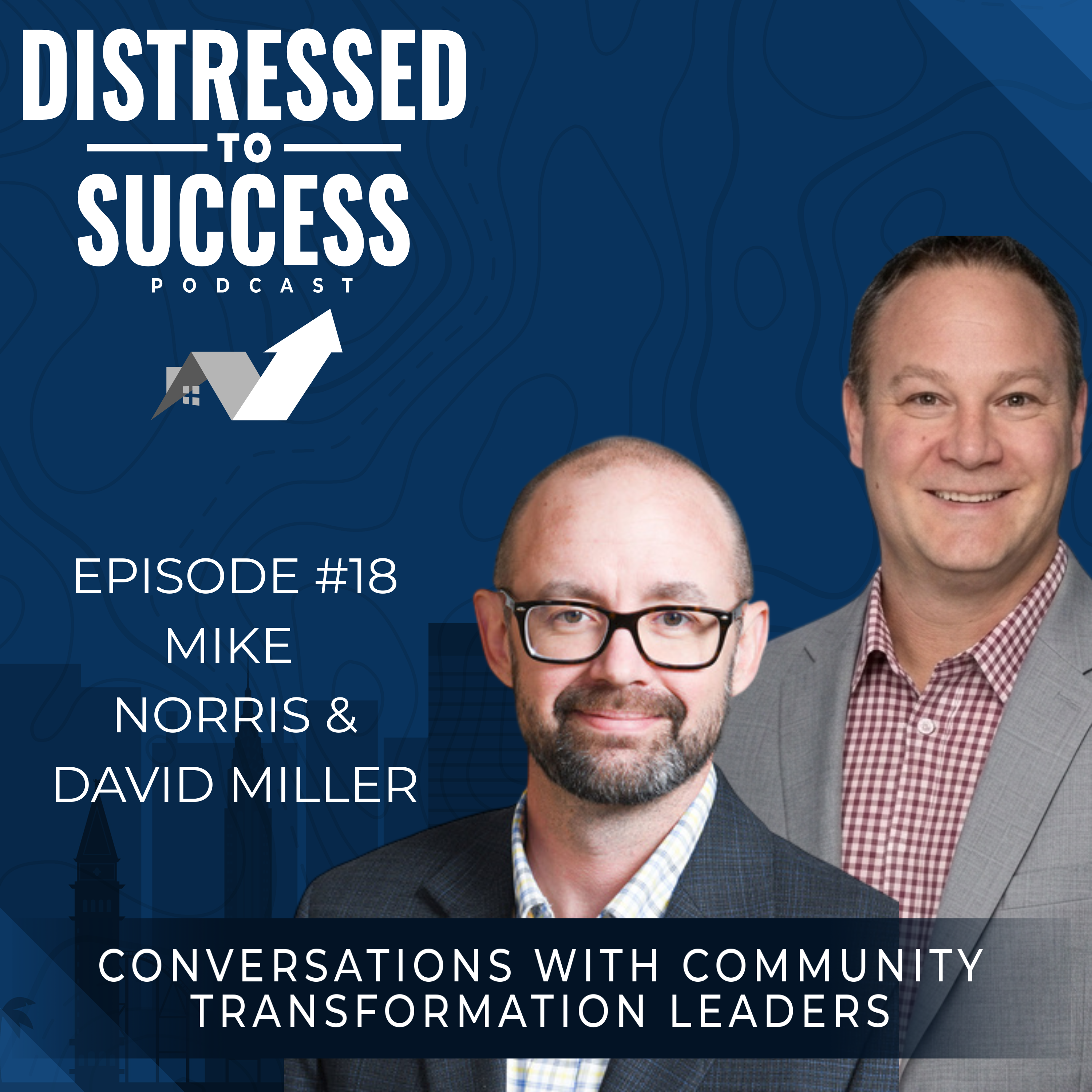
[00:00:00] Speaker A: With us today, I have a couple guests. Mike Norris is the executive director of the Southeast Iowa Regional Planning Commission and David is the executive director of the Homes for Iowa.
[00:00:11] Speaker B: So then in 2019, we just went full steam ahead Incorporated, the nonprofit. We assembled the board, IPI was doing their thing, got the site set up. Twelve months after the governor said, you can start, we delivered our first house.
Wow.
[00:00:26] Speaker C: We're multiple acres. We build 24 homes at one time today. So it's a production level capacity. We're expanding the site this summer to include about another 16 to 20 sites with four of those being a 20,000 square foot new build to be able to build some homes in inclement weather for winter. So it's not just the onesie twosie home program. We are building to capacity and meeting those needs of those orders as they're coming in.
[00:00:54] Speaker A: This is a two part episode. If you want to listen to the full conversation, please check out the previous episode of Distress to Success with our friend Mike Norris. Welcome everybody to another episode of Distress to Success where we talk with professionals who are helping reinvite blighted communities ultimately in a, in a profitable way.
With us today, I have a couple guests, one whom we've had on before. Mike Norris is the executive director of the Southeast Iowa Regional Planning Commission.
Welcome Mike. Welcome back.
[00:01:27] Speaker B: Hey, great to be back, Brian. I appreciate it.
[00:01:30] Speaker A: And then our other guest for today, for those that have listened to our previous episode, kind of highlighting what, what Mike and the and the Regional Planning Commission does, he mentioned a very unique program which is the Homes for Iowa. And so he saw he was able to snag some of David Miller's time and David is the executive director of the Homes for Iowa. And David, welcome.
[00:01:53] Speaker C: Thanks for the invite, Brian. Looking forward to the conversation.
[00:01:56] Speaker A: Yeah, yeah. So I guess to set the table a little bit and then we're going to dive into your background a bit more, David. But as a reminder for the audience, basically what my understanding and we're going to dive into details here shortly.
There's a program that Mike was a part of, obviously David's a part of as well, that solve several problems at the same time, which is why I think it's such a cool, beautiful program.
It's, it's, I guess re educating folks into the workforce.
I guess, I don't know, I guess we'll dive into this. But at least a portion of it are previously incarcerated. Right. It's helping build homes. Right. In areas that are in need of new construction. Right. And then ultimately it's Helping your developers that are also building those communities and providing those, those homes, I'll say at a reasonable price. That's an assumption at this point, but great homes, you know, and really solving several of the problems that we see in smaller communities across America. So anyway, I don't want to steal all the thunder and David, before we dive into the specifics of Homes for Iowa, can you give us just some background of, of I guess how you came into this role, what, what the purpose of Homes of Iowa is all about and, and how you got to the success that you're having so far.
[00:03:25] Speaker C: Previous to my role here as like executive director with Homes for Iowa, I was a community and economic development practitioner for a rural community in northwest Iowa, name of Rock Valley.
Growing community faced housing challenges, but namely realistically workforce housing was a big gap in what we were seeing. We, we really had a lot of new housing stock coming up. Most of our existing housing stock was pretty well taken care of. So not necessarily the dilapidated side of things, but really just a growing community needed new housing stock to support our workforce. It was a predominantly heavy manufacturing community size of 4,000 grew about 30% over 15 years, driven obviously by that employment need.
And so what we had was a lot of new specs going up, but they were all market rate, executive move up style homes really for what we saw for our need for workforce housing was not being met. And by that I mean at the time was probably that low 200,000 range.
Now you're probably talking low threes. But realistically just meeting that need for, for those, you know, new people coming into the community and Homes for Iowa kind of fell on our radar. We are or Rock Valley was near the South Dakota border. We were familiar with the South Dakota Governor's home program which is very similar to what we're doing at Homes for Iowa.
And essentially we looked at it as a community to take on just and meet the niche need that was not being met.
And so the economic development group was never in a housing game. We had not built a spec home previous to our Homes for Iowa project.
Essentially believed in it. I think when the inception of Homes for Iowa back, I think it was 2020 when they first announced and we're going to build their first few homes. I do remember making a call down there and said we will take six and they said we're going to build four this year. We're not going to make it to you. So grew organically. But on the community side, you know, we waited patiently, called every year and essentially in 23. We moved four homes up in the summer, sold them over the course of about six months for the project. Just believed in the, the product, the mission, everything else as we gained those relationships and learned about it. And from there, when they went from I'll call volunteer board driven to need an executive director, I really kind of jumped at the chance and said, hey, I'd really like to take a look at leading and helping with this mission because I believe in, in what it's doing. I saw the impact that did it, that it helped with our community, but just see the potential for that growth impact for many other communities, but also the people that are involved on the ground at our correctional facility.
[00:06:30] Speaker A: Excellent, excellent. Well, I'm gonna, I guess let you continue with the mic with the microphone here, David, but that's a little bit of background. But what would you say, like what's the high level overview of what Holdens for Iowa is and what it's all about?
[00:06:48] Speaker C: Sure, Ken.
You know, it's kind of three to four different missions within it. Realistically, what we're doing on the ground at a correctional facility is we're, we're training incarcerated individuals in the skilled trade and showing them exactly how to build a home from the ground up. And some of these folks show up on site, have never swung a hammer or done any trades at all. Some of them have some skills that they come to the table with that maybe want some retraining.
And essentially during that course of training they're on their tail end of incarceration.
And so we're training them and kind of filling that workforce gap because we do not, or we do have a skilled trade shortage in the state of Iowa.
And so as they reenter society, the hope would be that they gainfully employed, turn their lives around, create second chances and impact their community around them.
And then at the byproduct is the affordable home which we're shipping and selling all over the state of Iowa. And so it's really a win, win, win for the people that are purchasing the home, the guys that are getting training and then the workforce side of things where we're finding really well trained certified employees as they enter the. Excuse me, enter the workforce.
[00:08:16] Speaker A: Awesome. Well, I guess Mike, you've been, you've been quiet here, so I'm going to rope you in a bit, but I guess give us a little background of how you know, the regional planning commission and, and just you and David ended up, you know, connecting and, and working together on this project.
[00:08:34] Speaker B: Yeah, I've, I've Been involved in this.
This effort since about 2014. So we're working on, you know, 12 years here.
And it really started as a conversation with Iowa Prison industries.
And in 2014, state of Iowa was building a new statewide max penitentiary in southeast Iowa.
So we thought, hey, we know Iowa Prison Industries does some things to support affordable housing.
At that time, it was building cabinets. They actually analyzed some walls. They do millwork.
So we thought maybe they'd build a house for us. And so we had a conversation.
And that was the summer of 2014. They said, hey, we're in. Our mission's all about training incarcerated men.
And pretty rapidly that conversation changed from building in the max prison to scaling this project to being a statewide project. So just like anything that grows, there's serendipitous moments that happen that you remember that, you know, the future kind of turns on. So first one of those moments was the first meeting with Prison Industries. We totally hit it off with their director, Dan Clark, who's now retired and is living his best life in Vermont. The second one was meeting the person that implemented the South Dakota program, who actually lived in Burlington, Iowa, where we're located.
And she said, oh, because I met her just on regular business. She was a board director, board of director on Iowa Finance Authority.
So wanted to meet her, talk about some housing business. She asked me what was going on. I said, hey, we've got this idea.
What do you think? She said, well, I've already done that idea in South Dakota.
And so. So she opened up all kinds of doors for us. We set up a tour about, I don't know, nine months later, just South Dakota in 2015.
And. And then from there, it was really. It was really just kind of that background work. It was talking to people.
And by and large, we started gaining momentum. And so the third serendipitous moment was Mark Loughran, state senator out of Muscatine.
And he really put the political horsepower behind the effort, and he lobbied the governor's office, talked to everybody. He's just one of the hardest working people I've ever met.
And so we had some resistance, some political resistance from business groups because they felt that. They feel that in certain cases, offender job programs compete with the private sector.
So their narrative was, hey, if you're building houses, someone else isn't building houses, right? And that's a loss for the private sector. So they're looking at it like a zero sum game. They're like, no, no, this is additive, right? Nobody's building spec. 1200 square foot homes In Iowa. Right.
Well, why is that? They're not profitable.
We don't have the, the economic growth and demographic trends to support volumes and volumes of these types of homes. And that's why people aren't doing it. So Mark broke through that. The governor of Iowa said, hey, we're starting this program and her condition in the state speech in 2019.
And then, you know, so those five years were just like sharpening the ax, as Abraham Lincoln would say, before we cut down the tree. So then in 2019, we just, we just went, you know, full steam ahead. Incorporated the nonprofit, reassembled the board, IPI was doing their thing, got the site set up. And then so really, 12 months after the governor said, you can start, we delivered our first house.
[00:12:40] Speaker A: Wow.
[00:12:41] Speaker B: So now, fast forward six years, Dave. Correct me if I'm wrong, But we delivered 185 homes. We trained about 600 men.
We are, we've had the first apprenticeships for incarcerated men in Iowa. We had the very first electrical apprentice. We've had great stories coming back from guys who wanted to change their lives, went through the program, and then they did change their life when they got out with the skills they, they acquired through the program. So.
And, you know, we hit a point where we, we knew we had to grow and take a little risk. So basically from, you know, 2019 through half of 25, I was kind of the, you know, volunteer executive director for president.
We needed growth and more capacity. And so, so we hired Dave. And it's just more people know about Home Stryway than ever. Dave's really leveraged the program, all of his speaking engagements and relationships. And so, so the program is poised for growth.
It's widely accepted now in all corners of the state. And it's a one price model. We deliver a 1000 square foot box or a 1200 square foot box in one piece.
It's a completed house anywhere in Iowa for one price.
[00:14:04] Speaker A: That's awesome. That's awesome. I guess. When did you and David end up connecting? Is that the 2025 time frame?
[00:14:11] Speaker B: Actually, Dave and I knew each other before then.
When we were trying to get legislation passed to enable the program to start, Dave called and said, hey, what can we do? We're really interested. We need the houses.
And so, you know, we chatted at that point. That was what, almost seven years before he was hired as executive director.
But Dave did amazing things up in Rock Valley.
You guys ended up buying what, six homes?
[00:14:38] Speaker C: Yeah, I think six. We've got eight total deliveries. We had one this year. So really cool to continue to see the community latch onto the product as we move forward.
[00:14:49] Speaker B: So it's a, it's a standard, it's a standard ranch product.
We've got different roof lines, we've got different siding profiles, we have different floor plans. And so we're not, you know, the program is not trying to be a custom builder because we are a job training program ultimately. But we sell the houses to pay for the training. So it has to be attractive enough in the market.
So if someone wants to buy 10 at a time, you can vary up the look a little bit through your siding colors, your layouts. And so far the market's been receptive to that approach.
[00:15:25] Speaker A: What's it. It sounds similar. We can dive, we'll dive into the, the specifics here. But it sounds similar to kind of a modular.
Right.
Product. Although it's not a modular product per se, or would you consider it in that round?
[00:15:41] Speaker B: It's a module. We're a registered modular builder in Iowa.
[00:15:45] Speaker A: Okay.
[00:15:45] Speaker B: And so when people think modular, usually think of two halves or you think about panelized walls, but we ship in one piece, so. So if you ever drive through Iowa and you see a, a whole house, a 24 foot wide by 50 foot long house going down the road in the roadblock, that's probably home's drive. That would be us.
[00:16:06] Speaker C: Yes.
[00:16:08] Speaker A: That's a good sign. It's a proud moment when the road is shut down.
[00:16:11] Speaker B: Right.
[00:16:11] Speaker A: All the house where it needs to go. That's really, really cool.
[00:16:15] Speaker C: You know, we, we are a, we are a licensed modular builder within the state of Iowa. Would be built completely different than what a traditional factory modular build would be. And that's what I mean is a stick frame really from the ground up, just exactly what you'd see if we were to move our crews to a site and build on site. We do exactly that on our build site. We just happen to pick up the house and transport it anywhere in the state of Iowa.
So Web Trust systems, two by six wall.
Really just built exactly like, like what you'd see on site.
[00:16:51] Speaker A: Just on site, picked up and moved. Yeah, that's, that's, that's amazing.
What, like so many questions, but. So we'll start diving into some of those, maybe starting with the economics, if you will, on, on the training side. Right. You know, because this is serving so many different functions on the training side. I think you mentioned, Mike, there was over 600 individuals that have learned a trade. Right. In the housing construction industry since inception. On average, how many does that end up being on an annual basis.
[00:17:24] Speaker B: Now today, it really varies with how many homes we're building at that time.
It's important to mention that the crew members are minimum security level and so they're out there on imminent release.
So as they progress through the rehabilitation in the correction system, they start out as medium security, then they go down to minimum before they're released either to a area judicial residence or even, you know, their own home or something like that. So we have a lot of turnover now in comparison, the governor's house program uses all medium security.
And those guys are going to be there like, you know, for two to five years or something.
So we have a lot more turnover.
So really, however men we have at one time is directly proportional to how many houses we're constructing for orders that we have.
So I would say, you know, you're going to have a baseline of about probably 50 guys and that's going to include, you know, your ins and outs. I think right now we're ahead of that baseline. We're probably in that, you know, 70 to 80 range right now. And so, you know, some guys stay longer than others. We've had, you know, people there multiple years. We've had people that get on Korea leave after 90 days. And so it's, it's a, it's a. There's two sides to that coin, right? You're getting a lot of guys through the program that are, in an organized fashion, learning how to do things and be committed, which is one of the points of the training.
But then the flip side of that is that our professional staff who supervised the building are constantly having to retrain. So, so those are things that we have to look for.
[00:19:17] Speaker C: Maybe an explanation of what the site looks like too. We're multiple acres. We build 24 homes at one time today. So it's a production level capacity. We're expanding the site this summer to include about another 16 to 20 sites, with four of those being a 20,000 square foot new build. To be able to build some homes in inclement weather, you know, for winter, because we are in Iowa and it gets cold, you know. But it's a production side of things where, yeah, we'll have 50 to 80 guys on site every day with our staff that's overseeing them. So it's not just the, the onesie twosie home program.
We are building to capacity and meeting those needs of, of those orders as they're coming in, which allows for, you know, on the skilled trade side of things, even if you don't end up in carpentry, you still understand, you know, production, inventory management, team building, those soft skills side of things too.
But also you know how to work to together and collaborate, work through problem solving, all those interesting things. So it's not, you know, 10 guys on site building one house at a time. It's. It's multiple homes, many, many people on site and specific kind of factory setting type hours as well.
[00:20:35] Speaker A: Got it.
[00:20:35] Speaker B: Got.
[00:20:35] Speaker A: Okay, so you're answering some of my questions along the way. It sounds like currently you can build 24 at a time, expanding that to about 40.
What, I guess what's the timeframe? Like, how long does it take for a home to be completed from start to finish?
[00:20:51] Speaker C: Typical construction's about six months. We like to say first nail to delivery, roughly about six months timeline. So kind of following that traditional build too. But again we're that job training program first. So we do model homes in a way of, I mean we have a third party inspector. So sometimes things are, I wouldn't say held up that way, but again we're training, we're showing people on how to do things.
And then again it just takes a little time. Sometimes it's a little quicker, sometimes it's a little longer. It really depends on where we're at for volume capacity and then how many men we have on site.
[00:21:27] Speaker A: Got it. So is it, is it a like 40 homes are being built all at the same time or is it more of an assembly line and that home is moving through stations? Is it kind of a mixture of both?
[00:21:37] Speaker C: It's a, it's a little mixture of both. You know, if you're going to look at a typical modular facility that's building modular homes and they're, you know, bringing them in pairs or marriaging them on site, that's a factory setting where they're, they're moving through a production line. This one's different where we have the 24 sites, but we're never moving a home. So once it's started, it stays where it is till it's finished. We move our crews to that specific build site of that home and we, we go through the process. There's so we've got homes that are in all stages of construction from you know, really rough start framing side of things where they're squaring up and starting really the first nails all the way to ones that are sitting on the truck ready to ship out.
[00:22:23] Speaker A: Okay, so it's, is it safe to say with the current setup or the setup that's coming right you know, roughly 40 houses every six months is kind of the output. So 80, 80 houses a year.
[00:22:36] Speaker C: Long term goal would be that 75 to 100 plus.
[00:22:38] Speaker A: We'd.
[00:22:38] Speaker C: We'd love to get to that range again. That means, you know, more.
More families fulfilled with housing. But also for us, it's sustainability for sales and then being able to support the crew and continue to keep training and then support them afterwards as well.
[00:22:54] Speaker A: Excellent. Then I guess, Mike, you mentioned, you know, right now there's roughly 50, 50 guys, you know, kind of going through training at any given time. Is that anticipated to go up with this, you know, 16 or so additional sites and like, what. What will it be, do you think? Kind of at peak capacity?
[00:23:12] Speaker B: Yeah, I think.
I think generally, you know, we'd look at a like a one crew member to one house built per year ratio.
That's a real rough number. And so if like Dave says we grow to 100, we'd have at least 100 guys and probably have more just because you're always kind of retraining and training ahead of time.
And so it gets to be that there's a whole. A whole system of organization that goes through actually getting the crew members on site. And so Homes for Iowa has a recruiting system that recruits some other minimum securities around the state of Iowa. And so there's a staff member with Iowa Prison Industries that will actually to sell the program.
And this program pays the most in any.
In any job in the Iowa correction system. The only jobs that pay more are offsite.
Right. So if you go more for a private manufacturer, you can earn more. However, on site, this job pays the most and you get to the outside, which is very rare in the correction system. So we kind of have a recruiter and a chief assistant staff, so to say they recruit. A lot of men have responded to that sales pitch and we try to recruit guys because this is an all voluntary program.
We try to say, here's what the program can do for you, here's what you get to do.
And so there's actually a waiting list to get on the crew right now. Now when they get on the site, we've got annual classroom training that we want to put the men through.
That would be OSHA 10. And then the.
They helped me with the first curriculum. It's a construction labor, I think, nccer.
And so the I.
Thumbs up. All right.
So the IPI staff are qualified to teach that curriculum. And so as the guys come through, it's the goal to get everybody classroom training.
And then if we can go further, you know, and start like a skilled trades apprenticeship, like cloning, electrical sheet metal, something like that.
They can actually do that. Now typically they're not there long enough to actually, you know, continue that apprenticeship. But that NCCER curriculum does count towards apprenticeship hours if they want to, if they want to go that route.
[00:25:48] Speaker A: Got it. So, and I, I think if I understand correctly, not only is it a training opportunity, right, so they come out with a new skill, but they can actually earn an, an income right. While they're doing this. So they actually come out ahead. Right. Because they're, you'll have that income, you know, while they're, while they're still waiting, you know, to be released.
Which is amazing.
What I guess kind of getting to the question probably I think everyone's waiting for, including me. But you mentioned there's kind of two base levels. There's some options in there. But what is the roughly as delivered price of the two options coming out of the Homes of Iowa program?
[00:26:31] Speaker C: So today's model 1200 square foot is 108,000 delivered anywhere in the state of Iowa. That house is two bedroom or three bedroom. We don't charge different by bedrooms. It's just a flat rate that comes with everything in it, including cabinetry, fixtures, interior door trim. It's finished with sheetrock, it's got the H vac system, all the plumbing, water heater, guts essentially of the home.
I said my best analogy is it's about as close to plug and play as you can get.
What the owner or buyer would be responsible for is grading and site prep, footings, foundation, utility hookup. So think municipal or private utilities, gas, water, electric and sewer. And then we come and deliver the home.
It's fairly upfront. We hold our prices generally for the calendar year.
So we do assist with those projects for budgeting reasons, but also for cash flow too. We require 10% down on the purchase agreement. The other 90% comes on the delivery of the home. So we look at every project as a partnership. We, we have many first time builder buyers we'll call the, the normal home buyer that calls us up and is only going to probably buy one from us in their lifetime. To developers that we've parked with, partnered with, that have built multiple homes and communities, economic development groups, a lot of non profits have latched onto this product as well. So there is a potential for some
[00:28:10] Speaker A: project
[00:28:13] Speaker C: income for those that want to purchase our project and speculate on it.
I guess a good rule of thumb at least because there's so many variables between concrete and lot costs, we always tell everyone, good rule of thumb is probably the double our price and that's probably what your input's going to be.
And those variables are again, lot price, concrete, whether you add a garage to the home or not, if you finish the basement. Some people tend to over build things, some people tend to under build them.
Our home can be delivered on a full basement or a crawl space. We don't do slab on grade because of that web trust system. You need to hook those utilities up underneath it and so it becomes a permanent fixture and taxed as such. So it's, it's a real estate transaction.
Anything else I'm missing here, Mick? Mike?
[00:29:06] Speaker B: No, no, I think that's about it. It's, you know, we talk a lot about the advantages of a modular system like this.
You know, so for a developer, you're not coordinating, you know, seven to ten subcontractors on site, dealing with schedules, weather, material availability, right? The house shows up, it's, it's complete house, right. It doesn't have gutters on it.
And so we set it on the foundation and then you know, the developer gets to work off the rest. They add the stairs, they want to put a garage, they do that, they cut stairs into the basement. I mean it's, it's pretty amazing the advantages on site you can get with that, products.
[00:29:52] Speaker A: Yeah.
Well, what's the, what's the biggest bottleneck today, David? Is it, is this is the supply keeping up with demand? Does the demand need to be higher?
Where, where's the, where's is there, is there an imbalance and where would that be in your mind today?
[00:30:11] Speaker C: I think for us today is probably knowledge of product and then still lack of available contractors.
So if some of the smaller rural communities may have not have seen a home in their community built for the last 10, 20 plus years, you know, they've got dilapidated housing, they're unsure on, you know, that remediation or abatement side of things to remove some of those problematic properties. Or maybe they put in a new road and development and just kind of hoping for the best and nobody's built. We've seen some of that. And then again it goes just to contractor availability. I think there's a shortage of available contractors in the rural setting and by that specifically probably those concrete contractors, even general construction. And so we're kind of re educating some of these communities or developers or even we just have, you know, many different community group type people that say, hey, we're just going to pool our money and Build a house and just see if it's going to work in our community to understand that our product is very easy to general you really, you know, if you've probably remodeled a room in your house, diy, you can probably set this house as long as you're following code and you have a contractor that's helping you out with it.
But you know, it's just, it's just understanding the basic building environment and it's pretty easy to do. I think on another level, kind of going back to my community days was when you have a board of directors and you're sitting there looking at floor plans all the time and you're kind of arguing about what closet sizes and wall spaces and all those things. This, our plan is the plan. We don't allow customization.
What you buy is what you get and that allows the job training end of it. But again, that makes it easier for people to understand that when you look at these floor plans, you don't have to make any changes. There aren't any alterations.
What we, what we show you on the plan is what shows up and that that allows that affordability, but it also makes it easier to sell, I think to some of those community groups, non profits, et cetera. You know, even fundraisers, when they're looking at putting this product in is you, you know what you're going to get. There's not arguments across the room about, you know, moving walls and doing this and doing that. Um, we've seen material suppliers, we'll call the lumber yards in the rural communities are starting to kind of take a look at this as a product to offer as well, because they're not looking at it as competition. They're looking at a plus up sale. If I can land this home now, I can sell more product to add a garage on. I can finish a basement. And so it's interesting to have those conversations as Well. I think 10 years ago, or maybe even five, some of those different, same of the same companies probably would have looked at this as a competitor in the market. But they're all starting to understand what this is and what it could do for their community, for their families.
All those things.
[00:33:12] Speaker A: Well, just, you know, kickstarts development in areas like you said, that maybe haven't seen that in a decade plus.
So did I understand correctly that there's certainly demand right out there is. I guess I'll equate it to the. There's orders for more than 80 a year right now, which is driving the growth.
[00:33:32] Speaker C: There's not orders for 80 I think, you know, going back from inception, just building a handful the first few years and we've, we've really organically grown and scaled up on purpose and that was to make sure, you know, we validate the product.
We, we know what our processes are to be able to keep, continue to keep streamlining the job training side of things but also keep up on the quality. And our biggest year we pushed about 40 homes. And so our hope over year is to continue to keep growing that number up again that long term is that 75 to 100 homes. But today, you know, 40 to 50, 55, 60 homes would be great.
And then we just continue to keep building on that, improving our internal processes, deliveries, all those things to be able to keep just bringing quality attainable product around.
[00:34:26] Speaker A: Yeah.
So as of today, right, if you got an order for 10, there's bandwidth there for 10. It's not a multi year wait.
[00:34:34] Speaker C: Yes, for sure.
[00:34:35] Speaker B: Yep, yep.
[00:34:35] Speaker C: For now our capacity, what we have is realistically place an order.
We, we put it into production. We do have a few, we, we've got enough history behind us now where we're doing some I'll call speculative starter homes just on the floor plan side. But we don't necessarily put the finishes in it. So you can pick your cabinet color, you can pick your siding color, but we have a pretty good idea of, you know, how many bedrooms, what floor plan works and then what roof lines are on it. And so we can start that home to kind of increase a capacity to keep our gentlemen busy on site, but B be able to speed to market and bring some of those people that are looking for a product sooner. Now again when demand increases, we may not be able to offer that. So we're kind of hesitant to, I wouldn't say make that a big public known, but it's definitely been nice to get a few people that want a home quicker than the normal six months.
[00:35:32] Speaker A: Yeah, well, six, I mean six month turnaround time is in today's world is fantastic.
You mentioned you ship anywhere in Iowa, right? What's the, what's the biggest sticking point? Why you won't ship out of Iowa or could you? Or would you?
[00:35:47] Speaker B: I think we would.
You know, it's, it's kind of, it's, it gets to be a complex question because you know Homestar Iowa is the program name. Right. And then what makes up homes for Iowa is Homestar Iowa Inc.
And I'm the board president of that. Dave's the executive director of the Inc.
And then we have IPI So Homestar Iowa Inc. Contracts with IPI to build the houses for us. Right. So our plan and all that stuff.
But I point out the, the organizational structure because we are tethered to the state of oclock. Right. This is a private public program.
And so the state is sensitive to where its resources go.
And right now, I think for a lot of great reasons, they want the resources to stay within Iowa.
We do have interest from other states and for two years now we have exhibited a home at the Iowa State Affair.
And if you haven't been to Iowa State Fair, you gotta go. It's a, it's a total spectacle. There's a lot to do, you know, food, animals, entertainment, all the, all the things. But you know, every year we have about 10,000 people walk through the house and people from multiple states come to the Iowa State Fair to see what's going on.
And so we have people from Missouri, from Nebraska, from Kansas, you know, know Illinois saying, gosh, can you move a house to my state where I am?
So, so the first complication is just, you know, working, working through to stay, which totally respect and has supported this program immensely.
The second issue is once you start transporting things state to state, then, then you got kind of federal involvement with licensing and insurance and all that stuff. So.
So could it be multi state?
[00:37:44] Speaker A: Yes.
[00:37:44] Speaker B: Will it be?
You know, I don't think the odds are above 50% at this point.
[00:37:51] Speaker C: I think today's standard answer is we're concentrating on Iowa, trying to build capacity within our walls. And you know, I think when and if our sales cap out there, we, we may look further with permission from other state leaders.
[00:38:08] Speaker A: Well, I think it's a safe assumption to say like the demand is there will be there. Right. For 80 plus homes on an annual basis.
[00:38:17] Speaker B: Right.
[00:38:17] Speaker A: It's just building that network and demand right within Iowa. But I'd like to say once the word is out, I don't think you'll have any problem finding demand for 80 houses a year at the less than $110,000 delivered price range.
That's my assumption. Right. I'm not as familiar with development in Iowa, but the, the areas and developments that, that we've been involved in, that would be a very high desire to have that price point at that volume on an annual basis. So I had to ask the question, guys, just out of curiosity, but I certainly appreciate the answer. I'm sure everyone listening understands as well.
Okay, so we talked about the 1200. I guess I do want to ask on the pricing of the it was a 900 square foot option as well. David.
[00:39:09] Speaker C: We have a thousand square foot model. That's 99,000. I think of the 175 homes we've delivered, I think there's been less than a handful in that thousand square foot model. So our most most popular today is a 1200 square foot. Traditionally it was three bedroom. We started offering a two bedroom, I think in 2024.
And that has really kind of caught on. And I think the main reason for that is almost 85% of our homes go on a basement. And at that point, the ability to add a couple more basements, excuse me, bedrooms down in the basement, egress, windows on their own has definitely pushed that volume there. The living space is just a little bit bigger. By living space, I mean kind of the living room, dining, kitchen areas on an open concept that's a little bigger on the two bedroom than the three.
[00:40:02] Speaker A: Right, right. Yeah, for the. I like in general. Right. For another ten grand, might as well get the extra space.
[00:40:08] Speaker C: That seems to be. That seems to be the general consensus of most that look at the plan. I think the. The main ones at the thousand square foot were predominantly for setbacks, zoning reasons, or specifically just.
[00:40:21] Speaker A: Yeah.
[00:40:21] Speaker C: Room to build or maybe even budget at first.
[00:40:23] Speaker A: Right.
Well, I guess before we dive into, I guess my favorite part of every episode, I guess, Mike, you've been a part of this once on the carve outs. But was there anything else from either one of you, Mike or David, that you'd like the audience to know about homes for Iowa before we wrap up?
[00:40:40] Speaker B: I'd just say that if anybody's listening that wants to look into starting this concept in their state, you know, reach out, get a hold of us, you know, we want to pay this forward. South Dakota was extremely generous.
Two homes for Iowa and still is. We actually coordinate on a lot of things that the last thing we coordinated on was how to crane a house. We trained our first couple houses this year. And so if other states are interested, you know, get a hold of us. So we'd be happy to talk and kind of pull back and show you how it all works.
[00:41:18] Speaker A: Awesome. And we'll, we'll collect. Oh, I'll get. I'll get your direct contact information here at the end of the episode, I guess. David, did you have anything else?
[00:41:27] Speaker C: Double down on that too. You know, if you're interested in it, feel free to reach out. I think again, that side of things with second chances and paying it forward and, and you know, I mean that's just kind of our M.O. on our end is, you know, we don't look at at all competition obviously state to state. Sometimes there is but I think the, the more people we can assist going through the program, more home ownership that we can provide throughout the country is great.
And again I'd just say hey, we're open to tours. Anyone in Iowa that wants to take a look at it, anyone outside of Iowa as well. You really best bet to see really what's happening is really to get down on the ground and take a look at it. You get to interact with some of our crew members working on the homes, understand what they've learned and really understand the potential for their life impact and changes of what's happening there. It's really, really, really incredible.
[00:42:24] Speaker A: Excellent. I guess I know we'll get your personal connection information here shortly, but if somebody would just wants to learn more about homes for Iowa, you know. David, is there a website or somewhere that folks can go?
[00:42:36] Speaker C: Sure can. Www.homes for Iowa.com. we're also on LinkedIn and Facebook. We have started pushing a lot more social media out so our product but also videos of moves cranes interior. We also have some virtual plans on there as well so you can virtually walk through a couple floor plans to understand, you know, what the interior is. We're continually updating our website. So keep along, follow us on social and we'll, we'll try to keep pushing out information as much as we can. And then I open invite. We go to numerous conferences, exhibitors, et cetera. So if anyone wants us to come speak and tell our story to help out with housing, we'd love to do that. If you need an exhibitor at a show specifically, we'd love to share the message there as well.
[00:43:23] Speaker A: Excellent. Excellent. All right. So kind of moving into I guess my favorite part of every episode. This will be new for you, David,
[00:43:29] Speaker C: but I'm getting a little nervous about this.
[00:43:31] Speaker A: You're smiling, so don't worry. It's not that. It's not that crazy. We'll let you go last. You have a little time to think.
[00:43:36] Speaker C: Oh, even better.
[00:43:37] Speaker A: Like we call it carve outs. I totally stole the term from a podcast I listened to and they bring something totally unrelated, typically totally unrelated to the episode that they thought maybe the audience would benefit from. It can be a piece of advice, David.
A gadget. I had one gentleman mention a Ninja Creamy and by the end of his spiel I had ordered a Ninja Creamy or anything book podcast that maybe you listen to that you think folks would benefit from.
I'LL give you a moment to think about. I'll go first and then Mike, you go second. We'll give David a second to come up with something. But mine is actually going to be a podcast that was recommended to me, really, in the last month, is called Founders by David Senra. And it was really awesome because basically what he does is he reads these biographies or autobiographies of founders of companies or prominent individuals throughout history. And then he kind of does, I say, a verbal version of a Cliff Notes of what the. The book was all about.
Now, myself, and if anybody else's listening is in that same category, being a little bit of add, right. And not necessarily having a whole lot of time to sit down and read Cliff Notes, getting a verbal version of that for me was fantastic because in the. I spent a Sunday re sealing our place. Place it in our backyard. Took me about five hours. In that five hours, I essentially read almost five books from his Cliff Notes version, which was, which was awesome for me. So again, anybody listening wants to check it out. It's a podcast called Founders by, by David Senra. So there's mine, I guess, Mike, hopefully give you enough time to think about something from your end.
[00:45:24] Speaker B: Yeah, I guess I'll, I'll lay out, lay something out that's really kind of led me to a lot of different mental models and just kind of life outlooks.
There's a, an investor, Silicon Valley investor, his name is Naval Job Account, and he's done just hundreds of things. And all these interviews have been condensed into a book called the Almanac of Naval.
And it's just an amazing gateway to a lot of different other, you know, kind of resources like books, mental models, ways to look at the world.
And honestly, that's, that's something that really helped me with, you know, developing the Humpster Iowa program and kind of trying to improve my own thinking. And so if people are interested in something interesting, check out the Almanac of Naval Almanac.
[00:46:24] Speaker A: Well, it's interesting that I believe it's the same gentleman because that's not a common name. I guess I don't hear very often. But the, the, the podcast called Acquired, that I kind of stole this whole concept from the two gentlemen that host that I have, I think, have a good relationship with him and, and reference him in their podcast on a very regular basis. So anyway, small world out there and Silicon Valley. Appreciate it, Mike. All right, David, you're on the in the spotlight now. Hope you had some time to kind of think about something from your end.
[00:46:55] Speaker C: Well, it's kind of funny you mentioned books, so I'll stay on that note. I, I picked up this book. It's called the. The. The Inner Game of Tennis. If you've not read that yet, I'm about halfway through it. So it's been very entertaining. But realistically, just showing kind of the, the inner game on oneself. How to improve when.
I'll call things around. You are very busy and you know, you just have to focus on things. And it's definitely helped so far, I guess. And I'm. I'm only a couple days in it, but yeah, it's been interesting to kind of a different game set mind mentality on, on how to kind of work through problems. And you know, today I think I kind of read it with. I'll call it distractions in a way of, you know, you, you've got a phone or two and you have Internet access at all times. You got social media, emails, life, right. Busy kids, work, whatever you have. Right. I think, I think today's mind is busy and it's just kind of nice to be able to kind of remember how to focus.
I think we're probably all the age when we were probably playing Atari and that was the most distracting thing. So, you know, I, I think going.
Especially kids these days, they're just pulled in numerous directions. So it's kind of nice to, to understand the knowledge base on, on how to just dial in and get things done.
[00:48:22] Speaker A: What was the game? The inner game of tennis?
[00:48:24] Speaker C: The inner game of tennis. It's a. It's actually the, the 50th anniversary is the one I picked up. So it's.
I don't know, it's. It's been around for a while. First I've seen it. So we've.
[00:48:35] Speaker A: I think you, you nailed it. Right? Talk about understatement of the century. We live in a world of distractions. That's a fact. And I'm not a tennis player, never have been, probably never will be. But I, I have listened to several books and have learned how much of the game of tennis is, is internal and mental. Right. And being able to quiet that noise. Right. Because all. Any sort of mental distraction, it can take the best in the world, you know, and, and take them off the leaderboard and out of the sport really in a, In a. In a very quick manner. So anyway, it's been a. Interesting to learn how much of that game and development, at least at the elite level, ends up being a mental training as much as physical training and Sounds like that's kind of what the the book is about. So that's, that's awesome. I'll have to check that out. Well, gentlemen, I immensely appreciate both of your time.
Again, Mike Norris with the Southeast Race Regional Iowa or sorry, Southeast Iowa Regional Planning Commission. And and David Miller with the is the executive director with the Homes for Iowa, I guess. Mike, what's the the best ple or best way for folks to connect with you?
[00:49:41] Speaker B: Yeah, just shoot me an email mnorrisseirpc.com Excellent.
[00:49:49] Speaker A: And David, if folks want to connect with you, what's the best way?
[00:49:52] Speaker C: It's David Miller at homesforio.
Com.
[00:49:57] Speaker A: And we'll have both of those emails and the link to Homes of Iowa website in the notes below. So check those out.
Thank you everybody for listening and thank you again, David and Mike, and we'll see you next time.
[00:50:11] Speaker C: Thank you.
[00:50:11] Speaker B: Thanks, Brian.