Episode Transcript
[00:00:00] Speaker A: I averaged about 200 to $250 a month in positive cash flow back towards me when everything was going good. And I've that exact same home now brings me in $8,500 a month and my output on it is about 4,200. The reality is is you basically can just go grab a home and start a sober living home when that's all someone's doing this for, it doesn't work. You become a slumlord. Our biggest rate of people relapsing was when they were alone. It's tough to watch a grown man cry because you're kicking him out because he did meth in the bathroom, but I mean, you have to.
[00:00:34] Speaker B: This podcast is for informational purposes only and does not constitute financial, legal or investment advice. Please consult a professional advisor before making any decision based on what you hear on the show. Welcome everybody to another episode of Distress to Success where we talk with professionals who are helping reinvent blighted communities in a profitable way with us today.
I don't know exactly how Jim found us or we found Jim. It was kind of a, an immaculate find.
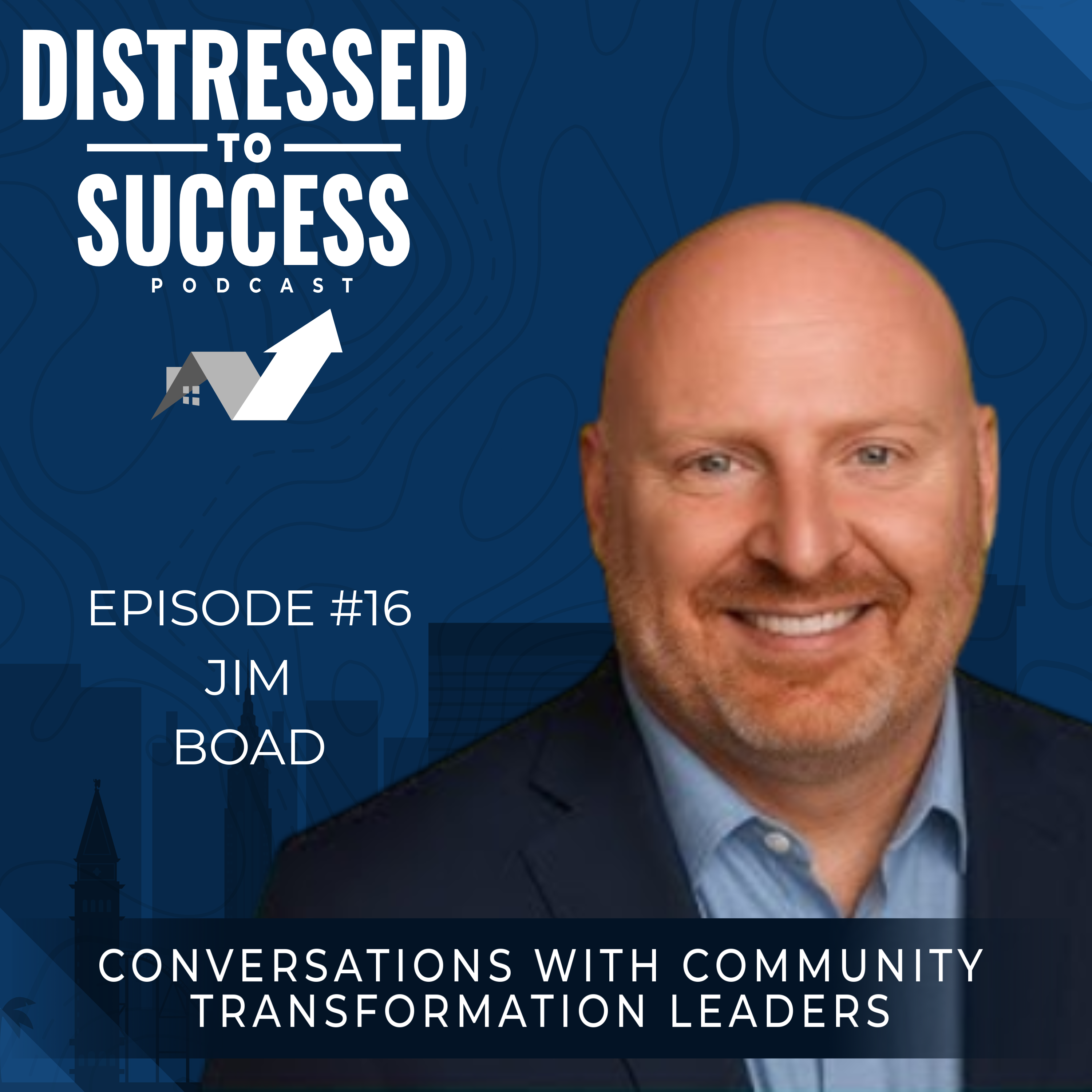
But Jim Bode, who's the founder of, of group home accelerator and in short, he basically helps people open and scale sober living homes is, is on with us today. But I guess Jim, before we dive into it, thanks and welcome.
[00:01:22] Speaker A: Super happy to be here.
[00:01:24] Speaker B: Well, you're, you're, I'm gonna call it a business model, right. I think ultimately that's the, the cool thing about it is it's, it's, you know, checks. I'll say every box from.
You feel like you're doing good, right? You're doing good for the community, right. And it's a. And it, and it is a profitable and scalable business model on top of it.
So you know, to me that's, you know, the, the, the, the goal at the end of the, the rainbow if you will, the, the cool and best business models out there. But um, how did I guess before we dive into the specifics of the business, tell us a little bit about your background, Jim, and kind of how you, how you ended up doing this.
[00:02:07] Speaker A: Absolutely. And I, I kind of double double dip on, on this show because when I started, I started as a fix and flipper. So I started doing heavily distressed properties, turning them into first time home buyer homes. That was my niche in the market I loved the most because I got so much joy from watching somebody get into their first house.
More, much more so than I did doing luxury homes. I did not enjoy Luxury houses at all. I didn't do that long, but so I've been doing that for about 25 years now.
And you know, we've kind of went through the ups and downs of that. We've been through two different markets, we've been through a crash, we've been through the COVID And the second one, Covid is actually what really put me on the path that I'm on today because I was really building out my rental portfolio that was going to be my retirement. That was how I was going to, you know, live the rest of my life. And really once everyone stopped paying because they told me they didn't have to and they weren't wrong, there was nothing I could do to make them pay and I couldn't get them out of the houses during COVID it made me reassess my whole life. I was watching everything slip away very quickly and literally just I had to close, close my computer one night because my spreadsheet was nothing but red and, and got on my phone and was just doom scrolling through social media trying to forget the world. And I ran across something talking about a recession proof business model in real estate. And it was called, it was group homes and it was very generic. So it was elderly care, it was everything. And then kind of one of the last ones was sober living. And sober living is always, you know, not, not sober living specifically because I didn't know too much about it really at the time. But addiction, I, I, I, I grew up around addiction. I was not addicted myself. But the only reason I wasn't is because I saw so many people do so many bad things in addiction. And that one really hit a cord with me. I, I checked it out, I bought the coaching program. It was just an online recorded one. I tore through it and as quickly as I could, I started taking any of my homes that I didn't have occupied and turning them into sober living homes. And I just kind of sprinted towards that. And within 18 months, ish, I had about 14 active sober living homes. And I've just kind of been playing chess with my houses, getting rid of the smaller ones, getting the right ones that fit the model in place. And I absolutely love what I'm doing.
[00:04:27] Speaker B: That's awesome. Let's talk about making lemonade out of lemons, right? With what Covid threw at many industries and many people and forced people to rethink their lives. Right. In your case, it's like what have I done this whole time? And then you see it kind of, you know, say evaporating to some. Some degree. And, you know, major kudos, right, for. For having the, you know, the, the initiative. Right. To. To go do something about it. Right. I think that a lot of people wouldn't have. Right. And. And then just blamed Covid. Right. And you, you know, you didn't let that happen. You. You went and solved that problem and ultimately in a. Ended up being, I'm assuming, right. You can correct me wrong. But assuming today you're actually at a better place today, having gone through that than if it just had played out without Covid in the middle there was that accurate.
[00:05:19] Speaker A: I am in such a better place in so many ways. First and foremost, I'm more fulfilled than I've ever been in my life because we truly change lives for people. We help people do something that is so hard to do alone. And then if we get into the financial aspect of it, well, I went from being able to make a few hundred dollars a month off of a rental property to being able to make thousands of dollars a month off that same property. So cash flow wise, it's 3x5x10x on some houses.
[00:05:46] Speaker B: So that's awesome. That's. Well, so let's dive into that a little bit about like, so what, what is a sober living home? What is, what is, what does that mean? What is this all? How is this different? What is it? What does it do?
[00:05:59] Speaker A: Absolutely. I think the biggest misconception in that thing that I have to explain to people is a sober living home isn't a recovery facility.
So what happens is people will go to like an inpatient drug clinic and they'll go through an intensive rehab. And then what happens is when they're get, they get out of rehab, they either have a great place, like we have a sober living home to go, or they go back to where they were. And that's normally the worst thing that can happen is when people just go right back to where they were because they tend to go back to doing exactly what they were doing.
So we get to be this really cool bridge that helps people stay sober. We don't get them sober, we help them stay sober.
And a sober living home is basically any home in any community. We just chose to put rules around that home and bring people in there that are actively keeping themselves out of addiction.
[00:06:51] Speaker B: Okay, so when you say any, any home, is it like a standard three bedroom, two bathroom house in a normal neighborhood? Is that what we're looking at here?
[00:07:01] Speaker A: 100%.
And normally you're better off with more bedrooms because the model Shifts from a rental where I'm renting you a house to now, now I'm, I'm licensing you a bed. So if you have a, you know, and, and we do two people per bedroom, and the most important reason that we do two people per bedroom is it provides a different layer of accountability to people.
Because when you're, when you're struggling with addiction and you're, you're, you're coming out of it, a 30 day rehab doesn't fix your problems. It just gives you a fresh start. And you know, the real work begins once you get out of that rehab clinic. And now you're around drugs, you're around alcohol, you're around people using, you know, so getting in an environment like a sober living home. Well, now you're around people that are actively trying to stay away from and avoid that and you have a built in support structure.
And then of course, secondly, if you have two people per bedroom and you're charging that fee to two different people in that room, that room generates more money than it would as a solo room.
[00:07:59] Speaker B: Right. And that's the, let's say the profitable, long term, expandable, scalable and profitable like component of what I think is so great about, I think truly winning business models do good and are profitable. Right, right. And that's what I think is so cool about this. So what, so you know, and you know, correct me where I'm wrong and, and I know you're not necessarily a professional in that space too, but the whole point of having two, two people per bedroom, right. Is like you said, the accountability. Because I'm, I'm assuming the relapse percentages for going back right to their previous environment, which is where they came from, is, is probably high, I don't know how high, but probably sky high because it's very hard to break old bad habits in 30 days. And so you're in reinducing those same potential exposure to those addictions. And so that is a non winning scenario in most cases. Is that accurate?
[00:09:01] Speaker A: That is absolutely accurate. And I don't have empirical data over the whole country or anything like that, but I knew in our homes the only, the only rooms we've ever really had relapses in were our solo rooms because you have to have a certain amount of square footage to be able to put two people in a room. And I, I, so I just inherently I have some rooms that aren't big enough and those, those are now our graduation rooms. People graduate up to those solo rooms because our, our biggest rate of people relapsing was when they were alone.
[00:09:30] Speaker B: Okay. And yeah, because that's, you know, that's better. Right. In a, in a sober living home, it's better than being back where they were. But you still have that chance of the accountability isn't there? If you're in the room by yourself and you have, you certainly have access to go, you know, not every addiction, but, you know, if it's alcohol, you can go buy alcohol anywhere. Right. There's nothing that says, nope, you don't have your card today.
And so you have the ability to go do those things and you have the ability to consume those things. Right. If you're in the room by yourself versus being in a room with someone else, that is going to help hold you accountable.
[00:10:08] Speaker A: Absolutely. It's so much easier to just spin in your own head when you're alone.
It can, you know, it can be one of the most dangerous places for a lot of people. That's why meetings are so important, so you can get around other people that are actively working towards the same thing. Because when you're in addiction, you're all fighting that same battle.
[00:10:26] Speaker B: Right? Right.
[00:10:27] Speaker A: And I mean, it's no different than PTSD and things like that. Some of the worst things you can do is go, go into your own room and just get in your own mind and wall yourself off from the rest of the world. Because now it's just whatever story you're spinning there, it's. There's no, there's no help.
[00:10:42] Speaker B: Right. And so there can be no end to that down spiral. Right. If there's nothing to, to help get you out of that. Right?
[00:10:50] Speaker A: Absolutely.
[00:10:51] Speaker B: What, so what, you know, it's not as easy, right? I'm assuming not as easy as saying, hey, I own this rental on this market. I want to start a sober. Him. So sober living home. Right. There's more to it than that. Right. So can you give kind of a, just a high level overview of what it takes and what goes into actually setting one of these up?
[00:11:12] Speaker A: Absolutely. And that's actually kind of one of the fun myths that we get to dispel. There's, there's a few states where there's a little bit more regulation, but most states don't have any regulation on this. This is a completely unlicensed business almost everywhere. You know, Florida has a little bit more and there's, there's five states that really have some sets of regulation on it. But I mean, the reality is, is you basically can just go grab a home and start a Silver living home.
Now, where, where the difficult part on this comes in is actually running a properly structured home. That's. That's the biggest difference. To do it very simple. But first and foremost, the caveat I always give people is you have to care. You know, the money part of this I hate talking about.
Just because when that's all someone's doing this for, it doesn't work. You become a slumlord. Like, I'm just going to throw cameras up in the house and put somebody in the house in charge and it's going to be great. It's not.
You actually have to have a good structure to this. And that's, I mean, really the only difference that sets a sober living home apart from any rental is the rules that we have and that we adhere to them and that we remove people for not following these rules quickly because it will spread throughout the house quickly. But I mean, you know, the. And if you walked into one of my homes, the only way, you know, it's different than any other regular rental that's out there is I'm going to have more furniture in my living room because I have more people living there than a regular home. And there's two beds in every room. And beyond that, it's just a regular residential home, so.
[00:12:43] Speaker B: Got it, got it. So what's the.
Well, you know, obviously marketing is an aspect of this. So how do you connect the right tenants with this type of living situation?
[00:12:54] Speaker A: Absolutely. And marketing is just different in this. And you know, one, I'm going to, I'm just going to correct a piece of verbiage because we never actually have tenants. We have participants in our program.
[00:13:06] Speaker B: Okay.
[00:13:06] Speaker A: So that is the biggest difference is just we never create a tenancy with anyone because if we did, then we'd have to follow landlord tenant act, and then it wouldn't be a sober living home because we couldn't remove people.
[00:13:16] Speaker B: Got it.
[00:13:17] Speaker A: But the main things that we do is you have to market to wherever your people are getting help. So we market to the inpatient drug clinics and we have to build relationships with them. So then what will happen is a couple of weeks before somebody finishes their program there, they're reaching out to us and saying, hey, I'm just finishing up over here at this, this, this drug program. I'm going to be 30 days clean. I'm looking for a sober living home. And that's where we get the majority of our people.
Then the other place we get the most part of our people is through Department of Corrections.
They have a Reentry program where we will help people coming out of prison. They can come into our homes and be a part of that program as well. And they work really seamlessly together because when you're coming out of prison, you're on probation, so you can't do drugs and alcohol. You know, you have to do certain different counseling things. So they, they, they, they follow exactly our program whether they've had addiction or not. And a lot of times we're still dealing with people that have had addiction, so.
[00:14:15] Speaker B: Got it, got it. Okay, so what, how long is a participant typically? A, are they in a home? You know, is it, is it a year? Years. Right? Months. How is it measured?
[00:14:29] Speaker A: The longer the better. We don't have a time frame. I've had people that are rounding four plus years in my, in my homes now.
[00:14:35] Speaker B: Okay.
[00:14:36] Speaker A: I'd say on average people are with us 90 to 120 days.
I, I, I, I, like longer, I mean, just the more time you have to recover, the, the better off you are.
You know, some, some people, and it just all depends. Some people, it's, it's fairly easy for them. They go through rehab, they come, they stay a month or two and then they're back to life and they never look back. There's other people that come and they relapse the first month they're in our home. You know, we, we try to send that, you know, depending on how they relapse and how they work. With us, we love to send them back to rehab. We'll save a bed for them. They finish their 30 days, they can come back and start again. Because this normally isn't a one and done. Hey, I went to rehab. I'm good. I can go hang at the bar with you guys and drink soda. Like that's not the norm.
[00:15:20] Speaker B: Okay, so there's, but there's no, like, obviously, the longer the better. There's no limit, right, that, that folks, you know, are required to maintain their, participate minimum or maximum. Right. There's kind of as long as they need. Is that the right.
[00:15:36] Speaker A: Absolutely. They're, they're, you know, other than people that are on from Department of Corrections, which even with them, they're not, they're not, they don't have to be in our homes. So, you know, they're not, they're not in prison. If they want to leave, they can leave anytime. It's, it's, it's their right to do so. And we will let them stay as long as they're working their program because, and, and then that Kind of goes into funding on this because the majority of people come to us with some level of funding either from the clinic that they were at or an outside resource. There's a lot of opioid funding out there. There's continuum of care funding. So like even like for, for, for homeless type funding for transient. So there, there's, there's a lot of different funding sources. Most people come to us with some level and we will also guide them to other, other funding sources if their funding runs out and they're not prepared to take it all on themselves yet.
[00:16:29] Speaker B: Got it, got it. Okay. So there's different avenues of which or how participants. Right. Can essentially help cover the cost of being in these homes.
And it's not always, you know, hey, what, you know, cash out of their pocket. Right. Okay.
[00:16:46] Speaker A: The majority of our people do not self pay. We do always give everybody because we, we run our business really well and we have a great database so we know what their funding sources are and how long those funding sources are and what they have to do to maintain that funding. So as they come into their last month of that funding, we talk with them. You know, are you looking to stay here longer? You know, are you going to get more funding? Are you going to go to self pay? Because we do have quite a few people that go to self pay because ultimately at the end of the day we're affordable housing also. So yeah, they, you know, if they need to stay there, you know, it's hard to find that, that price point where you're getting all your utilities paid for, your Internet paid for. You know, we don't have big, massive down payments. We don't pull credit. You know, you can, you can have a criminal history. So like there's a, there's a lot of, there's a lot of benefits to it for someone to stay with us even after.
[00:17:37] Speaker B: Yeah.
And so ultimately it's not just, you know, sober. Right. It sounds like you helping folks get their feet under them through multiple avenues. Right. Not just through addiction. Is that the right. Am I understanding that correctly?
[00:17:52] Speaker A: Absolutely. Well, we really promote a lot of getting people back to work as soon as they're comfortably ready. We own a couple other businesses in town and we employ a lot of people that live in our homes and we also do scholarship programs with people. We've sent people to Flagger School so they, they've got their certifications to be able to go out there and do the road flagging.
You know, there's a welding school that's coming up. We're trying to, we're working on a place where we can send people to start getting their cdls so they can become commercial drivers.
You know, we, we really, we really promote growth in there. So that way, you know, you can come in here, you can have a safe, sober place to be while you're building some skills and you know, saving up enough money to buy a car, saving up enough money to get into your own place. So there's, there's, there's a lot that we offer with that and really promote.
[00:18:39] Speaker B: That's awesome. That's awesome.
I guess, I guess talking about or getting into the economics a little bit. Jim, I'm assuming, right. That you know, when you're, when you basically have two beds per room and you got, you know, four plus bedrooms in a house, you end up with a pretty, you know, significant cash flow increase versus a single long term tenant scenario in that same house. But how, how much of a difference is there? Right. I guess you also have higher expenses because you, you as the landlord are paying for all of the, you know, the utilities and amenities, et cetera. Right. That, that maybe a single, you know, a long term tenant typically pays those stuff, you know, things themselves. So what is, what does that look like from an economic standpoint? How much more revenue and how much more expenses, you know.
Are you willing to share some of that information?
[00:19:31] Speaker A: Absolutely. So I can, I can give a pretty much real world example of it.
So I've got one house that's a five bedroom home. I used to rent it out just as a single family home and I averaged about 200 to $250 a month in positive cash flow back towards me when, when, when everything, when everything was going good. And I've that exact same home now brings me in 80$500 a month and my output on it is about 4200.
[00:19:58] Speaker B: So that, so. Wow. So from 250 to 4200 in net revenue on a monthly basis.
[00:20:06] Speaker A: Yes.
[00:20:06] Speaker B: Wow. Okay. And that's, you know, that's after paying all expenses, whatever if you have a like and maybe your scenario is different than others. But does that include a mortgage on the house and all?
[00:20:18] Speaker A: Yeah. Oh no, that includes the mortgage insurance. I pay all the utilities. Utilities are definitely more. I mean, you know, the house used to average 250$300 a month in utilities. It's closer to a TH000 now. But. Yeah, but still though, I mean it just the, the cash flow difference is. It's, it's night and day.
[00:20:36] Speaker B: Right. Well, I Think that's you know, for some folks listening, I think it's good to remind them, you know to that key statement that you said a little earlier of. To run these, you ultimately have to care, right? This is not a max cash flow, you know, model, right. Or in it. Otherwise you're just a, you know, slum lord, right? In a different degree, absolutely. Done correctly. And if caring then it, that's the nice thing is you don't have to run sounds like you don't have to run 100 of these. Right. For it to be not only highly gratifying, right. Because you're doing good, right. You're helping people, but you don't have a massive volume to where you can't actually help. Right. And, and do the things that you need to in carrying. Right. You don't have to know, have such a high volume that your time is stretched too thin, right. You can sounds like heck you give 10 of these, five of these, quite frankly is a, is a very good monthly cash flow to live a very comfortable life, right. Make sure that you've got all the, the capital needed to, to fix the things that need to be fixed and you're not living on razor thin margins like a lot of rental situations typically are, right?
[00:21:49] Speaker A: Absolutely. Three to five of these homes run properly and especially if you're in the four or five bedroom home range, you know, when you're in the three bedroom and below. I had some two bedrooms when I started and they still cash flow for what they are. But there's a big difference. You know, when you only have four people and one person's gone, you just lost a quarter of the income from that building. When you have 10 people and you lose two people, you know, so just, it just becomes math at that point. But, but, but you're, you're absolutely correct. I mean you could have three to five of these and replace a solid six figure income.
[00:22:19] Speaker B: So which is not, not an impossible endeavor when you can cover the cost of a mortgage in a four to five bedroom house and still have four to five thousand of net revenue is a very achievable. Now I guess kind of back to beyond the need to care, you also need to be on a market or an area that allows you to deploy this model. And so is there a typical like you need to be in a, a town of. I don't know if you, if you have any of this information, but you need to be in a town of at least X population to cover, you know, so many beds. Is there anything like that, that exists.
[00:23:00] Speaker A: I mean, it, it definitely does. The, the reality of it is, though, is we still have such a drug problem in our country and opioid issues and fentanyl, and now there's even stronger drugs than fentanyl coming out.
This, it's not going anywhere anytime soon.
I live in a city of 11,000 people, and I was able to keep 14 homes full with a waiting list all the time.
So you don't have to live in the heart of a city.
[00:23:27] Speaker B: So you said 14,000 people in your town.
[00:23:29] Speaker A: 11,000.
[00:23:30] Speaker B: 11,000. And you have 14 homes full. Okay. Well, I think that should tell everyone of even small town, which I anticipated to be the case. I just didn't know if you could have enough of those.
I'll say sources of, of new participants. Right. In the small towns, there certainly are addiction issues everywhere. Right. A town of 100 people, and I lived over all over Montana, and one of the towns I lived in had less than 100 people. And I'm sure there's still addiction problems in those. Right. But you, you do need those, those programs that you're working with that can be a source of participants, and they need to be, you know, in the general area, like, is there a certain, like, radius that you typically say, hey, they need to be within so many miles of a program that is helping on the recovery.
[00:24:25] Speaker A: It definitely helps. I mean, in my area, there's quite a few programs around us, but I mean, I, I expanded and I do my, you know, like, I, I built my connections really far away. So I have people that will come from almost 300 miles away and come over and stay in my homes. Because one of the big things is, is that a lot of people have to get away from where they were, because if they don't, they're just going right back to the same people that we're doing the same things with. So there's not specifically a range, like when I'm, when I'm teaching people how to do this, you know, of course I have. You start in your closest area and just work out. And don't be afraid to work out far because somebody two cities away might need to get away from where they're at. So they're, they're reaching out beyond where they live to actually come to a sober living home. They might have went to recovery there, but they don't want to stay there.
[00:25:12] Speaker B: Right, right.
Makes sense. Yeah. Sometimes that disconnecting. Right. From that previous, you know, scenario comes at different levels. Right. It can be as simple as living in One of these homes for a couple months in your same town. It could be, like you said, going multiple hours or states away. Right. Trying to, to really start over. Right. It's a reset at the end of the day.
[00:25:35] Speaker A: Absolutely.
[00:25:37] Speaker B: I guess, you know, at a very surface level, and I think that's what we've talked about most of stuff at a surface level, Jim, it's kind of like, wow, this is, I'll say, you know, too good to be true. Right. And so along that kind of thought process, I'm sure it's not all rainbows and sunshine. Right.
What are some of the pain points? Right. The unusual things that you maybe need to account for running this type of scenario or model versus a standard long term rental model.
[00:26:09] Speaker A: The biggest thing is it's the accountability that you hold people to in the home. And the, the, the, the most important step of actually having to remove people that are doing the wrong things because it's, it's very different than a regular rental. You know, I've had people live in my rental properties for years and I never even went back in that rental property until I was turning it over because I didn't need to. They paid the rent, they didn't have any issues.
So just, I don't, not that I didn't think about them, but it's not like I wonder how Joe's doing in my rental house on Main Street. Like, I don't here, the checks are coming in and I'm not getting complaints. We're good. Where here? It's, it's, you know, you have to do regular pop buys and you can build a team out around this so you don't have to be the one that goes in there specifically yourself and does it all. But, you know, you have to, you have to do those Popeyes. You have to check on people. You know, you're doing intakes and outtakes. You know, there's, you could, you could turn a room three or four times in a month because someone comes in and they're not a good fit and the next person's not a good fit. So like, you know, you can have turnover, you know, and we definitely have turnover, but we have a list of people normally waiting to come in right after that person. So that's, that's probably the hardest part because it's, it's, it's tough to watch a grown man cry because you're kicking him out because he did meth in the bathroom, like.
But I mean, you have to.
[00:27:27] Speaker B: Yeah, yeah. Ultimately, hopefully they're going back you know, to rehab. Right. To recover and, and come try again. Right.
[00:27:35] Speaker A: Yeah, we always, we always try to go that path with people first. Unless they do really bad things and want to fight with us and, and, and behave really badly after then, then we may just remove them and say, hey, we're just not a good fit for you. So.
[00:27:49] Speaker B: Got it, got it. So it's again, I guess back to the, one of the first statements. You said you have to care. Right. And I think I want to, I keep saying that because I just want everyone listening. Whoa. I can go from 250 of cash flow a month to 4200 cash flow a month. I'm going to implement this tomorrow. And if your heart's not in the right place, ultimately they're going to fail. Is that, am I thinking the right way there, Jim?
[00:28:11] Speaker A: 100%. And look, I work with a lot of investors who, it's not a good fit for them to run these and I connect them with really good operators because I teach a lot of people how to do this. By renting homes, you can kind of do the arbitrage model. You know, you don't have to own the homes. There's a guy that lives in Olympia who has 24 of these up and running and he doesn't own a single home.
So it's a total doable model in that regard. And as an investor, yes, you're not going to take, as a passive investor in this. You're not going to make the same, like the person running it deserves to make the jewelry, but you can make a higher, a higher rent than you would, but now you're guaranteed that rent because they're going to keep it full. You alleviate all of the issues that you have as a regular landlord because unless a major component goes out, you're not getting a phone call. The toilet clogging goes to whoever's operating that home. You know, the, the, the, the clogged sink goes to whoever's operating that home, not back up the pipeline to you. And then you're paying for it as the, as the investor. As an investor, it can be one of the most hands off ones you have when you put a good operator in place because they care. Because you don't operate these just for money. You just, you can't, it's just, it's, it's, it's just not the way it works.
[00:29:19] Speaker B: Right. Well, yeah, I get back to you. You have to care for it to be long term successful, otherwise it's a short term, maybe cash flow Positive. But boy, you could end up in quite the precarious scenarios I'm imagining. Right. When you have, when you don't care and you don't hold people accountable and you end up with homes with multiple people that ultimately don't belong there anymore.
[00:29:42] Speaker A: Those are the homes that end up on the news.
[00:29:45] Speaker B: Yes, exactly. Which is what you don't want.
[00:29:47] Speaker A: And the people that live in the home know if you care, like, and you know, there's a lot to it because like I said, they don't have to live there. So when you, you know, because there's people that will go and they'll jam three or four people in a bedroom. Cool. I get it. You want to make a million dollars off of one house. But like, you're making it a bad living experience. You're not making it a good place to come and recover. I mean, it's hard enough as an adult to go and have to be in a room with somebody else already, you know, but when it's only one other person and we're all following the rules and we're all there with the common goal, it, it makes it a lot more doable.
[00:30:20] Speaker B: Right? Right. Well, you kind of open the door a little bit. So I'm gonna, I'm gonna put my foot through it and walk right through it. But it sounds like, I guess I want to dig into exactly what Group Home Accelerator. Right. Your, your business does, right. I got the impression that you, you do this right yourselves, but then you also help others.
I'll say put these homes together. Right. What I didn't really think of, but you'd mentioned that there are different ways of participating. Right. There's folks that maybe are the investors. Right. That want to participate, but more passively. And then you have operators that are more, hey, I want to operate this model. Maybe don't have the ability or don't want to own all of the houses. And Group Home Accelerator helps put all those parties together. And then I guess what else does Group home. What is Group Home Accelerator all about?
[00:31:13] Speaker A: Absolutely. The biggest thing we do is we show people how to start and scale these and I break it down into really nice little bite sized pieces and I'm there with you from start to finish. And it's just showing you exactly how to first and foremost make sure that this is a viable model in your area.
And then second, I really just take you through each step, you know, how are you going to do it? Are you going to rent a home? So I can, I can show you how to work with an investor and rent these home and how to structure these the right things to say. Because it can be a weird conversation when I call you and just say, hey, I want to rent your home and put drug addicts in it.
What.
So teaching people what to say and how to say it and when to say it. And like, like I said to how to structure that because sometimes as an investor and if you don't know, they're going to want to kind of put the screws to you. Oh, you're going to bring in eight grand a month? Well, I went five, you know, and then now you're cutting a check every month for utilities because you, you didn't, you didn't structure your deal. Right. And then, then, then the other big part is once we get you up and running, we show you how to scale because your models and systems are really important in this business because you're not just in charge of one home, you're in charge of however many beds are in that home.
So if there's eight beds in that house, well, now you've got eight people you're in charge of. So you're tracking eight different people. It can. When, when I started this, I was using spreadsheets and Excel and Google and it was so dirty and now we've got it cleaned down into this beautiful CRM and it is so easy to track everything, like I said, right down to the bed.
[00:32:48] Speaker B: That's awesome. And that's all part of the group home accelerator, as I'll say program.
[00:32:53] Speaker A: Absolutely.
[00:32:54] Speaker B: Okay.
Amazing. Well, not to pivot off this entirely, but I think that's a great place to say, hey, you know, for folks that want to learn more about the group home accelerator program or about this model in general, I guess. Jim, what's the best way to. I don't connect with you or learn more.
[00:33:14] Speaker A: Absolutely. Jimbode.com and then you have some options in there. You can go because I run my coaching program through school. So you can go in there and actually get a seven day free trial. Come in, watch the videos, come to one of my live Q&As, ask questions and then if it's a good fit for you, you can stick around and you'll be charged for it. And then you can stay as long as you want. It's just a month to month program. So as soon as you get enough out of it and you don't feel like you need it anymore, you can just bow out of it and run your own homes.
[00:33:42] Speaker B: So, okay, so jimbo.com and anybody listening can check out the the notes below for links as well, I guess. Jim, before we wrap up, I totally took this segment. I call carve outs from one of my other favorite podcasts. But basically I think I mentioned before we started recording, start thinking about something that is a great piece of advice, gadget saying book, what have you that you want the audience to kind of know about.
And I'll go first to give you a little time to think about it.
My carve out this week is I'd say a use of AI. Everyone's talking about AI, right? And I don't intend this to be an episode about it, but I think a really cool use of it at the home right now is my daughter And I, she's nine, basically sat down with ChatGPT and I, I've tried this with, I don't know exactly when chat GP switched over because I don't know if you notice, you can have like the fast answer. I think they call it quick and then they have thinking and then they have like deep thinking. There's like three different modes. And I've tried it with the quick answer one and it produces a story, but not a real good structured story. And so we sat down the other night, I'm like, ah, let me put it on thinking mode. And I asked my daughter a couple questions about like, what is she looking to do in the story? Like, you know, give me think three sentences of what you want it to be about. And she basically gave me those three sentences, plugged that in, we added it with a, hey, we want this to be a 12 chapter book. And then every day, right? So now we've broken that down today I ask it to create the next chapter. So right now we're on chapter five, start with chapter one. And my daughter, who does love to read to begin with, but I've never ever had her come home from school asking to generate the next chapter so she can read it ever, right? And this is not going to a library, this is not a book series.
We could do this forever, right? Like we get through these 12 chapters, let's create another one. And so it's been a really cool process to go through. And one of those, I don't say side uses of AI that you don't certainly don't read about in the news, but it does even cool things. It'll generate the pictures that go right along with it.
And it's just a cool concept and cool use and, and way to use it that I don't know for, for those that are parents out there that maybe hadn't thought of doing that. Use the thinking mode. It generates a much better structured story, generates really cool pictures and I can tell you at least got one 9 year old girl addicted to the stories from that. So there's my carve out Jim. I'll let you kind of go with yours.
[00:36:29] Speaker A: That is an awesome Carvel and I'm just going to say one thing on your carvel and then I'll jump into what my thing is.
I love what you're doing and I love going into the deep mode and I talk with a lot of people about AI because I love AI. I've been using it for a long time now and it's just expressing to people.
A lot of people don't understand how to use it. They think that I can just give it these super easy basic things and it will do deep stuff where it's not, you know, it's all about the inputs that you give it. That's what's going to give you those great outputs. If you're like, just write me a best selling book.
Okay, well what, what does that, what does that mean? Okay, yeah, so I, I, I love it and I love that your daughter's into it and my wife's been working on some books called Where My Nose Goes and it's all about our pets and where my pet's nose goes. So love, love, love, love the books. And then speaking of that, I'm going to jump into books.
I love the Alex hermosi offers the $100 million you underdog offers hundred million dollar leads.
They're just such a great book. And I don't care if you're really trying to sell things online or not. The information in them just kind of goes across so many different realms of thinking and sales and even if you're just in a job, how to do better at your job by utilizing some of these things, how to how to get a pay raise because you're utilizing some of these things. But if you want to start a business, there's just no better series to start with. He just breaks things down so simply with easy pictures. You know, Jim's not happy because he needs help.
Can help Jim now Jim's happy.
[00:38:02] Speaker B: That's awesome. I will, I will second that. I have not read that one. I have read $100 million money models which by Alex as well and is a fantastic book and I'd say that series is fantastic. Just, just different ways of thinking about things and that the one I read, you know, he kind of centered around how he could, how he could open a gym and the gym itself, the cost for opening it, plus a pretty significant amount of profit would be recovered in like 30 days or something. Like, he had it down to such a science. It was like, first one, like, I think I'm in the wrong business. Because if that's what you can achieve out there, like, that is amazing. And then he obviously has figured it out over and over. So anybody that wants to learn from him, I, I second your, your carve out, Jim. That's. That's awesome.
[00:38:53] Speaker A: Well, the, the genius I think of him is, is what they talk about with genius is he makes very complicated things ridiculously simple. It's like, how, how, how is this so simple?
Where I've watched it in other forums and I'm like, you absolutely confused me. And they're talking about the same thing. But he made it like, wow, two smiley faces. I got it.
[00:39:16] Speaker B: I would definitely be in that bucket of.
I'm an engineer and I certainly have been accused of over engineering things, right?
And I would be the one if I wrote that same book, people would be listening, going, I have no idea what he's talking about because, you know, it really shouldn't be this complicated. And Alex does the exact opposite, right? Takes that very complicated thing and make it sound.
[00:39:37] Speaker A: You'd have four or five people going, I get it. No kidding.
[00:39:43] Speaker B: That's. That's amazing. And I guess, Jim, thank you again for your time today. I really, again want to, I guess, applaud you for the model and what you're doing because it, it does check all of those boxes. And my mind immediately goes to.
We're constantly buying houses at auctions that we watch many others go unpurchased because you just can't get the financials to make sense with a typical model. And it's just sad to see properties get demolished in the same market today where there's a housing shortage in most of the markets that we're in. And that, that's why we started the series Distress to Success.
And just think your model embodies the solutions that are out there that hopefully others can employ.
And so really appreciate you sharing that with us today.
[00:40:30] Speaker A: Well, thanks for having me on.
[00:40:31] Speaker B: I love sharing and everybody listen, hopefully you learned a thing or two. We'll reach out to Jim again. Jimbo.com learn more about how to deploy that model and be a solution in your community.